
How to Pick the Right Rug Size for Any Room
One of the most common decorating mistakes has nothing to do with furniture, paint, or lighting.
It’s rugs. More specifically, rugs that are too small.
A rug that is undersized makes a room feel disconnected. Furniture looks like it’s floating instead of anchored. Even expensive pieces can suddenly feel awkward or unfinished. The frustrating part is that this mistake is incredibly common because most rugs sold in stores are designed to fit packaging and shipping standards, not actual room layouts.
Choosing the right rug size isn’t complicated once you understand the basic principles. It’s less about decoration and more about how furniture sits within the space. When rugs are sized correctly, rooms instantly feel more intentional, more balanced, and more comfortable.
Here’s how to get it right.
Why Rug Size Matters So Much
A rug acts as the visual foundation of a room. It defines the seating area, anchors furniture, and creates structure within open spaces. Without a properly sized rug, furniture feels scattered and the room lacks cohesion.
Designers often follow one simple rule: The rug should connect the furniture, not sit underneath it like an afterthought.
This is why slightly larger rugs almost always look better than smaller ones. A rug that feels generous helps the room breathe..
Living Room Rug Size Rules
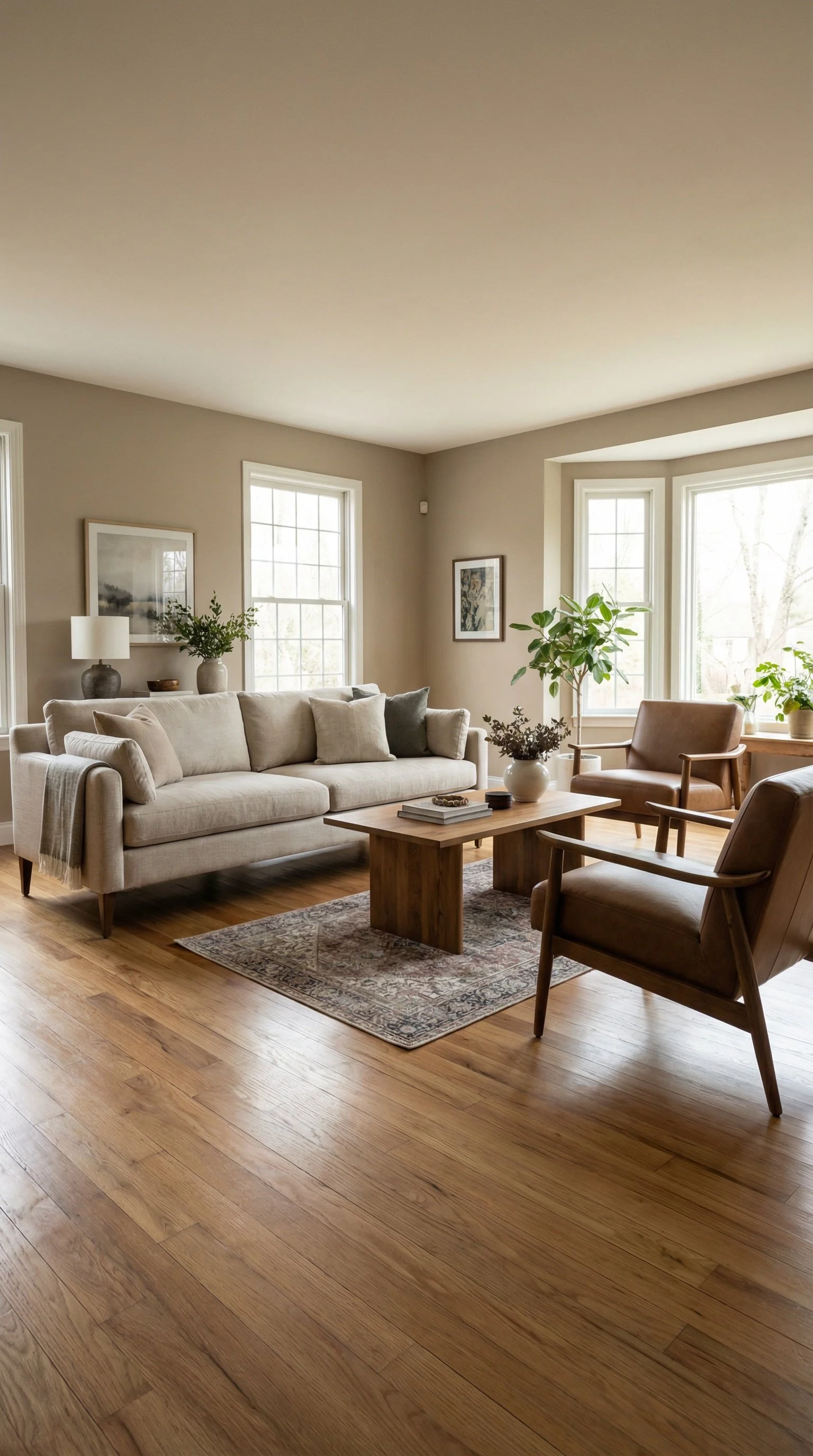
Living rooms are where rug sizing mistakes show up most often. The goal is to anchor the seating area so the furniture feels connected. There are three common layouts that work well.
The Best Layout: Front Legs on the Rug
In most living rooms, the ideal setup is placing the front legs of the sofa and chairs on the rug. This creates a visual boundary around the seating area without requiring the rug to cover the entire floor.
Common rug sizes that work well for this layout include:
8 x 10 rugs
9 x 12 rugs
Larger living rooms often benefit from a 9 x 12 rug because it provides more breathing room around furniture.
Natural fiber rugs like wool blends or textured woven rugs work especially well here because they add warmth without overwhelming the room with pattern.
Full Furniture on the Rug
In larger living rooms, the rug can sit underneath all the seating furniture completely. This works especially well in open concept spaces where the rug helps define the living area.
In this setup: The sofa, chairs, and coffee table all sit fully on the rug.
For this layout, larger sizes like 9 x 12 or even 10 x 14 rugs often look the most balanced. A large rug creates a sense of calm and structure in bigger rooms.
The Layout to Avoid: The Floating Rug
The most common mistake is placing a small rug in the center of the room with no furniture touching it. It looks like a decorative island rather than part of the room.
This usually happens when people use rugs like:
5 x 7
6 x 9
in living rooms that really need something larger.
Small rugs are better suited for accent areas rather than main seating spaces.
Bedroom Rug Placement
Rugs in bedrooms should create softness underfoot while also framing the bed.
There are two layouts that consistently work well..
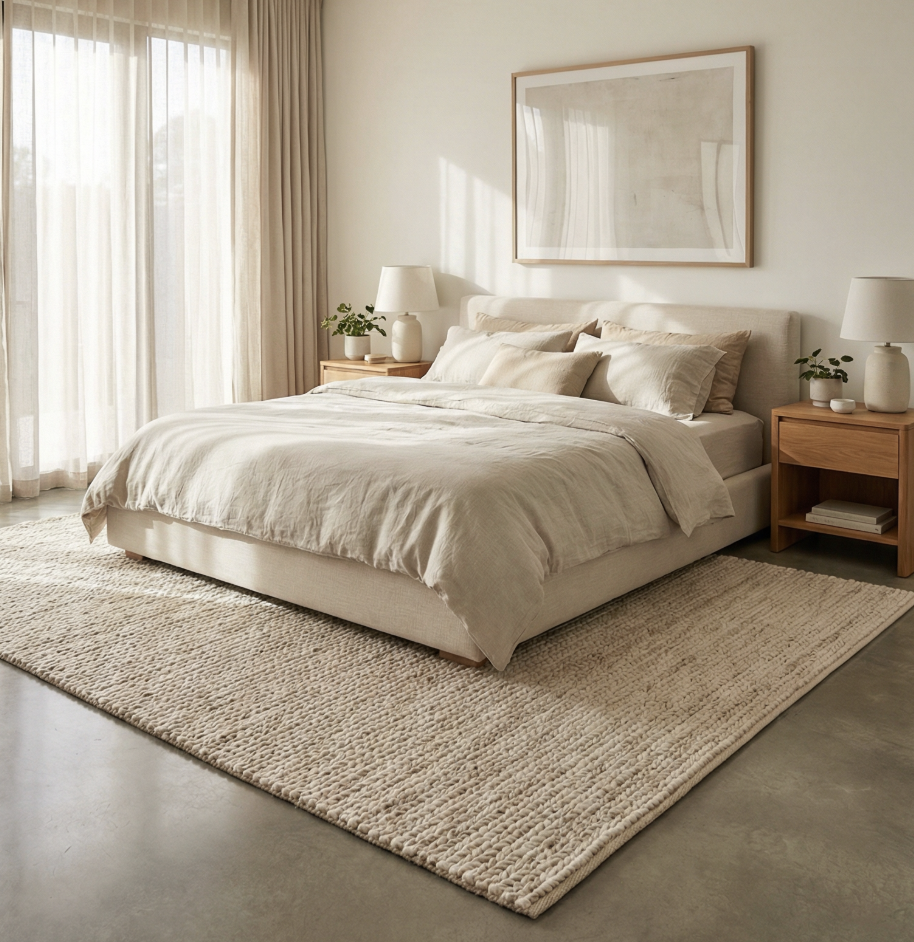
The Large Rug Under the Bed
This is the most balanced option.
Place a large rug under the bed so it extends on both sides and at the foot of the bed.
Typical rug sizes include:
8 x 10 for queen beds
9 x 12 for king beds
The rug should extend roughly two feet beyond the sides of the bed.
This ensures that when you step out of bed, your feet land on the rug rather than a cold floor.
Using a thick rug pad underneath helps keep the rug from shifting and also adds extra cushioning.
2. Runner Rugs on Each Side
If a large rug isn’t practical, placing runners along both sides of the bed can still create a comfortable layout.
Long runner rugs soften the walking path and visually frame the bed without covering the entire floor.
This approach works especially well in smaller bedrooms.
Dining Room Rug Sizing
Dining rooms require careful rug sizing because chairs need space to move.
The rule here is simple.
The rug should extend far enough that chairs remain on the rug even when pulled out.
A good guideline is leaving about 24 inches of rug beyond the edges of the table.
For example:
A standard dining table often pairs well with an 8 x 10 rug.
Larger tables may need a 9 x 12 rug.
Flat woven rugs or low pile wool rugs work best in dining spaces because chairs slide easily across them.
Avoid thick shag styles here, which make moving chairs awkward..
Entryway Rug Placement
Entryways benefit from rugs that define the space and catch dirt before it spreads through the house.
For narrow entryways, runner rugs work well.
In wider entry areas, small area rugs can help ground the space visually.
Durability matters here more than softness.
Look for rugs made from materials like polypropylene or tightly woven wool blends that resist moisture and dirt.
A non slip rug pad is especially important in entryways to keep rugs secure and prevent sliding.
Layering Rugs for Larger Spaces
Layering rugs has become increasingly popular because it allows flexibility.
A large neutral base rug, such as a jute or woven natural fiber rug, can define the seating area. A smaller patterned rug layered on top adds character without overwhelming the room.
This technique works well when large patterned rugs are difficult to find or very expensive.
Layering also adds texture and warmth to the space.
Rug Materials That Age Well
Size matters most, but material plays a big role in longevity.
Wool rugs are known for durability and softness. They resist crushing and hold up well in high traffic areas.
Synthetic fibers like polypropylene are extremely durable and easy to clean, which makes them great for homes with pets or children.
Natural fiber rugs such as jute or sisal bring texture and warmth, though they tend to feel firmer underfoot.
The best choice depends on how the room is used.
Why Rug Pads Matter
Rug pads are often overlooked, but they improve both comfort and longevity.
A quality rug pad keeps rugs from sliding, protects flooring, and adds cushioning.
They also help rugs wear more evenly over time.
For hardwood floors, look for non slip felt pads designed specifically for wood surfaces.
Even thin rug pads can make a noticeable difference in how a rug feels underfoot.
A Simple Rule to Remember
When choosing rug size, it helps to remember one guiding principle.
If you are deciding between two sizes, choose the larger one.
A rug that feels generous almost always looks better than one that feels cramped.
The rug should make the furniture feel anchored, not isolated.
Once you start thinking about rugs this way, rooms become easier to arrange.
Instead of decorating around the rug, the rug becomes the foundation that holds everything else together.
And when that foundation is right, the entire room feels more balanced..