
How to Choose Curtains That Make a Room Look Bigger
Curtains do much more than block sunlight.
They influence how tall a room feels, how wide a window appears, and how much visual weight sits along the walls. When chosen well, curtains can make a room feel taller, brighter, and more open. When chosen poorly, they can shrink a room visually without anyone realizing why.
Many homes end up with curtains that are too short, hung too low, or too narrow for the window. These small mistakes interrupt the natural lines of the room and create a cramped feeling even when the space itself is fairly large. The good news is that fixing this usually does not require replacing furniture or repainting walls. Most of the improvement comes from placement, size, and fabric choice.
Here is how to choose curtains that help a room feel bigger instead of smaller.
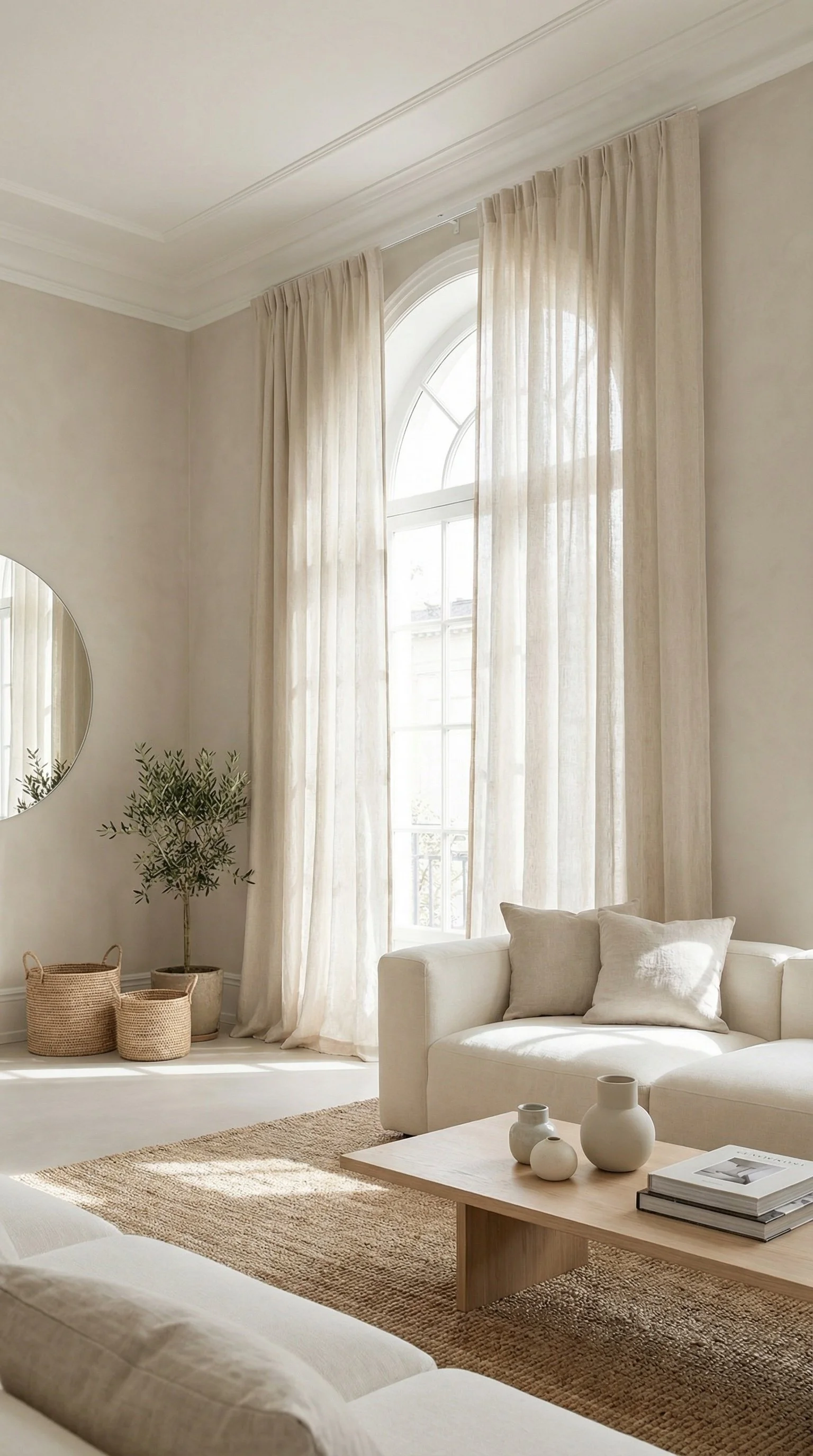
Hang Curtain Rods Higher Than the Window
One of the most effective ways to visually enlarge a room is to hang curtain rods higher than the window frame.
Instead of mounting the rod directly above the window trim, place it closer to the ceiling or crown molding.
This simple shift creates the illusion that the window itself is taller. The eye follows the curtain line upward, which makes the entire wall appear higher.
Interior designers use this technique constantly because it works in almost every space.
Using adjustable curtain rods makes this easier because you can extend them wider and mount them higher without needing custom hardware. Look for sturdy rods with solid brackets rather than thin rods that bend under heavier curtains.
The goal is to create vertical emphasis.
The higher the curtains start, the taller the room feels..
Extend the Curtain Rod Wider Than the Window
Curtains should rarely stop exactly at the window frame.
If the rod only spans the width of the window, the curtains will block light and visually compress the wall.
Instead, extend the rod several inches beyond each side of the window. This allows the curtain panels to rest mostly on the wall rather than covering the glass when they are open. More exposed glass means more natural light, which automatically makes the room feel larger.
It also makes the window appear wider than it actually is. Many curtain rods are designed with telescoping sections that allow you to easily extend them wider than the window. Choosing a rod that is several inches longer than the window width gives you flexibility when positioning the brackets.
More visible window space equals a brighter room.
Choose Curtains That Reach the Floor
Curtains that stop halfway down the wall visually cut the room in half.
This is one of the most common mistakes homeowners make.
Curtains should almost always reach the floor.
Even in smaller rooms, full-length curtains create vertical flow that elongates the wall.
For most spaces, curtain panels that just barely touch the floor look the cleanest. Some people prefer a slight “puddle” where extra fabric rests on the floor for a softer look, but this works best in more formal rooms.
If you are unsure about sizing, measuring from the rod height to the floor before buying panels ensures you choose the correct length.
Floor-length curtains visually stretch the space.
Short curtains do the opposite.
Use Light and Airy Fabrics
Heavy fabrics absorb light and add visual weight to a room.
In small spaces especially, lighter materials make a noticeable difference.
Linen curtains are a popular choice because they diffuse natural light while still offering privacy. Cotton blends and semi-sheer panels also help soften light without blocking it completely.
These materials allow daylight to filter through the fabric, which brightens the room and reduces the contrast between the window and surrounding walls.
More light generally means a room feels larger.
Thicker blackout curtains have their place in bedrooms, but in living areas lighter fabrics tend to create a more open atmosphere.
Match Curtain Color to the Wall
Contrast draws attention.
If curtain panels are dramatically darker or brighter than the walls, the eye immediately notices the boundary between them. When curtains are closer in color to the wall, the visual transition becomes softer. This creates a continuous vertical surface that makes the room feel more expansive. For example, soft beige curtains against warm neutral walls blend together rather than competing visually.
Neutral curtain colors such as cream, soft gray, taupe, or warm white tend to work in many spaces because they support the room rather than dominating it. The goal is subtle cohesion.
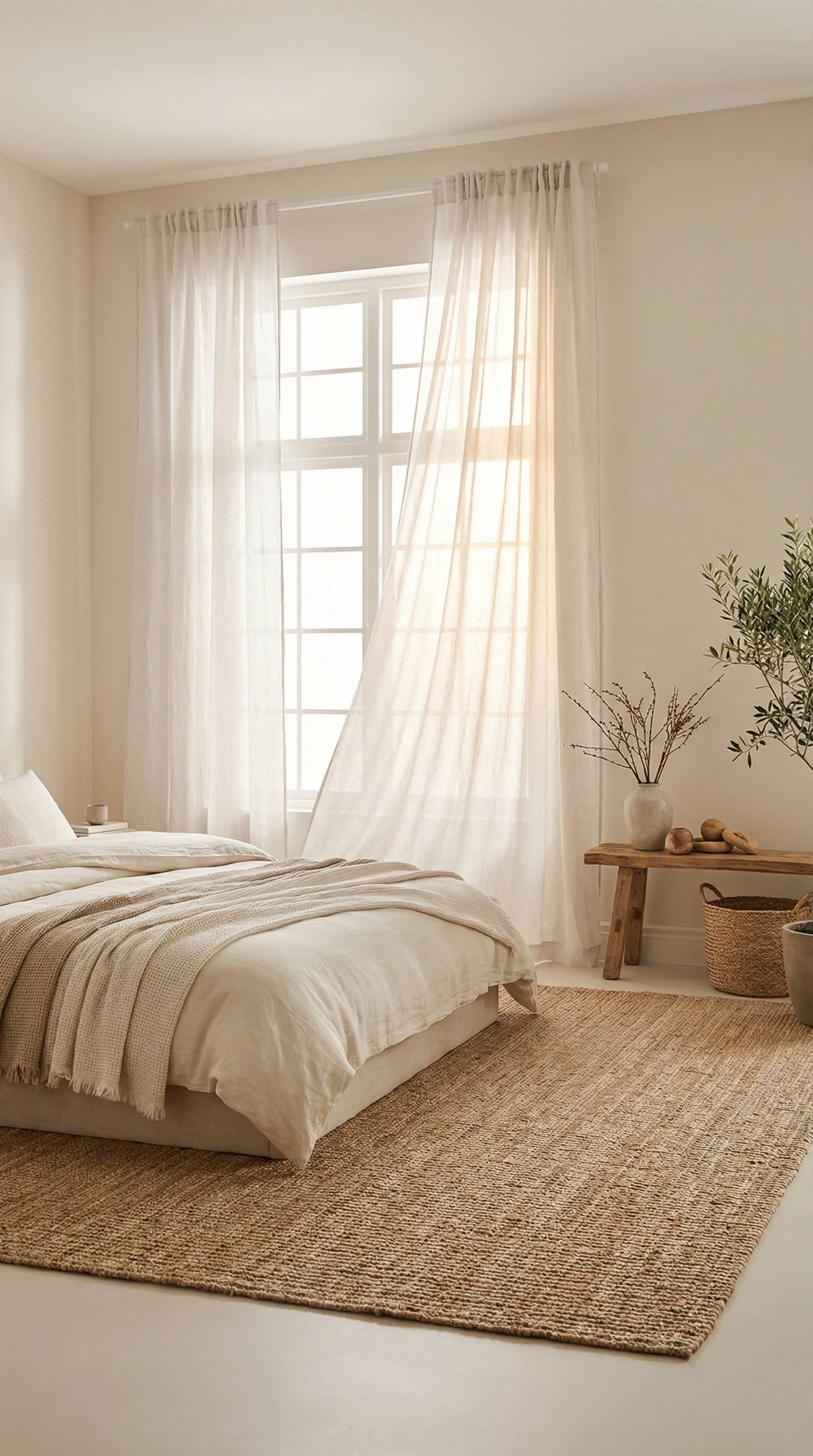
Use Wider Panels for a Fuller Look
Curtains that are stretched tightly across a rod look flat and unfinished.
Even when closed, curtains should have some fullness. Most designers recommend that curtain panels be at least one and a half to two times the width of the window. This allows the fabric to drape naturally instead of appearing stiff.
Using wider panels also creates a more luxurious appearance. The extra folds add texture and softness to the wall. Curtain panels designed with built-in pleats or grommets can help achieve this look while still sliding easily along the rod. Fuller curtains feel more intentional.
Let Light Work With the Curtains
Curtains should complement the natural light in the room, not fight it.
If a room already receives strong sunlight, sheer panels can soften the light while keeping the space bright.
Sheer curtain panels are particularly helpful in living rooms where privacy is needed but blocking light would make the room feel darker. Layering sheer curtains with heavier panels can provide flexibility. During the day, the sheer layer keeps the room bright. At night, the heavier curtains can close for privacy. This layered approach works especially well with double curtain rods, which allow both panels to hang neatly on the same window.
Keep Hardware Simple
Curtain hardware should support the design of the room without becoming the main focus.
Simple finishes such as brushed nickel, matte black, or antique brass tend to blend well with many styles.
Minimalist brackets and rods keep attention on the curtains and the window itself.
More ornate rods can add visual clutter, especially in smaller rooms.
Curtain rings can also improve how curtains hang. Rings allow the panels to move smoothly while creating more defined vertical folds.
Subtle hardware helps the window feel clean and structured.
Think of Curtains as Architecture
Curtains are often treated as decorative accessories, but they behave more like architectural elements.
They create vertical lines that influence how the room is perceived.
When positioned well, they guide the eye upward, widen the wall space, and allow light to flow naturally.
This is why something as simple as adjusting rod height or choosing longer panels can dramatically change how a room feels.
Curtains that emphasize height, light, and softness help a room breathe.
And when a room feels like it has space to breathe, it almost always feels bigger than it actually is.