
Low Maintenance Backyard Ideas That Actually Last
(Real Solutions That Reduce Work Year After Year)
Most backyard upgrades look good for one season. Fresh mulch. New plants. Clean patio furniture. A few decorative touches.
Then reality sets in. Weeds push through. Wood fades. Plants overgrow. Edges blur. Surfaces stain. Maintenance piles up. A low maintenance backyard is not about doing less work once. It is about building a yard that demands less attention long term. That requires choosing materials, layouts, and systems that hold up without constant correction. Here are backyard ideas that actually last, without turning into another weekly chore.
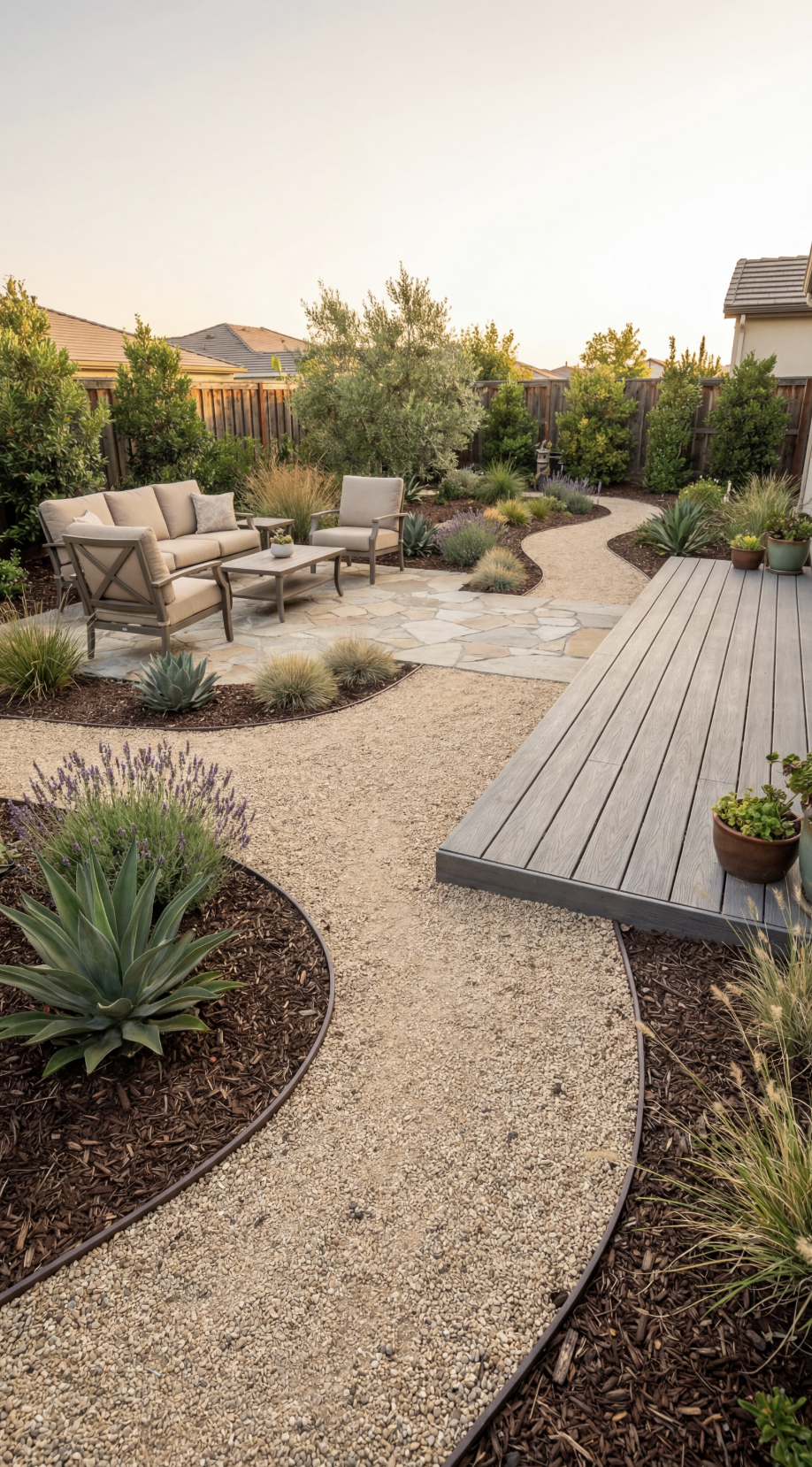
1. Use Hardscape to Reduce Lawn Area
Grass is one of the highest maintenance elements in most yards.
It needs mowing, edging, watering, fertilizing, and weed control.
Reducing lawn space with intentional hardscape immediately lowers workload.
This does not mean pouring concrete everywhere.
Consider:
-Gravel seating areas
-Stepping stone pathways
-Stone patios
-Paver extensions off existing slabs
A properly installed paver base with compacted gravel and leveling sand creates a surface that drains well and resists shifting. Using polymeric sand between pavers helps prevent weed growth and keeps joints stable.
Hardscape lasts because it removes the need to manage living growth in those areas.
Less lawn equals less maintenance.
2. Install Defined Edging Once
Uncontrolled edges create ongoing work.
When lawn spills into mulch beds or gravel areas, you are constantly trimming and correcting.
Installing solid landscape edging creates permanent boundaries.
Metal or heavy duty composite edging works well because it holds its shape and resists frost movement better than thin plastic strips.
The goal is clean separation between:
-Grass and beds
-Gravel and soil
-Mulch and walkways
Once edges are defined, maintenance becomes predictable instead of constant.
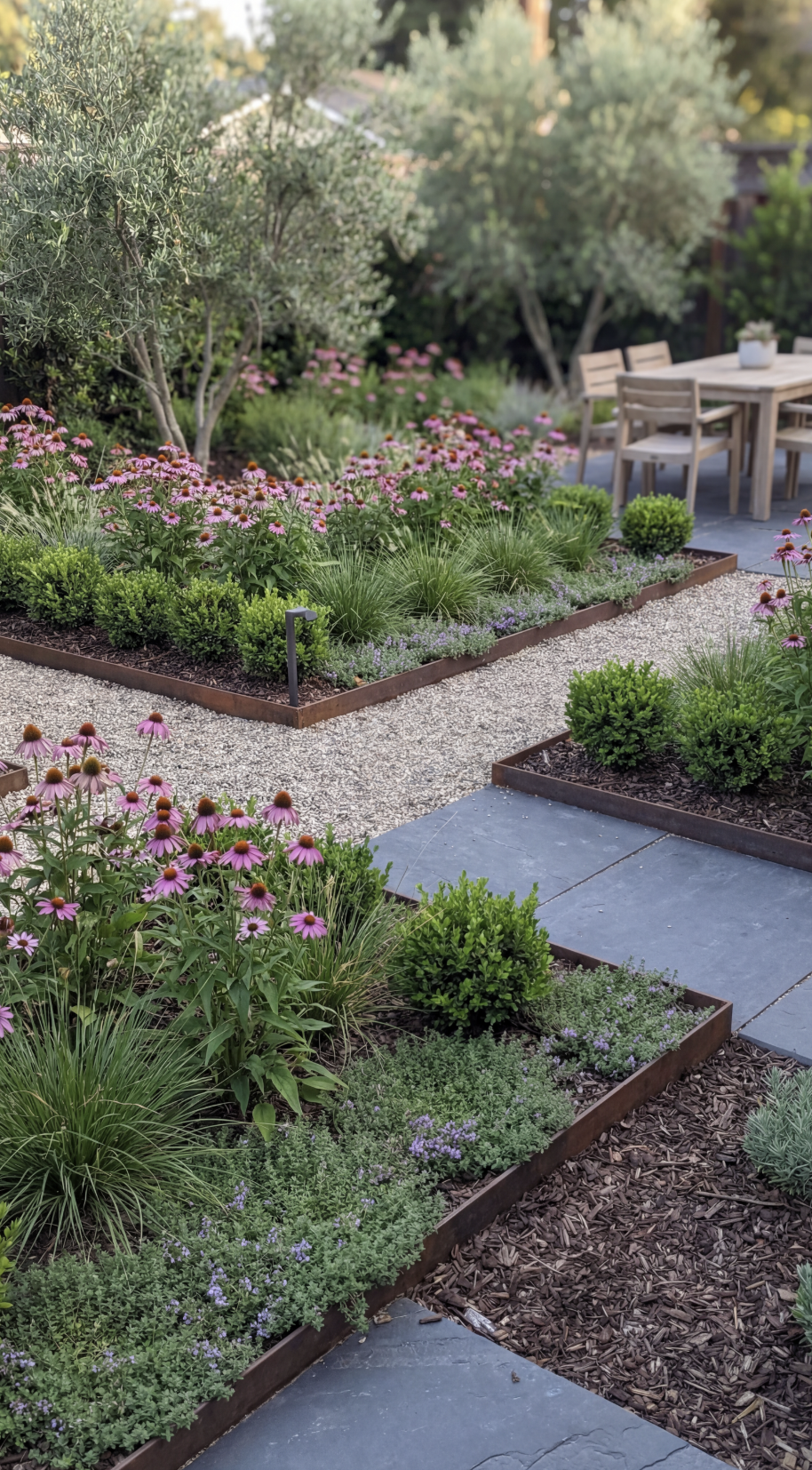
3. Choose Native or Slow Growing Plants
The biggest mistake in backyard design is planting for appearance instead of growth behavior.
Fast growing ornamental plants look impressive at the garden center. Within two years, they dominate the space and require constant pruning.
Instead, choose:
-Native perennials
-Slow growing shrubs
-Ground covers that stay contained
Native plants adapt to your climate, require less watering, and resist pests better. They are designed for your region.
Before planting, observe sunlight patterns. Six or more hours of direct sun is full sun. Three to six is partial. Less than that is shade.
Matching plants to conditions reduces maintenance dramatically.
Planting something that struggles in its environment creates ongoing work.
4. Use Mulch Strategically, Not Excessively
Mulch reduces weeds and stabilizes soil moisture.
But thick, constantly refreshed decorative mulch can become a recurring cost and chore.
Apply mulch in a moderate layer over landscape fabric where appropriate. Landscape fabric underneath reduces weed penetration and extends the life of the mulch layer.
Avoid piling mulch against tree trunks or foundation walls. That traps moisture and creates problems.
Mulch is a tool, not decoration.
Used correctly, it reduces effort. Used excessively, it adds work.
5. Install Drip Irrigation Instead of Hand Watering
Hand watering creates inconsistency.
Inconsistent watering stresses plants and leads to decline.
A simple drip irrigation system connected to a hose timer delivers water slowly at the root level. This reduces evaporation, conserves water, and eliminates daily watering tasks.
Basic drip kits are inexpensive and expandable. Once installed, maintenance drops to occasional inspection instead of daily involvement.
Watering deeply and less frequently encourages stronger root systems.
Automation removes friction.
6. Choose Durable Outdoor Materials
Outdoor furniture and finishes should resist weather, not require constant sealing.
For decks and patios:
-Composite decking resists rot and does not require staining.
-Powder coated metal furniture holds up better than untreated steel.
-Outdoor rated cushions with removable covers simplify cleaning.
If you use wood, protect it once properly instead of redoing it yearly. A high quality exterior stain applied correctly lasts longer than rushed applications.
Low maintenance is often about material choice upfront.
7. Simplify Lighting
Complex landscape lighting systems look impressive but often fail in pieces.
Instead, choose fewer, durable fixtures.
Solar pathway lights eliminate wiring entirely. Hardwired LED fixtures with weather rated connectors last longer than cheap plug in systems.
Focus lighting on:
-Entry paths
-Steps
-Key seating areas
Good lighting improves safety and usability without adding constant upkeep.
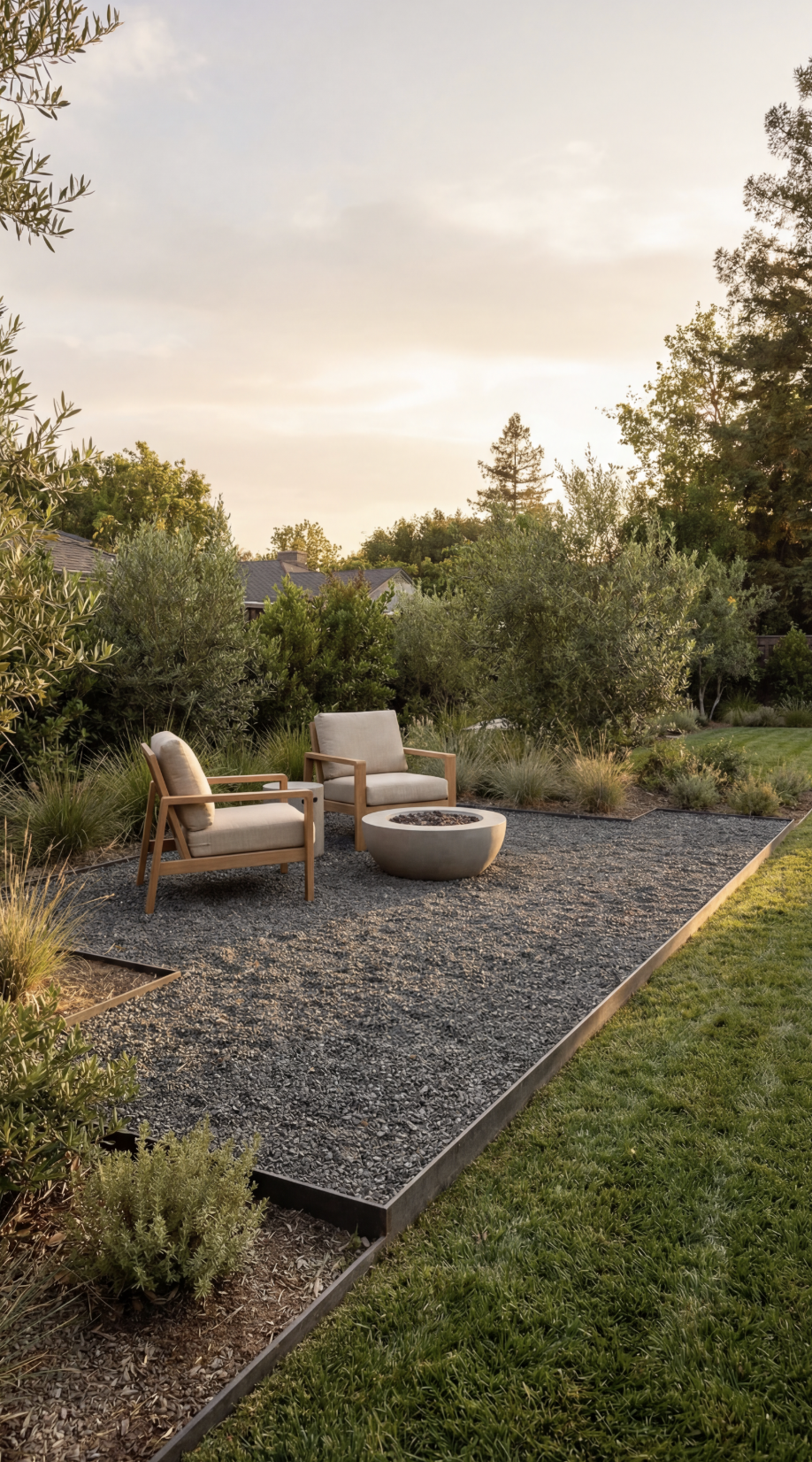
8. Install a Contained Gravel Seating Area
One of the lowest maintenance backyard upgrades is a defined gravel seating zone.
Steps:
-Excavate a few inches.
-Lay landscape fabric.
-Add compacted base gravel.
-Top with decorative gravel.
Border it with metal edging to keep material contained.
Gravel drains well, does not need mowing, and handles foot traffic easily.
Add simple weather resistant chairs and a fire pit, and you have usable space without ongoing care.
9. Build Raised Beds with Proper Materials
If you want garden space, build it to last.
Cedar or ground rated pressure treated lumber holds up far longer than untreated pine.
For longer beds, add internal bracing to prevent bowing from soil pressure. A simple vertical brace on each long side maintains structural integrity.
Raised beds reduce weed intrusion, improve drainage, and make gardening more manageable.
Built correctly once, they reduce annual rebuilding.
10. Control Weeds Before They Start
Weeds are not random.
They thrive in disturbed soil and open areas.
Prevent them with:
-Landscape fabric under gravel
-Mulch coverage in beds
-Proper edging
For persistent growth, spot treat early rather than letting weeds mature and spread seed.
A proactive approach reduces future effort dramatically.
11. Use Storage to Eliminate Clutter
Backyard clutter creates visual stress and more cleaning work.
Install:
-Wall mounted hose reels
-Weatherproof deck boxes
-Simple shed shelving
Containing tools and equipment protects them from weather and keeps the yard looking intentional.
Storage reduces friction.
12. Keep Drainage in Mind
Water is the root cause of most backyard issues.
Ensure:
-Downspouts extend away from the house
-Gravel areas slope slightly for drainage
-Patios do not trap water
A long level helps confirm slope direction. Even subtle grading adjustments make a difference. Standing water leads to rot, mosquitoes, and erosion. Drainage is foundational.
What Low Maintenance Actually Means
Low maintenance does not mean zero work.
It means:
-Fewer surprises
-Less correction
-More stability
-Less weekly upkeep
The goal is to design a yard that stays controlled without constant intervention.
That comes from:
Defined edges
-Durable materials
-Smart plant choices
-Proper drainage
-Automation where possible
You don’t need a designer backyard. You need a yard that does not fight you. When the structure is solid, the work becomes occasional instead of constant. That is what lasts.