
Ultimate Door Care Guide (Interior and Exterior)
Doors are one of the most used parts of a home, yet one of the least intentionally maintained.
You open them dozens of times a day without thinking about it. Interior doors separate sound and temperature. Exterior doors protect against weather, noise, pests, and energy loss. When doors work well, you barely notice them. When they don’t, they create daily friction in subtle ways that slowly wear on you.
Doors stick. They scrape. They let drafts in. They rattle in the wind. They don’t latch cleanly. Most homeowners live with these issues far longer than they should because none of them feel urgent. But door problems rarely fix themselves. They usually get worse.
The good news is that most door issues are simple maintenance problems, not major repairs. With the right attention, doors can feel solid, quiet, and effortless again without replacement or renovation.
This guide walks through how to care for doors properly, from the inside of your home to the outside, focusing on the details that actually matter.
Why Door Maintenance Affects Comfort More Than You Think
A door is a moving system. Hinges, frames, hardware, seals, and surfaces all work together. When one part drifts out of alignment, the rest compensate until something feels off.
You experience this as:
doors that need to be pushed or lifted to close
drafts near entryways
rooms that don’t feel private or quiet
visible gaps or uneven lines
finishes that wear unevenly
These aren’t cosmetic annoyances. They affect how a home feels day to day. Addressing door issues early keeps small mechanical problems from turning into structural ones.
Interior Doors: Fix Movement Before Fixing Appearance
Interior door problems almost always start with movement.
Seasonal humidity changes cause wood to expand and contract. Houses settle slightly over time. Hinges loosen. The result is a door that rubs, sticks, or swings open on its own.
Before sanding or trimming anything, check the hinges. A simple screwdriver tightening loose hinge screws often fixes alignment issues immediately. If screws no longer bite into the wood, replacing them with slightly longer screws helps anchor the hinge into framing instead of drywall.
For doors that rub consistently, hinge shims can be added behind the hinge leaf to correct alignment without removing material from the door itself. This is a cleaner, reversible fix that professionals often use first.
A small magnetic door stop or discreet wall-mounted stopper also prevents repeated handle damage and reduces long-term wear on hinges.
Hinges and Hardware: Quiet Fixes With Big Impact
Hinges carry more load than most people realize. Over time, friction increases, especially in high-use doors.
A dry silicone spray or graphite lubricant applied lightly to hinge pins eliminates squeaks without attracting dust. Avoid heavy oils, which collect grime and eventually make the problem worse.
Door handles and latches benefit from the same approach. If a latch feels sticky, removing it and cleaning the mechanism before lightly lubricating it often restores smooth operation. This takes minutes and avoids unnecessary replacement.
For older homes, upgrading frequently used interior door hardware to slightly heavier-duty versions improves feel and longevity without changing style.
Door Frames and Trim: Where Air Leaks Start
Interior doors don’t just affect movement. They also affect airflow.
Gaps between trim and drywall or between the frame and wall allow air to move freely. You may notice this as temperature differences between rooms or drafts near hallways.
Applying a paintable interior caulk along trim joints seals these gaps and instantly makes spaces feel more finished. Using a caulking tool or smoothing paddle keeps lines clean and avoids the “DIY look” people worry about.
This step doesn’t just improve comfort. It also improves sound separation between rooms.
Exterior Doors: The First Line of Defense
Exterior doors work harder than any other door in your home.
They face temperature swings, moisture, wind pressure, and daily use. When they aren’t sealed properly, the entire house feels the effect.
The most important exterior door components are:
weatherstripping
thresholds
door sweeps
frame seals
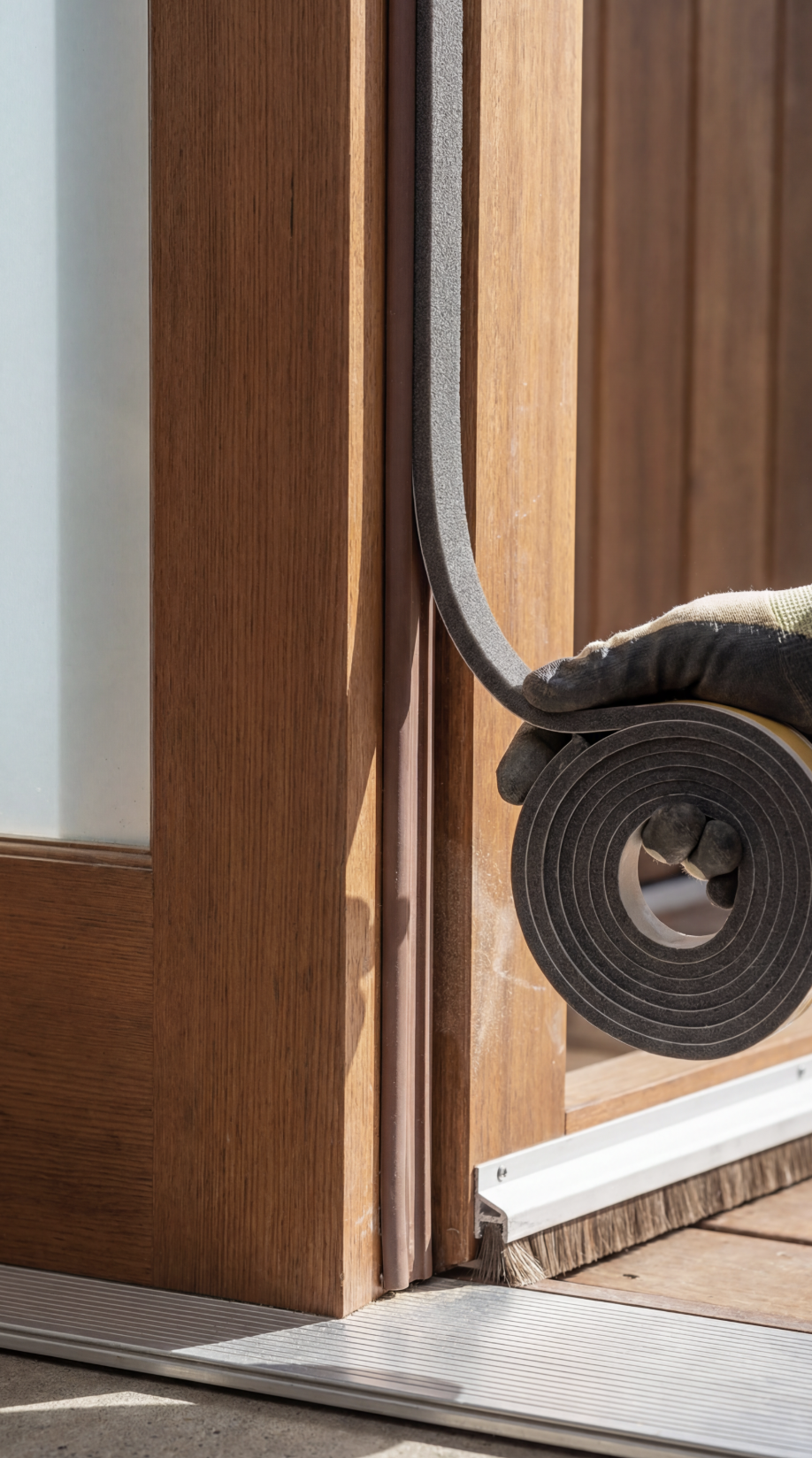
Worn or compressed weatherstripping allows air and moisture to pass even when the door appears closed. Replacing it with adhesive-backed foam or silicone weatherstripping restores the seal without replacing the door.
For door bottoms, an adjustable door sweep prevents drafts and keeps insects out. Choosing a model with replaceable inserts makes future maintenance easier.
Thresholds and Transitions: Often Ignored, Always Felt
The threshold under an exterior door takes constant abuse.
Over time, it loosens, cracks, or pulls away slightly. This creates gaps that let cold air in and warm air out. It also allows water to pool where it shouldn’t.
Adjustable aluminum thresholds are designed to be raised or lowered to meet the door snugly. A simple screwdriver adjustment can eliminate drafts immediately.
If a threshold is damaged, replacing it is usually straightforward and far cheaper than dealing with water damage later.
Exterior Caulking and Seals: Protect the Structure
Exterior door frames rely on caulking to prevent water intrusion.
Cracked or missing caulk around the exterior trim allows rain to seep behind siding or brick. This damage happens slowly and invisibly at first.
Inspect caulk lines annually. If the caulk feels brittle or pulls away easily, remove it and replace it with an exterior-grade sealant designed to remain flexible through temperature changes.
Using painter’s tape along edges before applying caulk helps create straight, professional-looking lines and protects surrounding finishes.
Screen and Storm Doors: Often Neglected, Always Useful
Screen and storm doors add protection, airflow, and insulation when maintained properly.
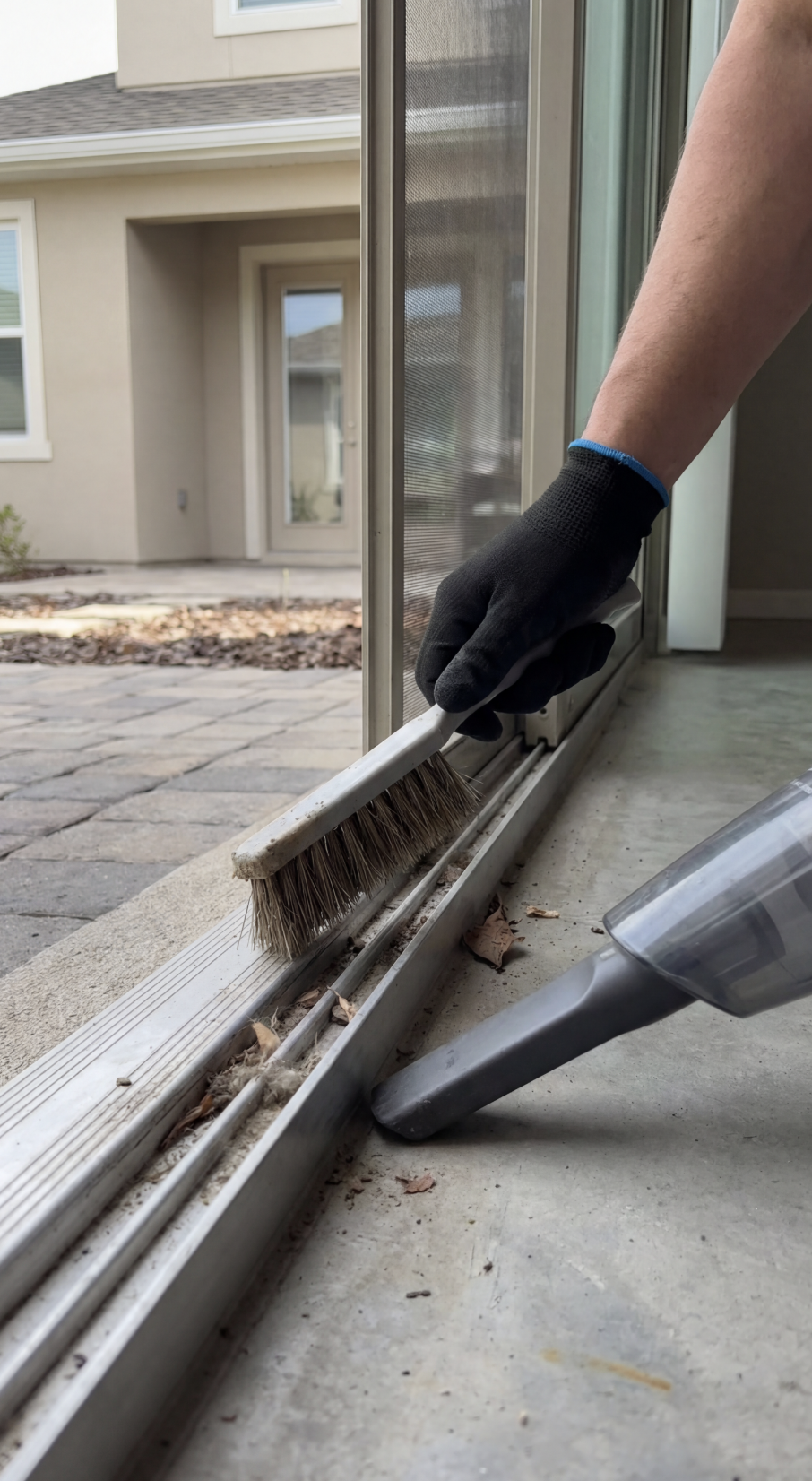
Clean tracks regularly to prevent binding. A small brush or vacuum attachment removes debris that causes grinding or sticking.
If a screen door slams shut, replacing or adjusting the pneumatic closer prevents damage to hinges and frames. For storm doors, checking that the sweep and seals contact evenly ensures they do their job during colder months.
These doors are often blamed for problems caused by poor adjustment rather than actual wear.
Finish Care: Protect Before Repainting
Door finishes wear unevenly because of touch, sunlight, and moisture.
Interior doors benefit from occasional cleaning with a mild cleaner to remove oils around handles and edges. This prevents discoloration that makes doors look older than they are.
Exterior doors should be inspected for peeling paint or worn sealant, especially at the bottom edge. Touch-up paint or clear protective coatings applied early prevent moisture from penetrating the door core.
This kind of maintenance extends the life of the door dramatically and delays full refinishing.
Seasonal Door Maintenance Timing
Door care works best when timed intentionally.
Spring and fall are ideal for adjusting alignment, replacing weatherstripping, and sealing gaps. Mild temperatures allow materials to settle properly.
Winter is the best time to notice drafts. Summer reveals swelling or sticking caused by humidity. Using those seasons as diagnostic tools makes maintenance more effective.
When Replacement Makes Sense
Not every door can or should be saved.
If a door is warped, delaminating, or severely rotted, replacement may be the smarter option. However, many doors that feel “old” simply suffer from neglected hardware and seals.
Before replacing, ask:
Does the door structure still feel solid?
Are the issues mechanical rather than structural?
Can sealing and adjustment solve the problem?
In many cases, the answer is yes.
Final Thoughts
Doors shape how a home feels more than most people realize.
They affect comfort, quiet, privacy, and energy efficiency every single day. When doors work properly, you stop thinking about them. When they don’t, they quietly drain your attention.
The best door care isn’t about upgrades or style. It’s about alignment, sealing, and smooth operation. Small fixes done intentionally keep doors feeling solid and effortless for years.
A well-maintained door doesn’t announce itself. It simply works. And that’s exactly the point.