
DIY Vertical Herb Garden for Small Yards
That Actually Lasts and Doesn’t Turn Into a Maintenance Headache
If you have a small yard, patio, balcony, or narrow side space, growing herbs can feel like a luxury.
You picture a lush little garden, but then reality sets in. There isn’t much room. Traditional garden beds take up valuable space. Containers end up scattered and messy. Watering becomes inconsistent. Things dry out or rot.
That’s where vertical gardening makes sense.
A well-built vertical herb garden doesn’t just save space. It improves airflow, reduces pests, keeps plants organized, and makes harvesting easier. But here’s the part most people miss:
Many DIY vertical gardens look great for one season… and then fail.
Wood warps. Planters sag. Drainage causes staining. Herbs overcrowd each other. Watering becomes annoying.
This guide walks you through a simple, durable vertical herb garden design that works in small yards without becoming high-maintenance.
No fancy joinery. No complex irrigation system. Just something practical that lasts.
Why Vertical Makes More Sense Than Containers on the Ground
Small yards usually have three problems:
Limited horizontal space
Poor airflow
Soil that stays too wet or too dry
Going vertical solves all three.
When herbs are elevated:
Air circulates better around foliage
Drainage improves
Harvesting is easier
Pests are reduced
Space underneath remains usable
You’re not just stacking plants. You’re improving growing conditions.
The Simple Design That Works
There are two main approaches for small-yard vertical herb gardens:
Wall-mounted pocket planters
Freestanding tiered frame with planter boxes
For durability and flexibility, I recommend a freestanding vertical frame with horizontal planter shelves.
Why?
It doesn’t depend on wall strength
It can be moved seasonally
It allows better drainage control
It avoids moisture damage to siding
This is the type that lasts.
Ideal Size for Small Yards
For most small patios or narrow yard sections, this size works beautifully:
Height: 5 to 6 feet
Width: 3 to 4 feet
Depth: 12 to 18 inches
This keeps it:
Stable
Compact
Large enough for meaningful herb growth
Narrow enough for walkways
Anything deeper becomes bulky. Anything taller becomes unstable.
Materials That Actually Hold Up Outdoors
This is where most vertical herb projects fail.
Frame Lumber
You have three realistic choices:
Cedar (Best overall)
Naturally rot-resistant
Lightweight
Looks good unfinished
Longer lifespan
Pressure-treated lumber (ground-rated)
Very durable
Affordable
Heavier
Less attractive, but practical
Untreated pine (not recommended long-term)
For small yard installations where moisture exposure is consistent, cedar is the best balance of durability and appearance.
Planter Boxes
You can:
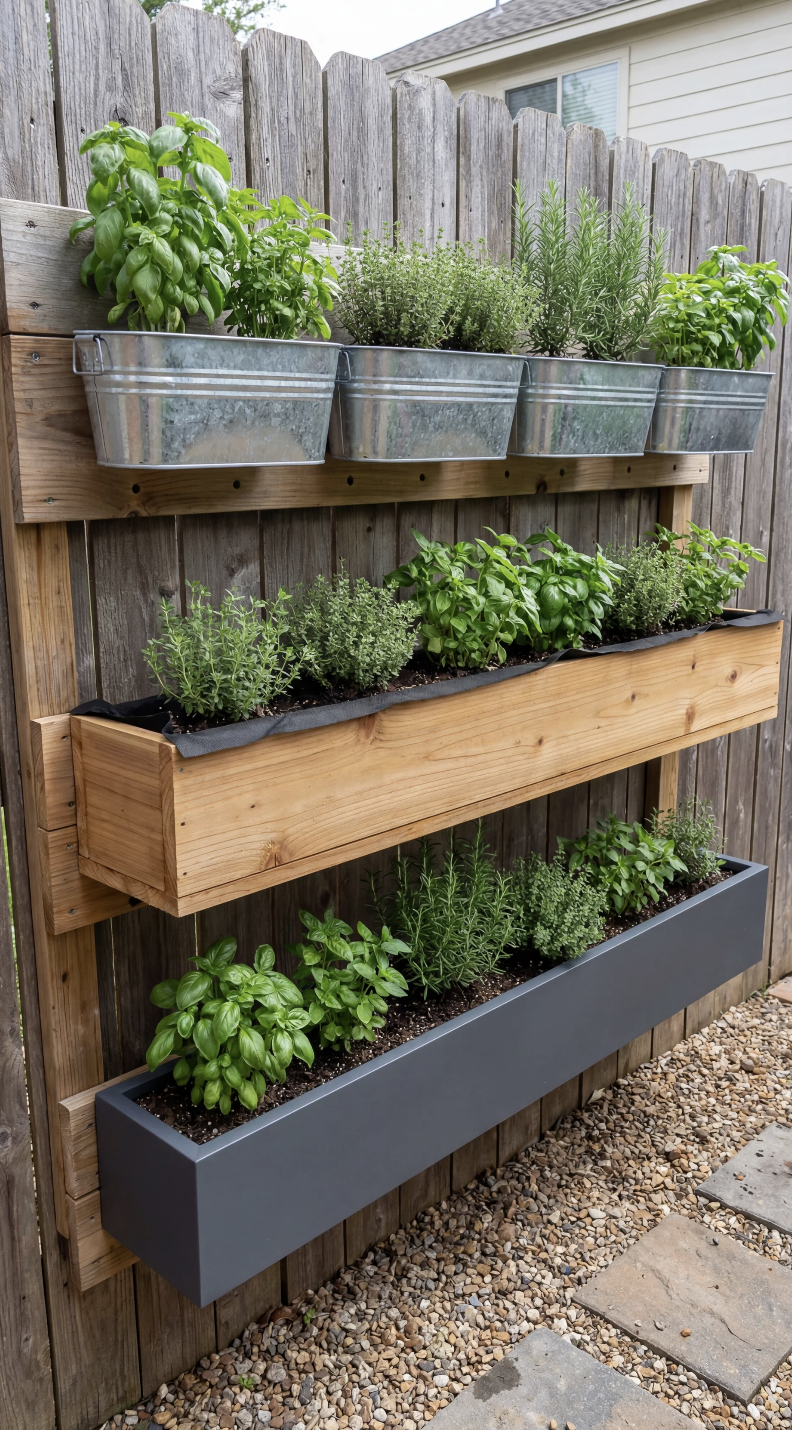
Build shallow cedar boxes
Use galvanized metal trough planters
Use heavy-duty composite planters
Metal trough-style planters are excellent for vertical builds because:
They drain well
They resist rot
They’re easy to clean
They last years
If building wooden boxes, line them with landscape fabric to extend lifespan without trapping moisture.
Fasteners Matter More Than You Think
Use exterior-rated screws, not drywall screws.
Galvanized or coated deck screws resist corrosion and prevent structural loosening over time.
This is a small detail that makes a big difference in longevity.
Basic Build Structure
Here’s a simple layout:
Two vertical side posts
Three or four horizontal shelf supports
Cross bracing in the back for stability
Each tier should angle slightly backward (about 5 degrees) so water drains toward the rear instead of spilling forward.
Spacing between tiers:
12 to 14 inches vertical spacing
Enough room for mature herb growth
Keep the bottom tier at least 6 inches off the ground to prevent splashback and moisture damage.
Drainage Is the Make-or-Break Detail
Vertical gardens fail when drainage is ignored.
Each planter needs:
Drain holes
A small layer of gravel at the bottom (optional but helpful)
High-quality potting mix (not garden soil)
Avoid placing planters directly flush against solid backing. Leave airflow behind them.
If placing on a patio, a simple drip tray system or gravel bed underneath prevents staining.
The Herbs That Work Best Vertically
Not all herbs thrive in vertical systems.
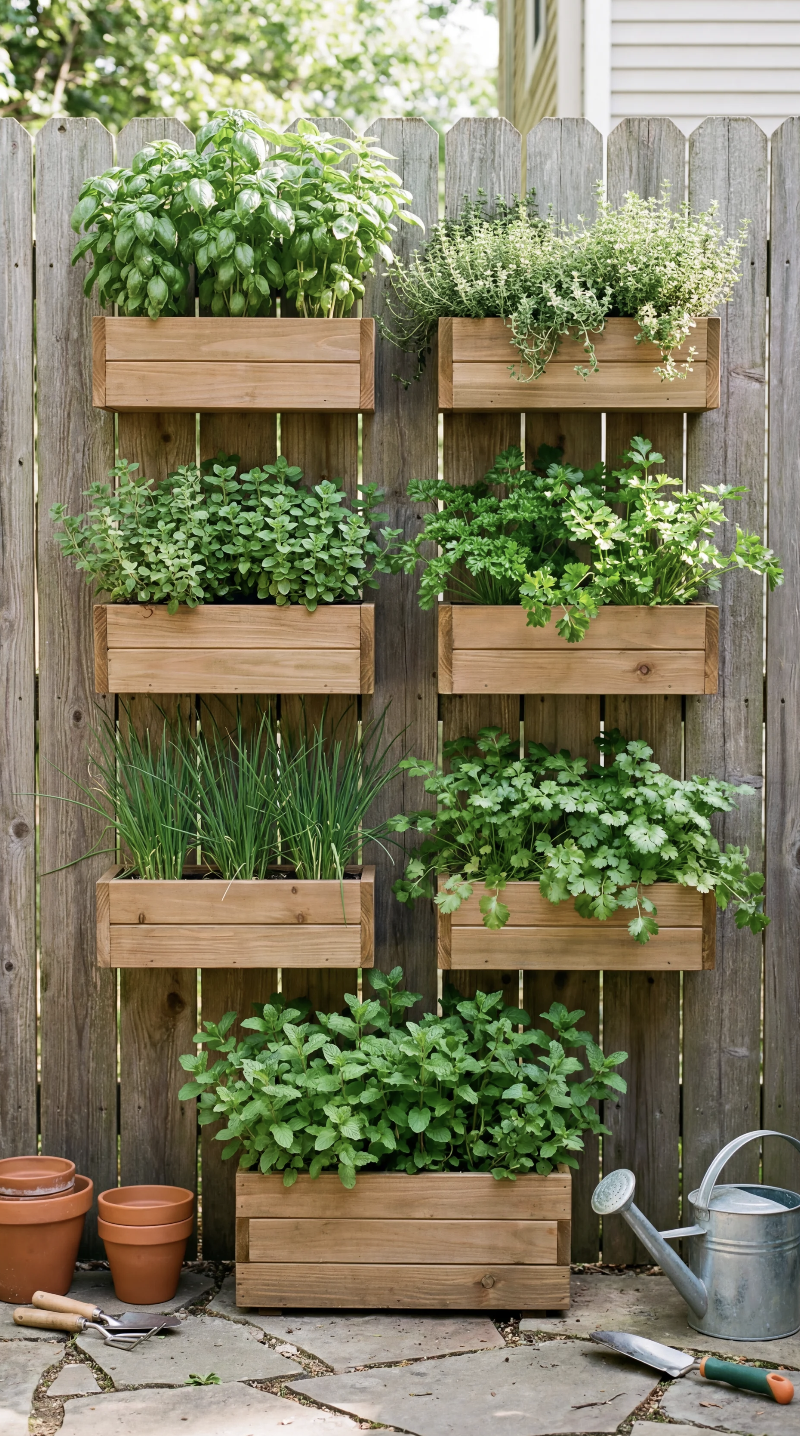
Best choices:
Basil
Thyme
Oregano
Parsley
Chives
Mint (contained only)
Cilantro
Avoid:
Deep-rooted herbs like large rosemary varieties
Aggressive spreaders without containment
Mint should always be grown in a contained planter. Never loose in shared soil.
Watering Without Creating a Daily Chore
Watering is where vertical gardens become annoying.
Three solutions keep it low-maintenance:
1. Drip Irrigation Line
A simple gravity-fed drip system connected to a hose timer ensures consistent watering without daily effort.
A basic outdoor hose timer paired with small drip tubing reduces overwatering and saves time.
2. Self-Watering Planters
Some metal or composite planters include built-in reservoirs. These reduce watering frequency significantly.
3. Manual Watering (Simplest Option)
If keeping it simple, use a watering can with a narrow spout and water slowly at the base of plants. Avoid spraying foliage excessively.
Consistency matters more than volume.
Sunlight Placement
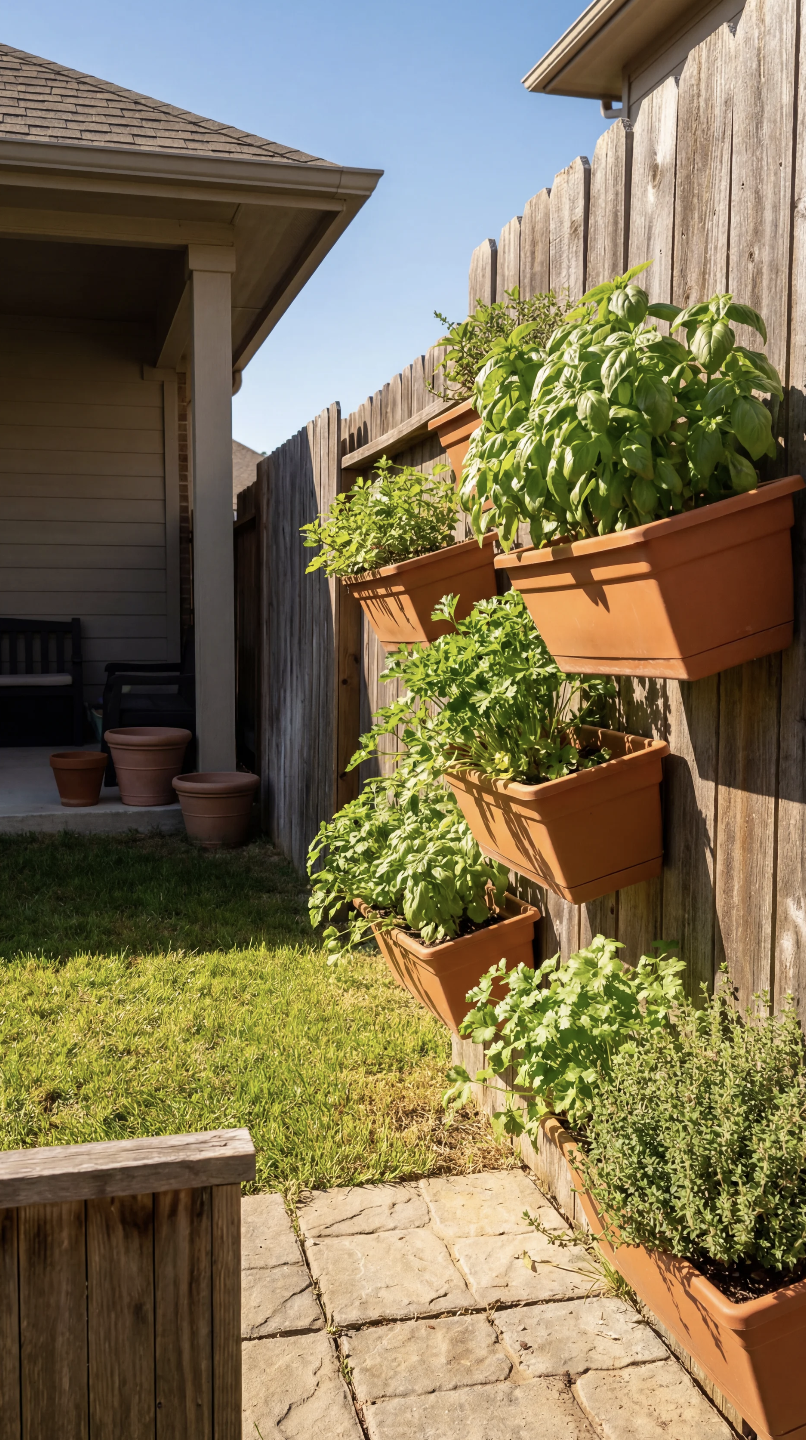
Herbs need 6 to 8 hours of sunlight.
Place your vertical garden:
Against a fence with southern exposure
Along a sunny patio wall
In an open yard section with clear overhead light
Avoid areas where roof overhangs block consistent light.
If sunlight is limited, leafy herbs like parsley and cilantro tolerate partial shade better than basil.
Keeping It Looking Intentional (Not Cluttered)
Vertical gardens can look messy fast.
To keep it clean:
Use matching planters
Keep herbs grouped by height
Trim regularly
Avoid overcrowding
Keep labels simple
Small chalkboard plant markers or engraved metal tags keep it organized without looking busy.
Consistency in materials creates a finished look
Preventing Structural Failure Over Time
To keep your vertical herb garden lasting multiple seasons:
Check fasteners annually
Tighten screws if needed
Inspect wood for moisture damage
Reapply exterior wood sealer if using cedar
Clear debris from planter bottoms
These quick yearly checks prevent rebuilds.
Winter Considerations
In colder climates:
Remove annual herbs
Empty planters if freeze damage is a risk
Cover structure or move to sheltered area if possible
Metal planters handle freeze cycles better than untreated wood.
Why This Works Long-Term
A vertical herb garden succeeds when:
It drains properly
It’s built with moisture in mind
It’s stable
It’s not overcrowded
Watering is simplified
Most failures happen because someone builds for appearance instead of durability.
When structure comes first, plants thrive.
Final Thoughts
A small yard doesn’t mean small potential.
Vertical herb gardens allow you to grow fresh herbs without sacrificing space or creating extra maintenance. When built intentionally, they become part of the yard instead of something that constantly needs fixing.
The goal isn’t just to grow herbs.
It’s to grow them in a way that works season after season.