
Ultimate Floor Care Guide
(Wood, Tile, Laminate, Carpet)
Floors take more abuse than almost any other surface in a home.
They handle foot traffic, furniture movement, spills, pets, temperature changes, moisture, and grit from outside. And yet, floor care is often reduced to one question: How do I clean it? Cleaning matters, but floor longevity and appearance are shaped just as much by how floors are protected, maintained, and treated over time.
Most flooring problems don’t start because someone used the wrong cleaner once. They start because small details were ignored for years. Grit trapped under rugs. Moisture that lingers too long. Seams that flex. Transitions that loosen. Those issues quietly wear floors down until they suddenly look tired or damaged.
This guide walks through proper care for the four most common flooring types — wood, tile, laminate, and carpet — focusing on what actually extends their life and keeps them looking good without constant effort.
The Universal Floor Care Rule Most People Miss
Before breaking down individual materials, there’s one rule that applies to all floors:
Dirt is more damaging than people realize.
Tiny particles of grit act like sandpaper underfoot. Over time, they scratch finishes, dull surfaces, and wear fibers down. The best floor care routine isn’t aggressive cleaning — it’s consistent removal of abrasive debris.
Using entry mats, removing shoes indoors, and vacuuming regularly with the correct attachment reduces wear more than any specialty cleaner ever could.
Hardwood Floors: Protect the Finish, Not Just the Wood
Hardwood floors age beautifully when the finish is protected. When the finish wears prematurely, the wood underneath suffers.
The biggest enemies of hardwood are grit and moisture. Dry sweeping or vacuuming with a soft floor attachment removes abrasive debris without scratching. Avoid vacuum heads with stiff rotating brushes unless they’re designed specifically for hard floors.
When damp cleaning is needed, less water is better. A lightly damp microfiber mop paired with a hardwood-safe cleaner removes residue without soaking seams. Over-wetting allows moisture to seep between boards, leading to cupping or swelling over time.
Felt pads on furniture legs are a simple upgrade that prevents scratches during normal movement. Replacing worn pads periodically matters more than installing them once and forgetting about them.
Area rugs help protect high-traffic zones, but rug pads underneath are just as important. Pads prevent slipping, reduce friction, and allow airflow that prevents trapped moisture.
Hardwood floors don’t need constant polishing. They need consistent protection.
Tile Floors: Grout Is the Weak Point
Tile itself is durable. Grout is not.
Most tile floor complaints aren’t about cracked tiles — they’re about grout that stains, darkens, or crumbles. Grout is porous by nature, which means it absorbs moisture, dirt, and cleaning residue over time.
Routine sweeping or vacuuming keeps abrasive grit from scratching tile surfaces and wearing grout edges. When mopping, using a neutral pH tile cleaner avoids leaving residue that attracts dirt.
One of the most overlooked steps in tile care is grout sealing. Sealer doesn’t make grout waterproof, but it dramatically slows absorption. Sealed grout stays cleaner longer and is easier to maintain. In high-traffic or wet areas, resealing periodically prevents discoloration that scrubbing alone can’t fix.
For deep cleaning, steam cleaners designed for sealed tile can loosen grime without harsh chemicals. Used correctly, they refresh grout lines without damaging tile.
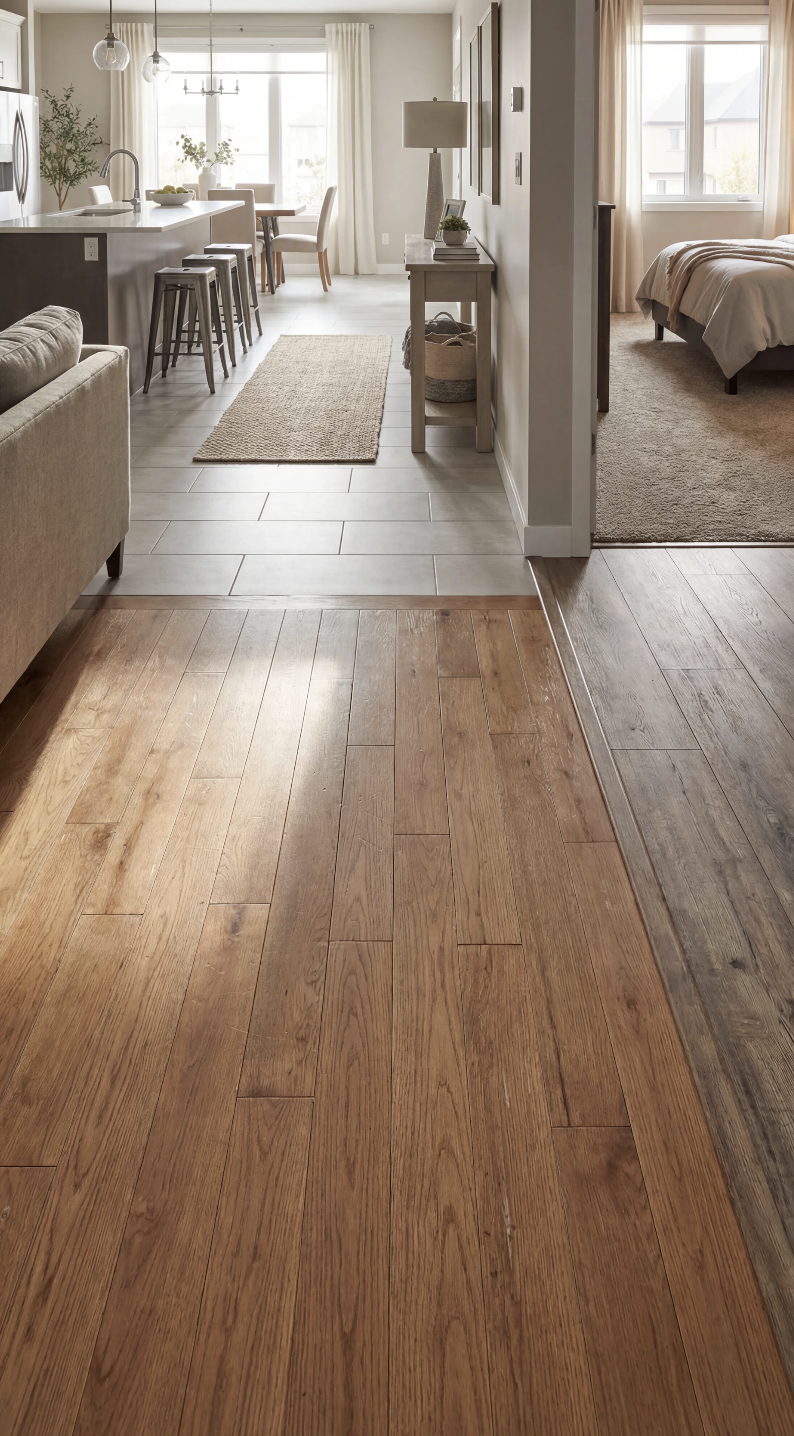
Floor transitions between tile and other materials deserve attention too. Loose or cracked transition strips allow movement that leads to grout failure along edges.
Laminate Floors: Moisture Control Is Everything
Laminate floors are durable, but they’re unforgiving when moisture gets involved.
Unlike hardwood, laminate cannot be refinished. Once water seeps into seams and causes swelling, damage is permanent. That’s why moisture control is the core of laminate care.
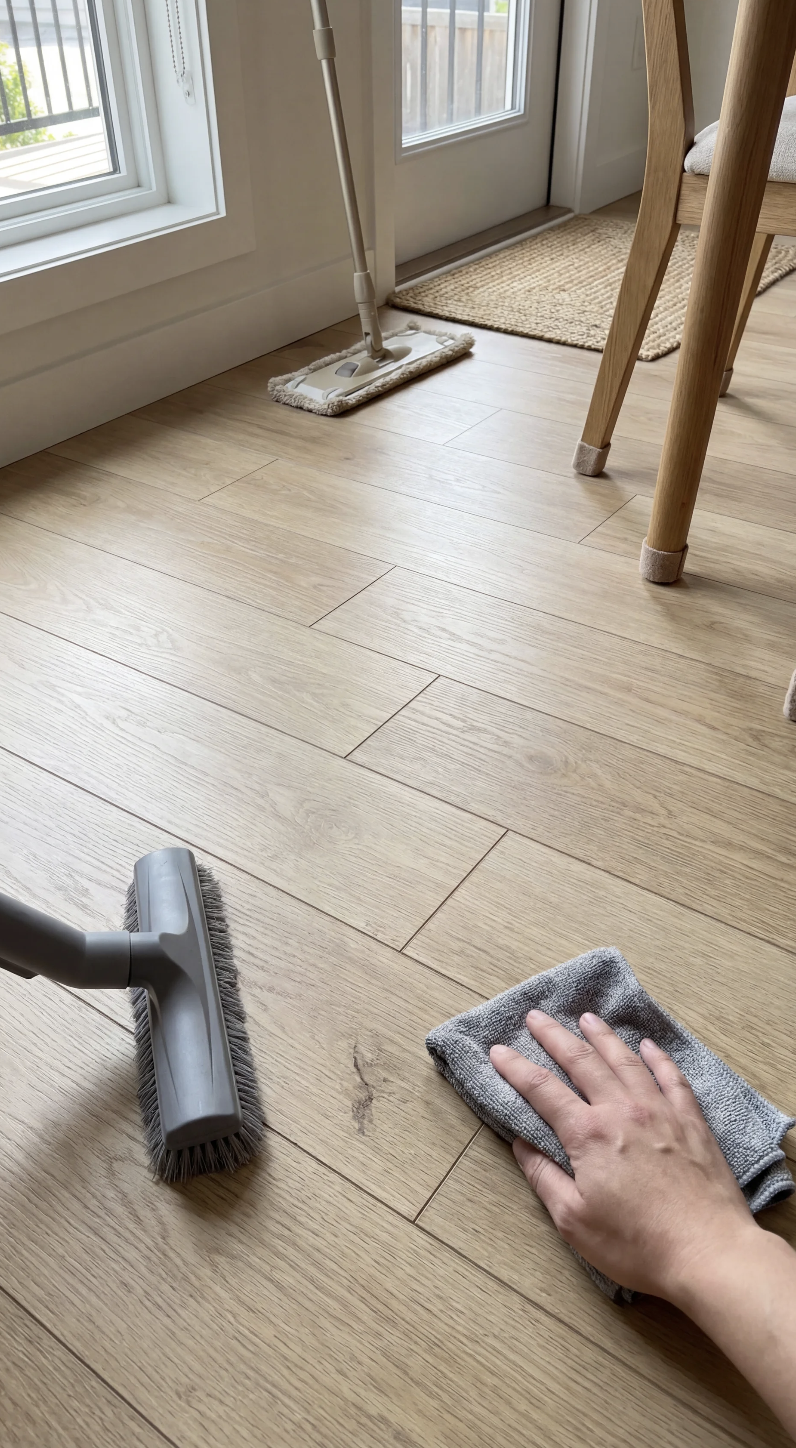
Dry debris removal is the priority. A soft vacuum attachment or microfiber mop works best. When cleaning spills, immediate wipe-up matters more than cleaner choice.
If damp cleaning is needed, use a laminate-specific cleaner applied lightly — never poured directly onto the floor. Excess moisture is the fastest way to shorten laminate’s lifespan.
Furniture pads and protective mats under rolling chairs prevent edge damage and surface wear. Entry mats reduce the amount of moisture and grit tracked onto laminate from outdoors.
Laminate floors stay attractive longest when they’re treated gently, not aggressively cleaned.
Carpet: Maintenance Starts Before It Looks Dirty
Carpet care is misunderstood because dirt hides so well in fibers.
By the time carpet looks dirty, damage has already occurred. Grit settles deep into the pile, grinding against fibers with every step. This is what causes matting and premature wear.
Vacuuming frequency matters more than vacuum strength. Using a vacuum with adjustable height settings allows proper airflow without damaging fibers. High-traffic areas benefit from more frequent passes rather than harder suction.
Entry mats and runners reduce how much dirt reaches carpeted areas. Rotating rugs periodically prevents uneven wear patterns.
Deep cleaning should be preventative, not reactive. Occasional professional cleaning or use of a carpet cleaner removes embedded debris before fibers break down. Over-cleaning with excessive moisture can cause issues, so spacing deep cleans appropriately matters.
For homes with pets or allergies, spot-treating accidents promptly and allowing carpets to dry fully prevents odors from settling into padding below.
Transitions and Thresholds: Small Details, Big Impact
Floor transitions are often ignored until they fail.
Loose thresholds between rooms allow floors to flex independently. This movement accelerates wear at seams and edges. Securing or replacing damaged transition strips protects both flooring types and improves how spaces feel visually.
Thresholds at exterior doors matter too. Gaps allow moisture and grit inside, which damages nearby flooring first. Adjusting or replacing thresholds prevents localized wear that spreads outward.
Well-maintained transitions make floors feel intentional instead of patched together.
Furniture, Movement, and Daily Wear
Floor damage doesn’t usually come from accidents. It comes from repetition.
Chair legs scraping slightly. Tables shifting during cleaning. Furniture dragged instead of lifted. Over time, these habits leave permanent marks.
Using furniture sliders or pads turns these movements into non-events. For heavier furniture, reusable sliders make rearranging safer for floors and easier on your back.
In high-use rooms, choosing rugs strategically protects flooring without hiding it completely.
Moisture Sources Most People Overlook
Floors are affected by moisture even when spills aren’t obvious.
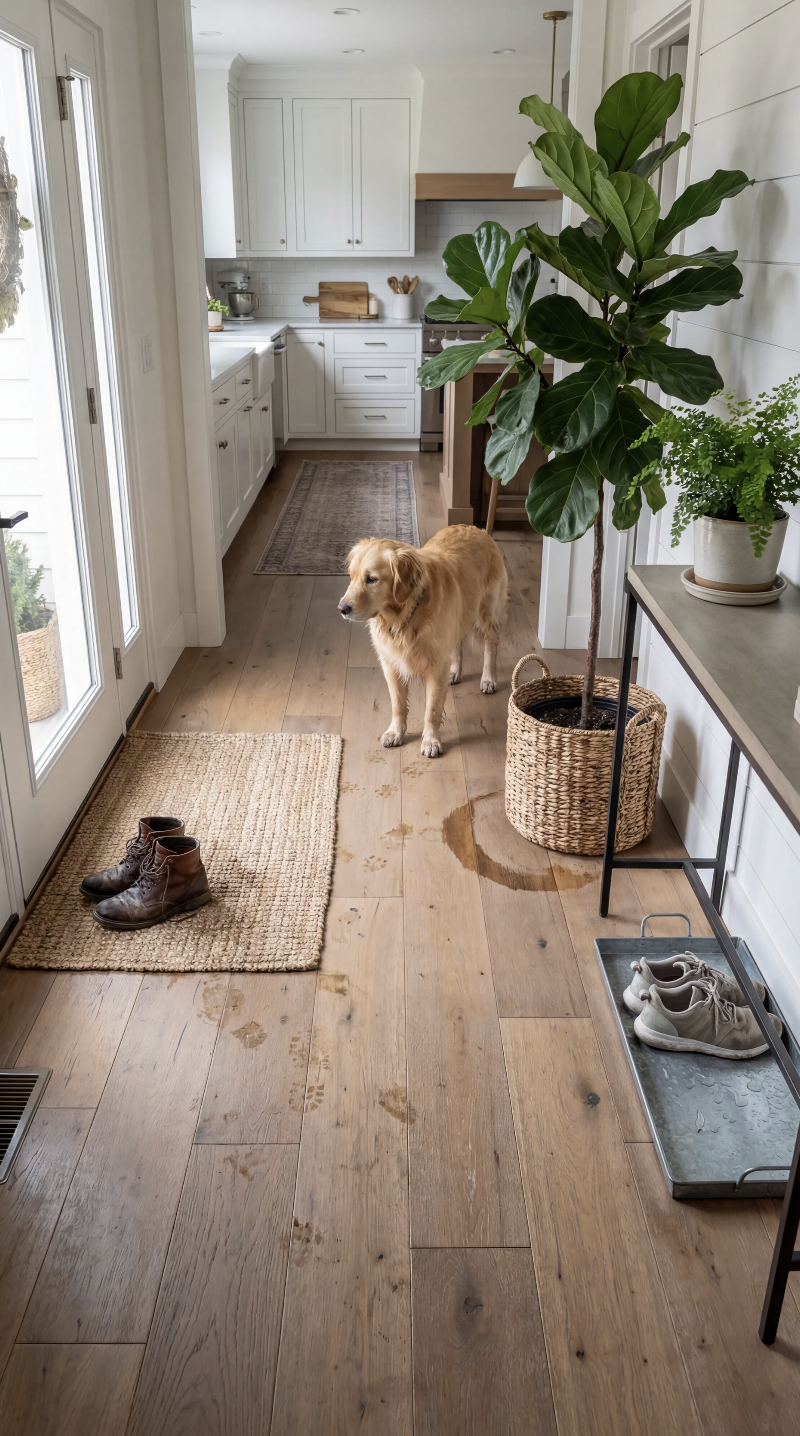
Wet shoes, damp pet paws, leaking planters, and humidity all contribute. Using boot trays, drip trays under plants, and quick-dry mats reduces moisture exposure at floor level.
Bathrooms, kitchens, and laundry rooms benefit from ventilation just as much as walls and ceilings do. Moisture that lingers settles downward over time.
Keeping floors dry is the simplest form of protection.
Seasonal Floor Care Adjustments
Floors respond to seasonal changes.
In winter, grit and salt increase wear. Extra entry mats and more frequent vacuuming help. In summer, humidity affects wood and laminate expansion. Maintaining stable indoor humidity reduces movement and stress.
Adjusting care slightly by season prevents long-term issues without adding much effort.
When Floors Need More Than Maintenance
Some signs indicate deeper issues:
soft spots
persistent odors
recurring grout cracks
swelling or buckling
These usually point to moisture problems below the surface. Addressing the source matters more than surface repair. Floor care is as much about what’s underneath as what’s visible.
Final Thoughts
Good floor care isn’t about constant cleaning.
It’s about understanding how each material wears, what damages it most, and how to reduce that stress over time. Floors that last and look good aren’t babied. They’re protected thoughtfully.
When debris is removed early, moisture is controlled, and movement is managed, floors age gracefully. They stop demanding attention and start supporting daily life quietly, which is exactly what they’re meant to do.