
Hidden Drain Problems That Aren’t Clogs
(But Feel Like Them)
When a drain starts acting up, most homeowners assume the same thing.
“It’s clogged.”
So you reach for a plunger. Maybe a drain snake. Sometimes a bottle of cleaner. And occasionally, that works. But just as often, the problem comes back. The sink drains slowly again. The shower backs up intermittently. The floor drain gurgles at random times.
That’s because not all drain problems are clogs.
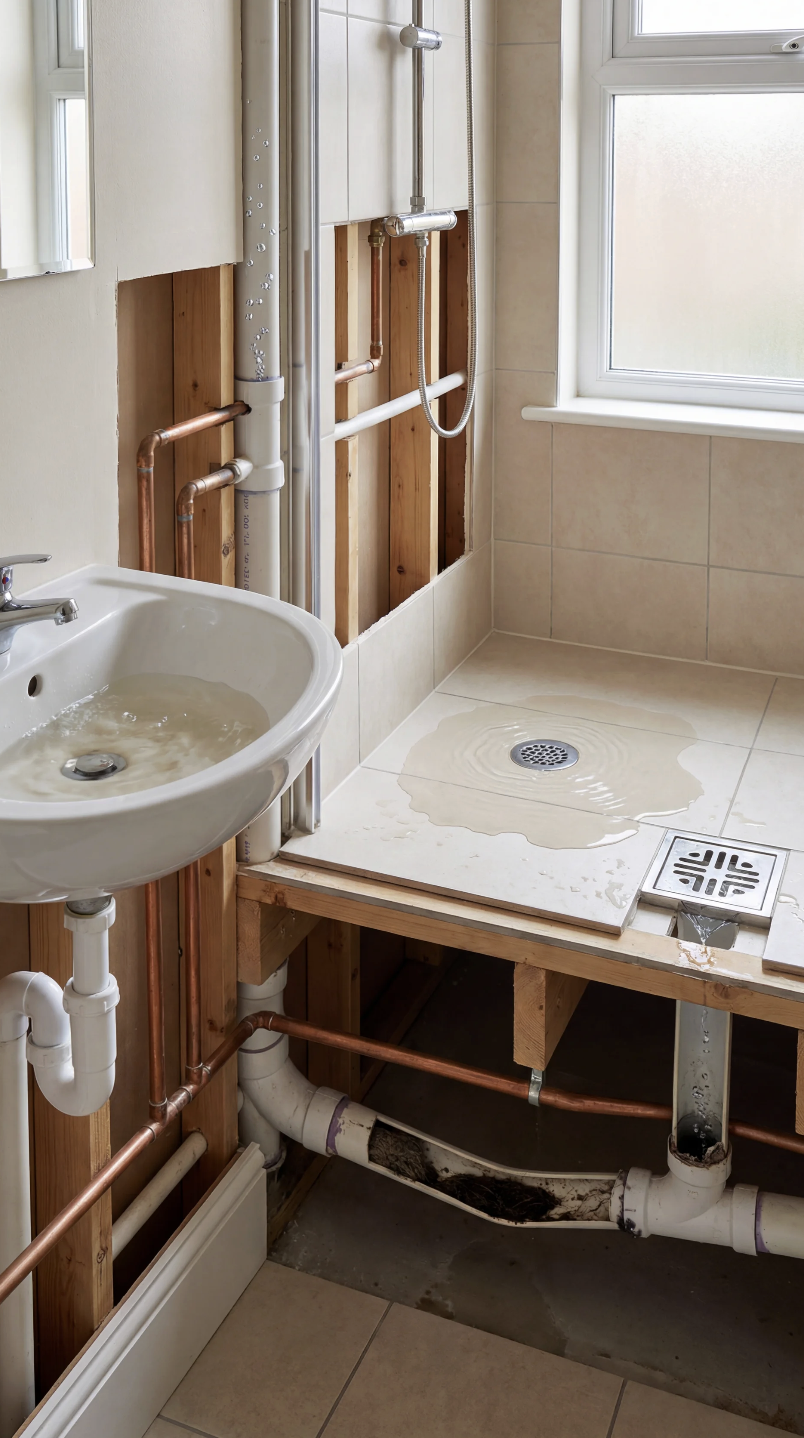
Many drainage issues feel exactly like clogs but are caused by something else entirely. These problems develop quietly, often behind walls, under floors, or inside parts of the plumbing system you never see. Because they don’t fully block water, they’re easy to misdiagnose and easy to ignore until they become much bigger.
Understanding these hidden issues can save you time, frustration, and unnecessary damage.
Why “Not a Clog” Problems Are So Frustrating
True clogs tend to be consistent. Water backs up every time. The problem doesn’t change much.
Hidden drain problems behave differently:
Water drains slowly sometimes, but not always
Gurgling happens only at certain times
Odors come and go
Backups appear during heavy use or rain
These inconsistencies make it feel like you haven’t quite fixed the problem, even after you’ve “cleared” the drain.
That’s because the obstruction isn’t always inside the pipe itself.
1. Partial Blockages That Never Fully Stop Flow
Not all buildup forms a solid clog.
Grease, soap residue, hair, and minerals can coat the inside of pipes gradually. Over time, this narrows the effective diameter of the pipe without fully blocking it. Water still flows, but slower than it should.
This is common in:
Kitchen sink drains
Shower and tub drains
Older metal plumbing
Because water still moves, plunging often does nothing. Chemical cleaners may help temporarily but rarely remove buildup evenly.
Foaming drain cleaners are more effective in these cases because they expand to coat the full interior of the pipe instead of just cutting a narrow channel through debris.
This type of issue doesn’t feel urgent, which is why it often gets ignored until buildup worsens.
2. Drain Vent Problems That Mimic Clogs
Every plumbing system relies on air.
Drain vents allow air to enter the system so water can flow smoothly. When vents are blocked or restricted, drains struggle even if the pipes themselves are clear.
Common signs of vent-related issues:
Gurgling sounds after draining
Slow draining that improves briefly, then worsens
Water levels in toilets or traps changing unexpectedly
Vent blockages can be caused by debris, nests, leaves, or even snow in colder climates. Since vents usually exit through the roof, these problems are rarely checked during routine maintenance.
The key difference is that plunging or snaking the drain won’t fix airflow issues. The drain isn’t blocked — it’s suffocating.
3. Dry or Failing Traps
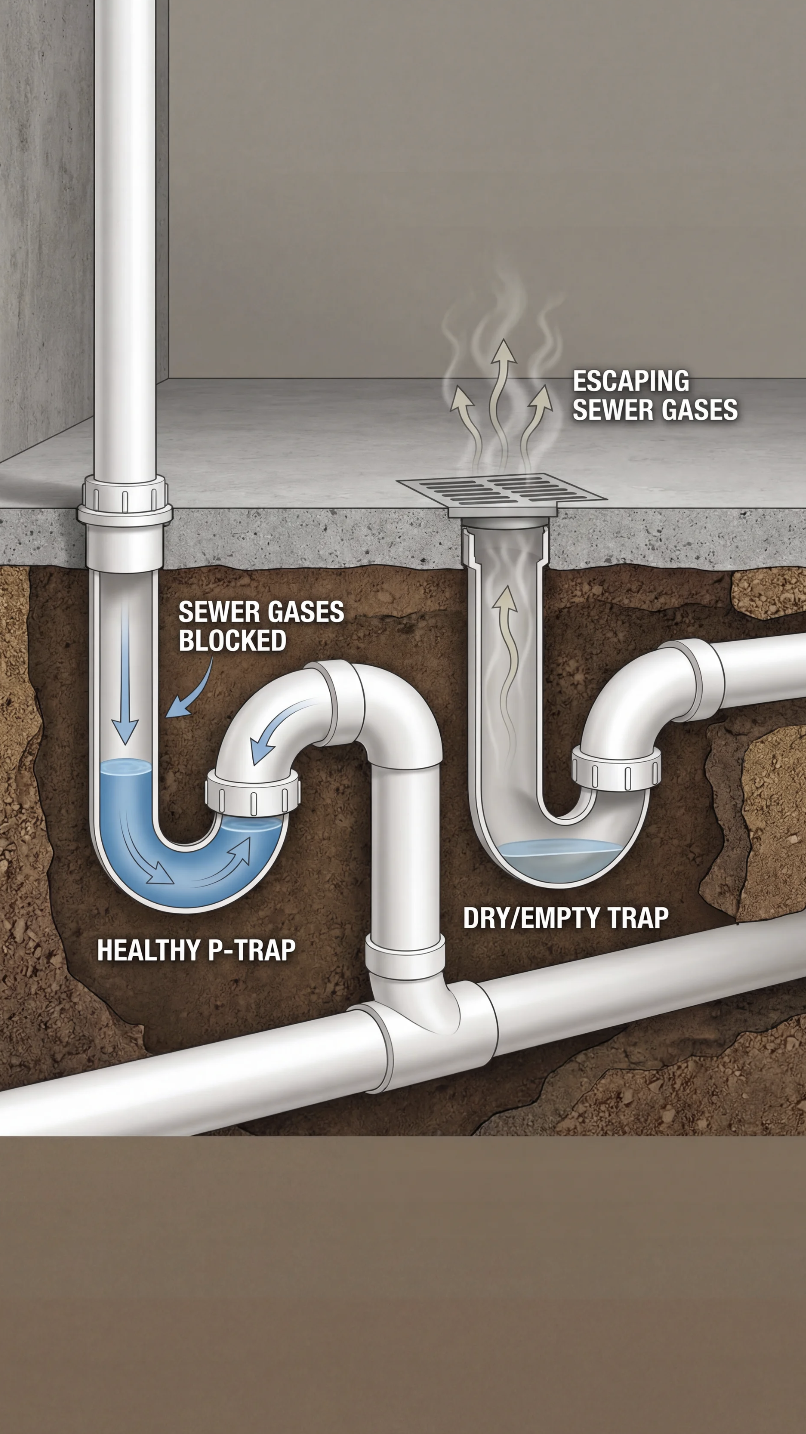
Drain traps hold water to block sewer gases from entering your home.
When a trap dries out or leaks, it can cause:
Gurgling
Odors
Slower drainage due to pressure imbalance
This often happens in:
Floor drains
Guest bathrooms
Basement fixtures
Laundry room drains
Drains that are rarely used can evaporate dry over time. In other cases, small leaks in older traps let water escape.
Running water periodically keeps traps full. In floor drains, adding a trap primer or pouring water down the drain occasionally prevents dry traps from becoming a recurring issue.
4. Improper Pipe Slope
Drain pipes rely on gravity.
If a pipe is sloped too shallow, waste moves slowly and buildup forms easily. If it’s sloped too steeply, water can outrun solids, leaving debris behind.
Improper slope causes:
Slow draining without obvious blockage
Frequent partial backups
Repeat issues after cleaning
This problem often appears after renovations or DIY plumbing changes. Everything may technically work, but not efficiently.
Unfortunately, this is one of the few drain problems that requires physical correction rather than cleaning.
5. Collapsed or Damaged Pipes
Older plumbing systems are vulnerable to damage.
Cast iron can corrode. Clay pipes can crack. Plastic pipes can sag or shift. When this happens, water still passes through — until debris catches on the damaged area.
Signs include:
Chronic slow drains
Frequent backups in the same location
Drain problems that worsen over time
These issues often feel like stubborn clogs that never fully clear. Camera inspections are usually required to confirm pipe damage.
The earlier this is caught, the less invasive repairs tend to be
6. Sewer Line Problems That Show Up Indoors
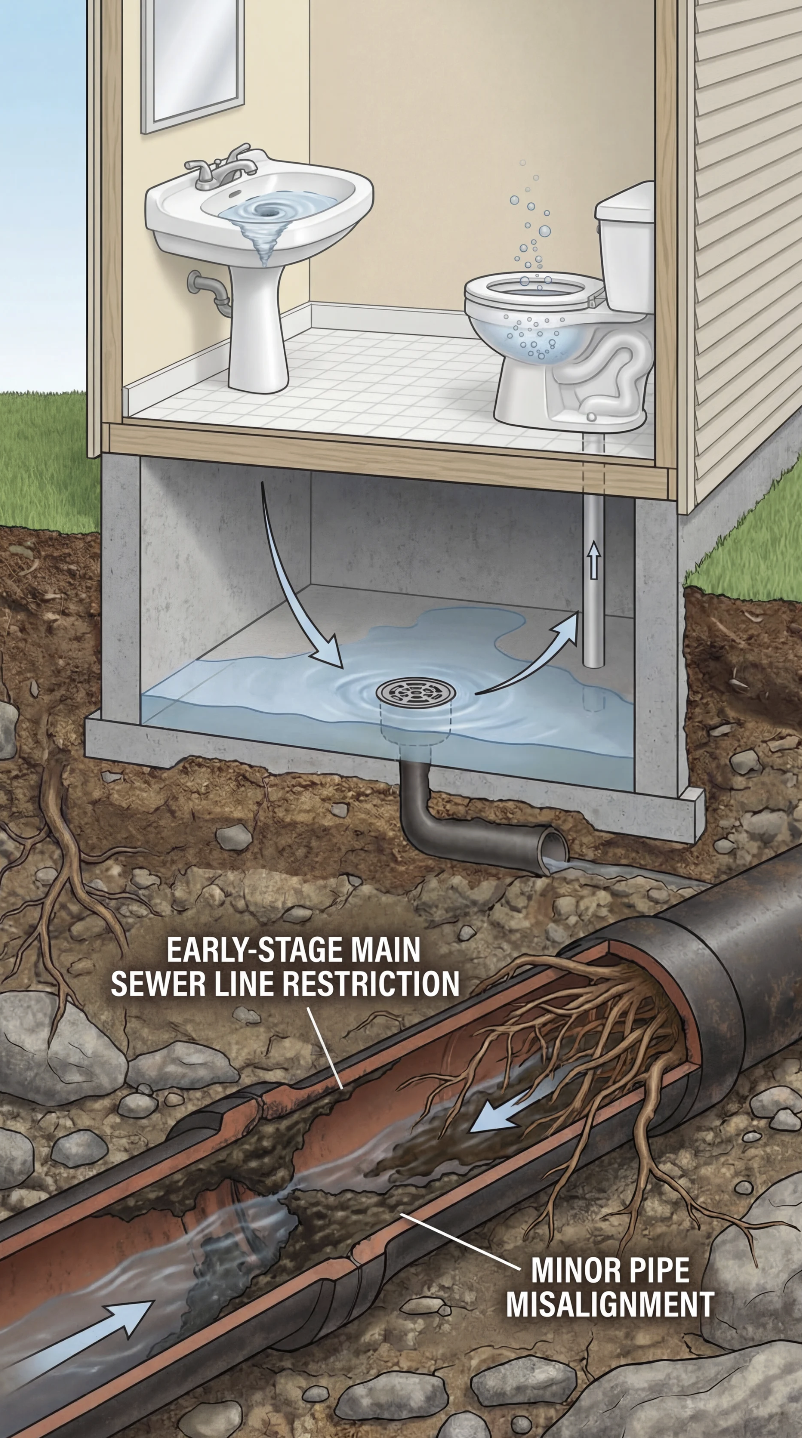
Main sewer line issues don’t always start with dramatic backups.
Early signs include:
Multiple drains acting slow at once
Gurgling in toilets when sinks drain
Floor drains backing up during heavy use
Tree roots, settling soil, and aging pipes all contribute to gradual restriction. Because water can still pass, the system feels “mostly fine” until it isn’t.
This is why repeated drain problems in multiple fixtures should never be ignored.
7. Overflow Channels That Get Overlooked
Sink and tub overflows are designed to prevent flooding, but they also collect debris.
Soap scum, toothpaste, hair, and bacteria build up in overflow channels, slowing drainage and causing odors. These areas are rarely cleaned during routine maintenance.
Foam-based cleaners work well here because they expand into the overflow path where traditional liquids can’t reach easily.
This is one of the most overlooked causes of “mystery” drain smells and slow draining sinks
How to Tell When It’s Not a Clog
A simple rule helps:
If the problem is inconsistent, recurring, or affects multiple fixtures, it’s probably not a simple clog.
True clogs usually respond quickly to basic clearing methods. Hidden problems don’t.
Pay attention to patterns. When the problem appears matters just as much as where.
Prevention Is Easier Than Repair
Most hidden drain problems develop slowly.
Simple habits help:
Periodic drain maintenance instead of reactive cleaning
Cleaning overflow channels occasionally
Keeping floor drains wet
Avoiding grease and heavy residue buildup
Watching for early warning signs
The goal isn’t perfection. It’s awareness.
Final Thoughts
Drain problems don’t always announce themselves clearly.
Many of the most frustrating plumbing issues aren’t caused by obvious clogs, but by airflow problems, gradual buildup, poor slope, or components no one thinks to check. That’s why they linger.
Once you understand what’s actually happening behind the scenes, slow drains stop feeling mysterious. You stop fighting symptoms and start addressing causes.
And that’s when drain problems finally stay fixed instead of coming back again and again