
How to Keep Your Garage Organized Through Every Season
Most garages don’t start out messy. They slowly become that way. A few seasonal items get dropped in the corner. Tools get set down “for now.” Sports gear piles up after a busy week. Before long, the garage stops functioning as a workspace and turns into a holding zone for everything that does not have a clear home.
The problem is not that garages are too small. It’s that they are asked to change jobs constantly.
Your garage is a workshop, storage room, mudroom, seasonal closet, and sometimes a home gym all at once. Keeping it organized year-round requires a system that adapts with the seasons instead of falling apart every few months.
This guide walks through how to keep your garage organized through every season, using simple habits, smart layouts, and a few well-chosen products that make a big difference.
Start With Zones, Not Shelves
Before buying storage bins or installing shelving, take a step back and think in terms of zones.
Most garages work best when divided into functional areas, even if those areas overlap slightly. A typical setup might include a tool zone, a seasonal storage zone, a sports and outdoor gear zone, and a general household overflow zone.
Creating zones helps you decide where things belong before you worry about how to store them.
Painter’s tape on the floor can help you visualize where each zone should live before committing to anything permanent.
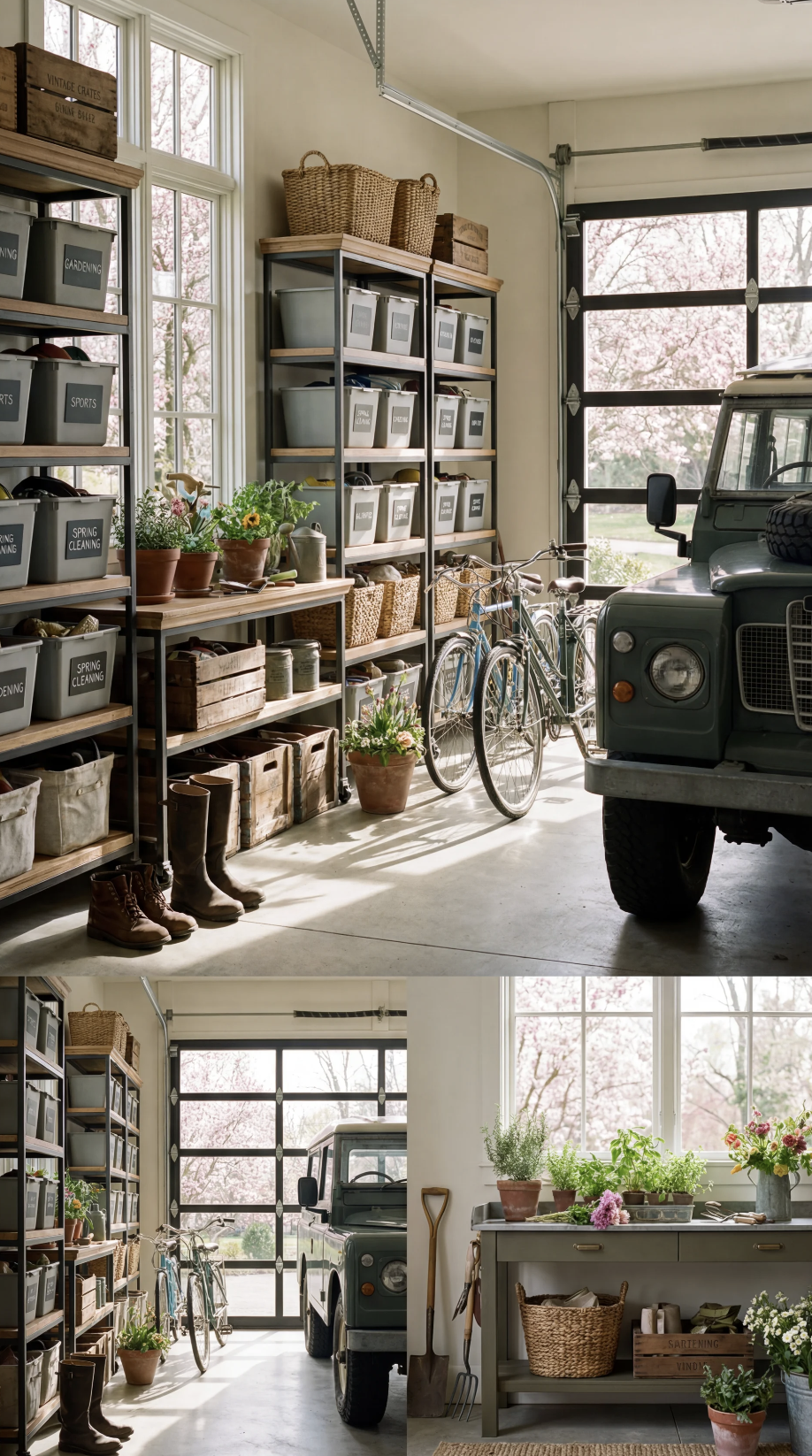
Spring: Reset and Reclaim the Space
Spring is the season when garages get overwhelmed. Winter gear lingers, yard tools come out, and home projects ramp up.
This is the best time to reset.
Start by pulling everything out of the garage that does not belong to the current season. Snow shovels, salt spreaders, winter boots, and sleds should be cleaned, dried, and stored together. Heavy-duty storage bins with tight-fitting lids work well here, especially clear ones so you can see contents at a glance.
Labeling bins might feel unnecessary, but a simple label maker saves time later when you are not guessing what is inside.
Wall-mounted shelving systems are ideal for seasonal bins. Adjustable metal shelving lets you raise or lower shelves as storage needs change, and keeps items off the floor where moisture and pests are more likely.
Spring is also the time to bring out yard tools. A wall-mounted tool rack or rail system keeps rakes, shovels, and brooms upright and easy to grab without leaning them in corners where they fall over.’
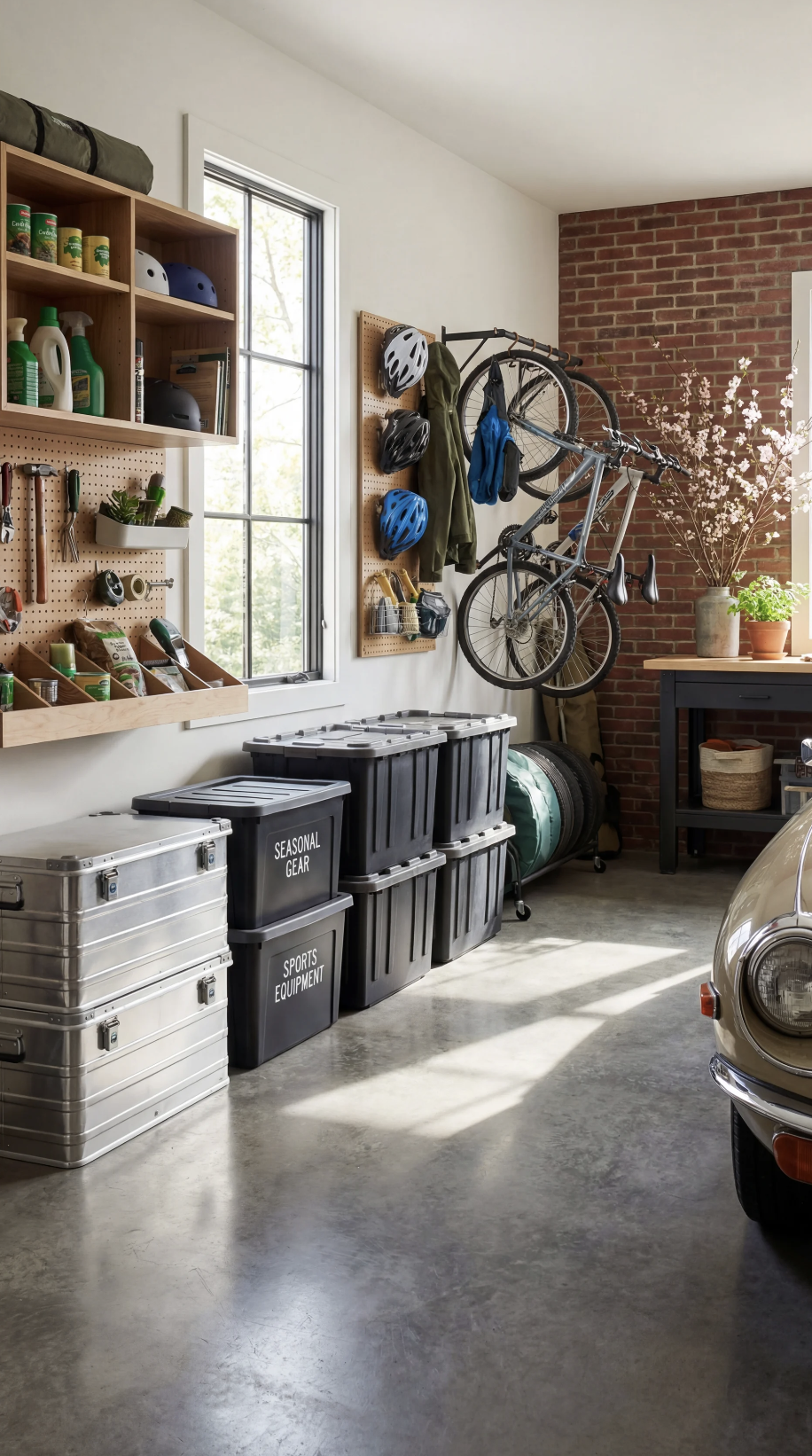
Summer: Control the Chaos of Daily Use
Summer garages see the most traffic.
Bikes go in and out daily. Lawn equipment gets frequent use. Coolers, sports gear, and outdoor toys cycle constantly. If organization is not simple, it will not stick. This is where vertical storage matters.
Bike storage hooks or ceiling-mounted bike lifts free up massive amounts of floor space. For families, individual bike hooks at kid-friendly heights make it easier for bikes to be put away properly instead of dropped wherever there is room.
For lawn and garden tools, a slatwall or pegboard system allows you to rearrange hooks and baskets as tools change. Adding a few heavy-duty pegboard hooks and bins keeps hoses, extension cords, and power tools visible and accessible.
A rolling utility cart is another underrated summer solution. It can hold frequently used items like gloves, sunscreen, small tools, and spray bottles, and roll out of the way when not needed.
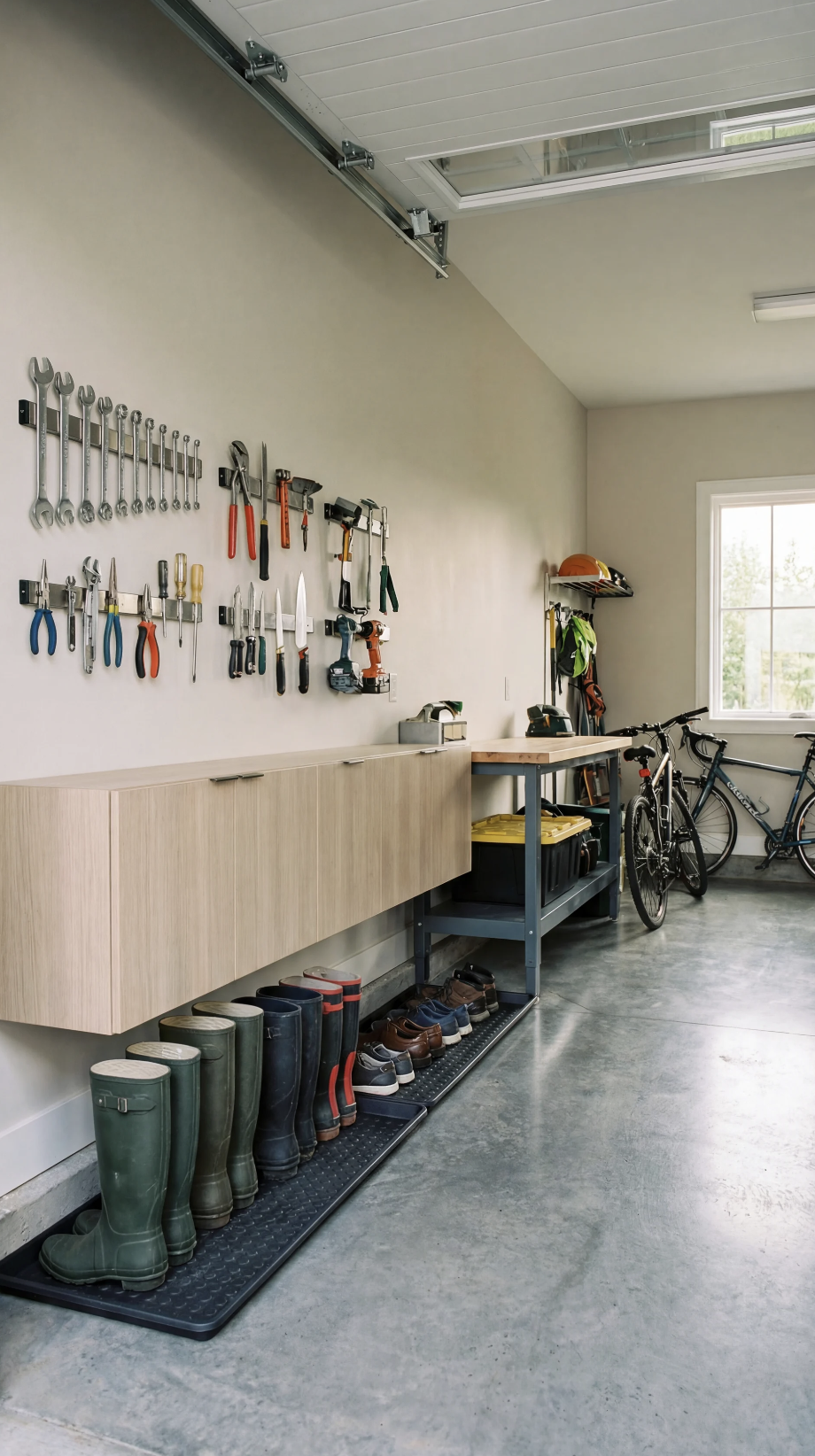
Fall: Prepare for the Transition
Fall is the most important season for garage organization because it sets you up for winter.
This is the time to rotate summer gear out and winter gear in, but more importantly, it is when you want to simplify access to cold-weather essentials.
Snow shovels, ice melt, and winter boots should be placed near the garage entrance, not buried behind boxes. A boot tray or shoe mat near the door keeps melting snow and salt from spreading across the garage floor.
Wall-mounted cabinets or enclosed shelving help protect items from dust and moisture as humidity levels change. Cabinets designed for garages are especially useful because they resist rust and warping.
Fall is also a good time to inspect and tidy your tool storage. Magnetic tool strips mounted on the wall keep metal tools visible and easy to return, which prevents drawers from turning into cluttered messes.
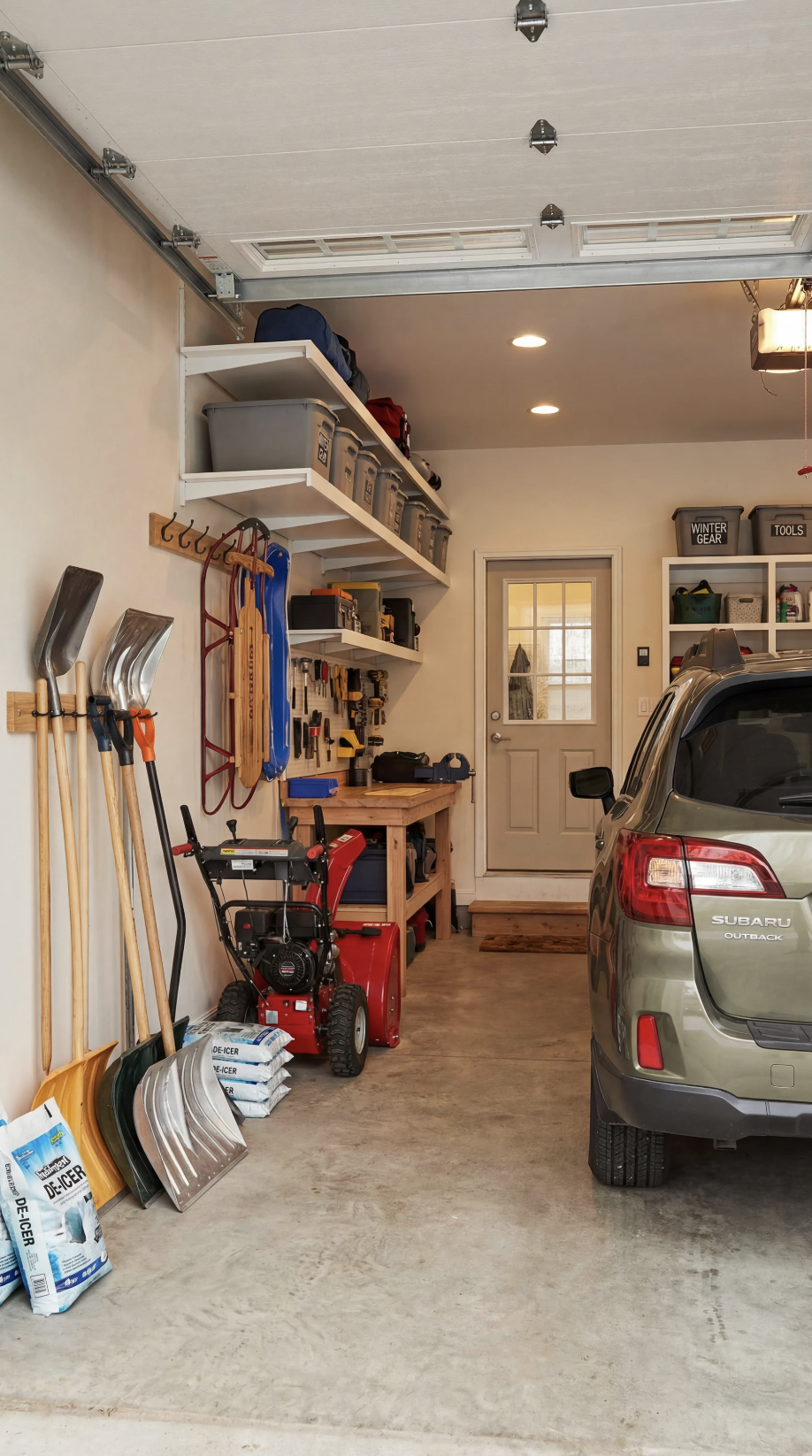
Winter: Maintain Access and Safety
Winter garages face two main challenges: limited access and harsh conditions.
You want to minimize how much time you spend digging for things in the cold.
This is where overhead storage shines.
Ceiling-mounted storage racks are perfect for lightweight, bulky items like holiday decorations, camping gear, and off-season sports equipment. Installing them once creates long-term storage that does not interfere with daily use.
For frequently used winter items, keep storage simple and open. A heavy-duty shelf near the entrance with baskets for gloves, hats, and scarves keeps everything contained but accessible.
Good lighting also matters more in winter. Adding LED shop lights or motion-activated garage lights improves visibility and makes the space feel more usable, even on dark evenings.
Use the Ceiling, But Do Not Overload It
Many garages waste their most valuable storage space: the ceiling.
Overhead racks and hooks are ideal for items you only need a few times a year. However, it is important to respect weight limits and secure mounting points properly. Steel ceiling racks designed for garages distribute weight evenly and attach to ceiling joists. They are far safer than DIY solutions and can hold multiple storage bins without sagging.
For ladders, kayaks, or long items, ceiling hooks rated for heavy loads keep them secure and out of the way.
The key is to store only what you truly do not need frequent access to overhead.
Make Small Tools Easy to Put Away
The fastest way for a garage to become messy is when small tools do not have a clear home.
Drills, chargers, hand tools, and hardware should live where they are used.
A dedicated power tool charging station mounted on the wall keeps batteries charged and tools organized. Drawer organizers or small parts cabinets keep screws, anchors, and fittings sorted so you are not digging through mixed containers.
Clear-front organizers work especially well here because you can see what you have without opening everything.
Manage Seasonal Overflow Without Permanent Clutter
Every season brings temporary clutter.
Holiday decorations. Party supplies. Project materials.
The goal is not to eliminate overflow, but to contain it.
Stackable storage bins that nest when empty make it easy to bring storage in and out as needed. Folding shelving units can be set up temporarily during high-activity seasons and stored flat later. Using color-coded bins for different seasons is another simple trick that reduces confusion.
Keep the Floor Clear Whenever Possible
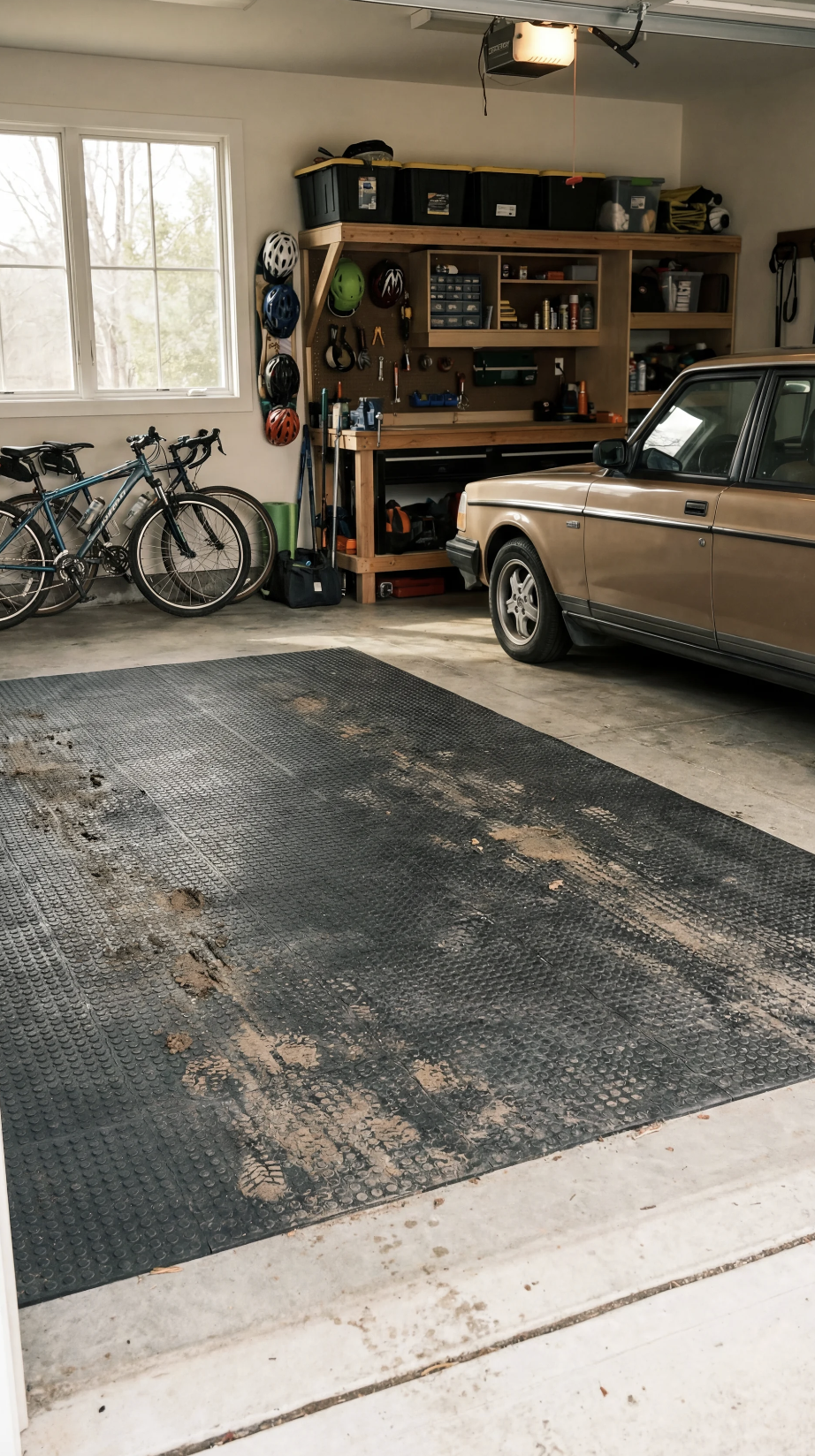
A clear floor makes a garage feel instantly more organized, even if storage is full. Wall-mounted shelving, cabinets, and hooks should do most of the work. Items that must stay on the floor should be grouped intentionally, not scattered.
Rubber garage floor mats help define parking zones and protect concrete from salt, oil, and water. They also make sweeping easier and reduce dust.
Do a Mini Reset at the Start of Each Season
You do not need to reorganize your entire garage four times a year. A quick seasonal reset is enough.
At the start of each season, spend 30 minutes doing the following:
Rotate seasonal bins
Return tools to their zones
Remove items that no longer belong
Wipe down frequently used surfaces
This habit prevents slow buildup and keeps your system intact.
Final Thoughts
A well-organized garage is not about perfection. It is about flexibility.
The best garage systems change with the seasons without falling apart. They rely on clear zones, vertical storage, and simple habits rather than constant reorganization. If you design your garage to adapt instead of resist change, it stops feeling like a problem space and starts working for you year-round.
You do not need to do everything at once. Start with one zone, one season, and one improvement at a time.
That is how organization actually lasts.