
How to Stop a Leaky Shower Door
(Without Ripping Everything Apart)
A leaky shower door is one of those problems that slowly wears on you.
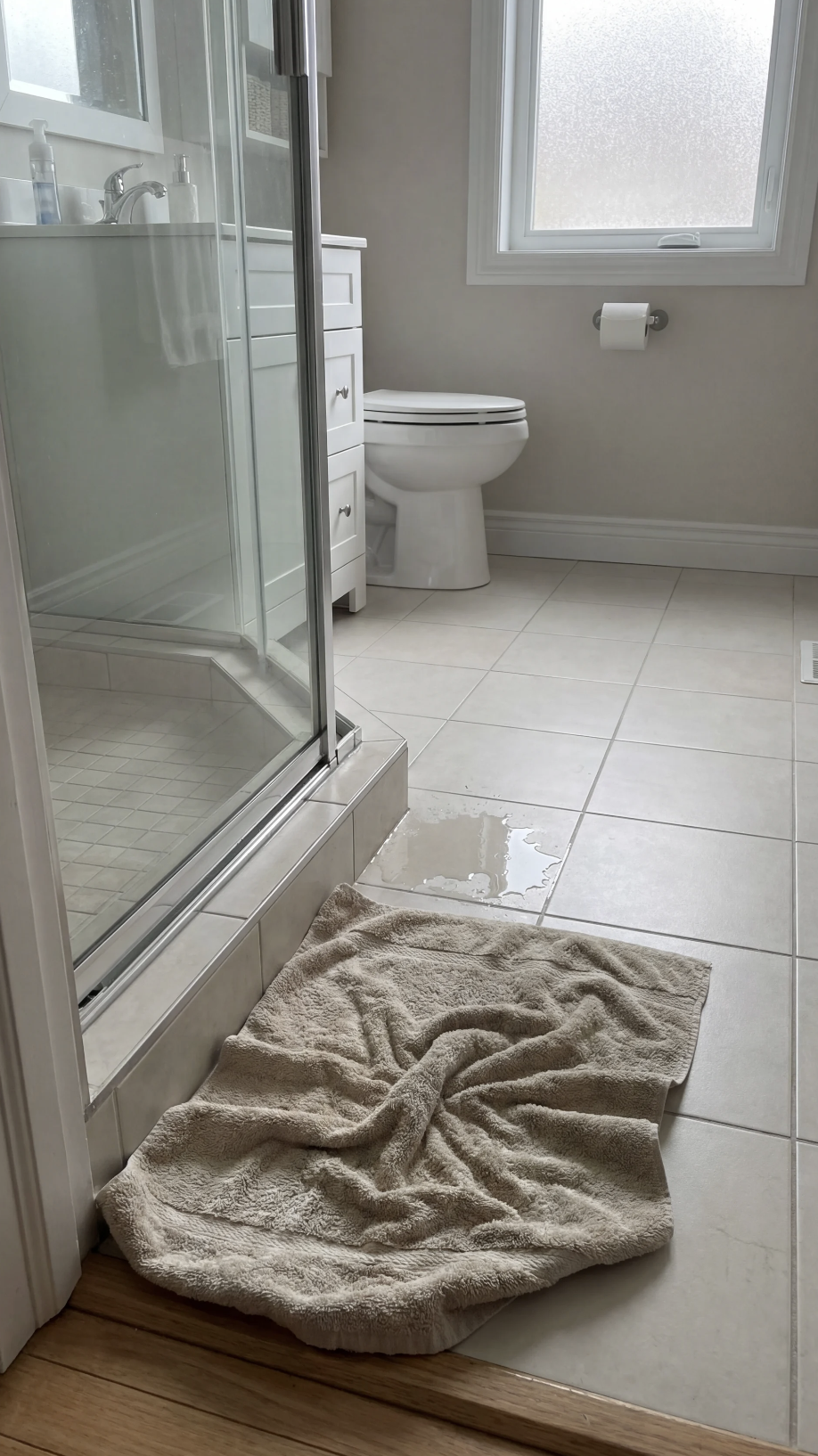
At first, it’s just a few drops on the floor. You wipe them up with a towel and move on. Then you start noticing water pooling near the curb or creeping toward the baseboards. Eventually, you’re laying bath mats in places they were never meant to go. Most people assume a leaky shower door means something big is wrong. Bad installation. Old glass. A full bathroom renovation waiting to happen.
In reality, most shower door leaks come down to a few small, fixable issues that are easy to miss if you don’t know what you’re looking for. Once you understand why shower doors leak, stopping the problem is usually far simpler than you expect.
Why Shower Doors Leak in the First Place
Shower doors are designed to deflect water, not contain it completely.
That surprises a lot of homeowners. Unlike a tub or shower pan, the glass door system relies on seals, sweeps, angles, and water flow direction to keep water inside. When any one of those elements stops doing its job, water finds a way out.
The most common causes are worn seals, poor door alignment, failed caulking, or water being directed straight at the door opening. None of those require tearing out tile.
The Door Sweep Is Usually the First Thing to Fail
The clear or opaque strip at the bottom of your shower door is called a door sweep. Its job is simple. It blocks water from escaping under the glass while still allowing the door to open and close freely.
Over time, door sweeps harden, shrink, crack, or lose their shape. When that happens, water slips right underneath the door and onto the floor. If your leak appears mostly at the bottom of the door, this is the first place to look.
The good news is that door sweeps are designed to be replaced. Many slide on or clip into place and can be trimmed to fit. A universal shower door sweep matched to your glass thickness often solves the problem in under fifteen minutes.
This is one of the most common fixes professionals start with because it’s fast, inexpensive, and very effective.
Side Seals and Vertical Gaskets Matter More Than You Think
If water is escaping along the vertical edge of the door, the side seals are likely the issue.
These clear vinyl seals run along the edge of the glass where it meets another panel or the wall. When they’re new, they gently press against the adjacent surface and deflect water back into the shower. As they age, they stiffen or pull away from the glass. Small gaps form. Water takes the easiest path out.
Replacing side seals feels insignificant, but it makes a huge difference. Many homeowners don’t realize these seals are even replaceable, so they live with leaks far longer than necessary. When choosing replacements, flexible vinyl seals designed for frameless or semi-frameless doors tend to perform best and install easily.
Alignment Issues Can Send Water in the Wrong Direction
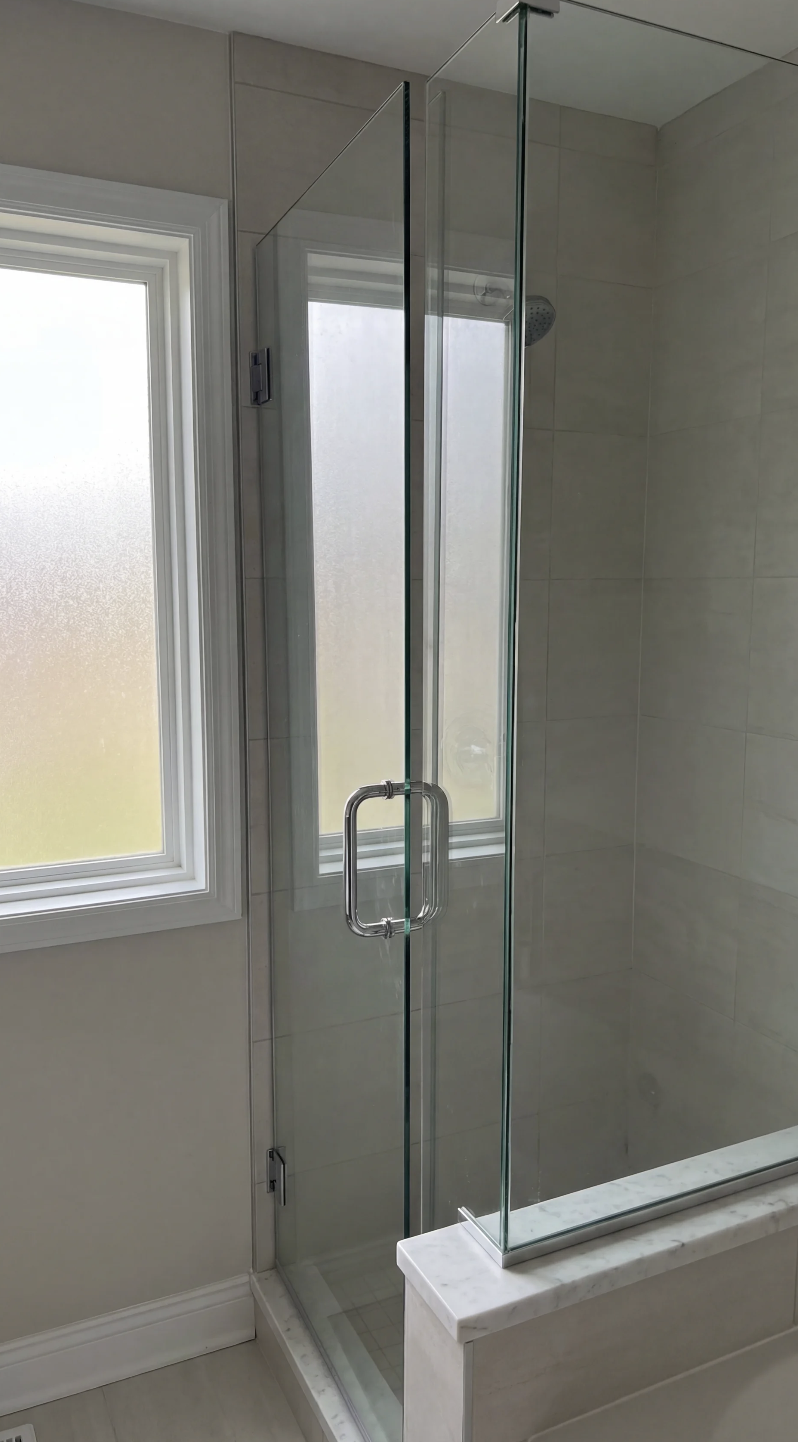
Sometimes the door itself isn’t sealing because it isn’t aligned properly.
Even a slight sag or misalignment can change how water flows across the glass. Instead of shedding water back into the shower, the door channels it outward toward the opening. This is especially common with heavier glass doors over time.
Before assuming parts need replacing, check how the door sits when closed. Look at the gap between the door and the frame or panel. If it’s uneven, hinge adjustment may be needed. Many shower door hinges allow minor adjustments. Tightening or slightly repositioning them can restore proper alignment and reduce leaks without replacing anything.
This is one of those fixes that feels almost too simple once you see it.
Failed Caulking Is a Quiet Contributor
Caulking around shower door frames plays a supporting role, but it still matters.
Over time, caulk dries out, shrinks, cracks, or separates from the surface. When that happens, water slips behind the frame and escapes elsewhere, often far from where the actual failure is. It’s important to note that caulk should never trap water inside the frame. Professionals only apply caulk on the exterior side of the shower door frame, never the interior. Caulking the inside can actually worsen leaks by preventing water from draining properly.
If caulk looks brittle or separated, removing it and applying a fresh bead of high-quality bathroom silicone sealant can eliminate hidden leak paths.
Silicone designed specifically for bathrooms resists mold and remains flexible longer than general-purpose caulk.
Water Direction Is an Overlooked Problem
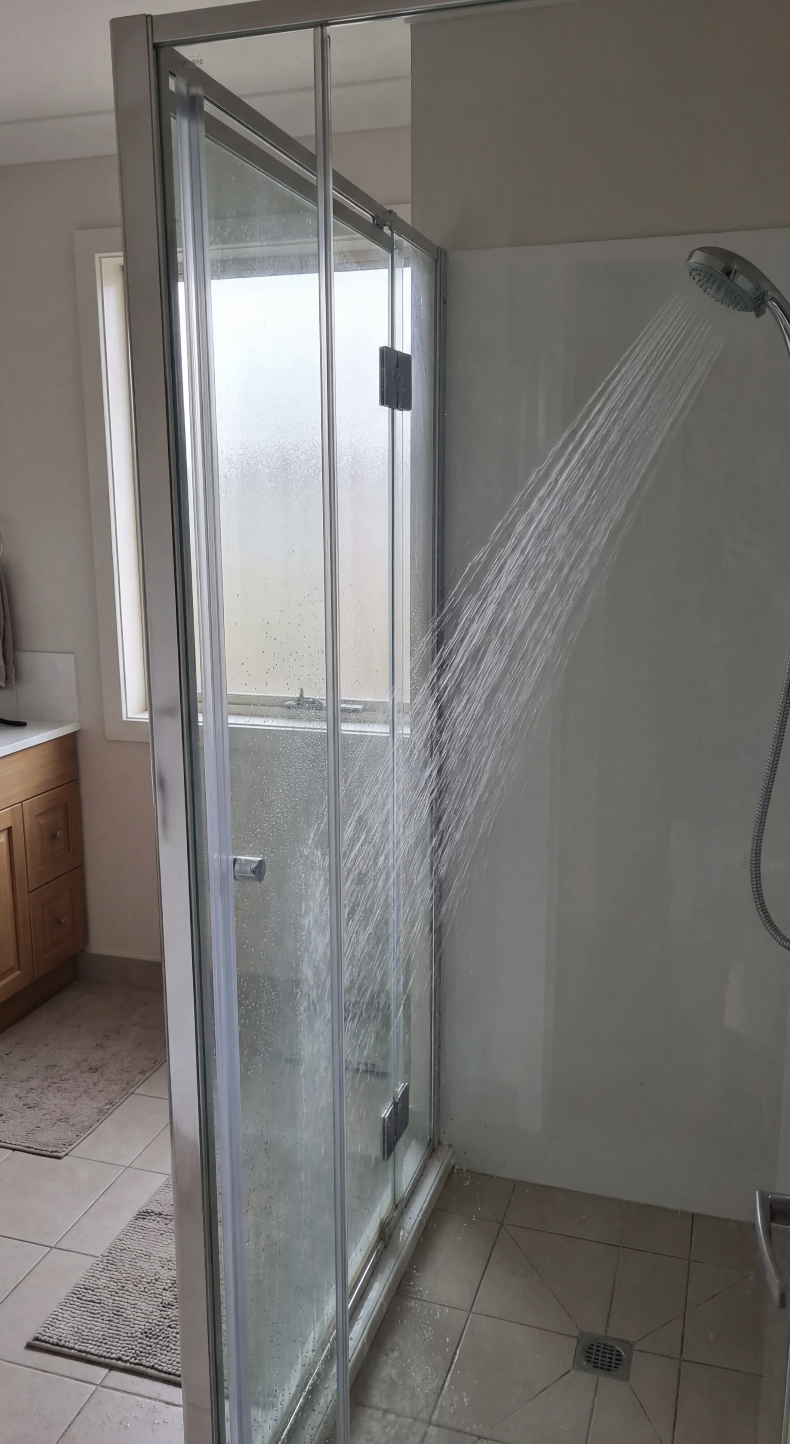
Sometimes the door is doing its job, but the water is being aimed straight at the opening.
High-pressure shower heads, angled body sprays, or poorly positioned fixtures can direct water toward door seams continuously. Over time, even good seals struggle under constant pressure. Adjusting the shower head angle slightly downward or away from the door often reduces leaking dramatically.
This fix costs nothing and is frequently overlooked.
Professionals always consider water direction before replacing components.
The Shower Threshold and Dam Can Fail Too
The bottom curb or threshold of the shower helps contain water inside the enclosure.
If the threshold is cracked, loose, or improperly sloped, water can escape regardless of how good the door seals are. Run your hand along the threshold and look for movement or separation. If the threshold has shifted or the seal between it and the shower pan has failed, resealing it with waterproof silicone may be necessary.
This is less common than seal failure, but when it’s the cause, replacing door parts alone won’t solve the problem.
When Drips Mean Something Bigger
In rare cases, a leaky shower door is a symptom of a larger issue.
If you notice water damage outside the shower, soft flooring, or recurring moisture even after addressing seals and caulk, it may indicate water is getting behind tile or the shower pan.
At that point, it’s wise to pause and investigate further instead of continuing to patch symptoms. Knowing when to stop is part of responsible DIY.
Why Professionals Fix Shower Door Leaks Early
Pros don’t tolerate shower door leaks for long.
They know that repeated moisture outside the shower leads to damaged flooring, mold growth, and rot over time. Fixing a seal today prevents far more expensive repairs later. Most importantly, they know shower door leaks are usually simple to fix when addressed early. That perspective saves time, money, and frustration.
How to Keep a Shower Door From Leaking Again
Once the leak is fixed, a few habits help keep it that way.
Periodically check door sweeps and seals for stiffness or gaps. Clean them gently to prevent soap buildup that degrades vinyl. Avoid harsh cleaners that dry out seals faster. If you recaulk, use quality silicone and give it proper curing time before using the shower.
These small steps extend the life of the fix significantly.
Final Thoughts
A leaky shower door feels like a renovation problem, but most of the time it isn’t. It’s usually a worn seal, a misaligned door, or a small failure that’s easy to overlook if you don’t know where to look.
Once you understand how shower doors are meant to work, the fix becomes clear. Address the seals first. Check alignment. Be intentional with caulk. Pay attention to water direction. Fixing the cause instead of fighting the symptom is what makes the solution last. And that’s the difference between constantly dealing with leaks and finally being done with them.