
How to Test Your Sump Pump Before Heavy Rain
(Because You Don’t Want to Find Out It’s Broken at 2 A.M.)
Sump pumps are one of those home systems you never think about until you desperately need them.
They sit quietly in a pit in the basement or crawl space. Most days, they do nothing. And that’s exactly how you want it.
The problem is this:
When heavy rain hits, your sump pump is suddenly the only thing standing between your basement and thousands of dollars in water damage.
If it fails, you don’t get much warning.
That’s why spring — before storm season ramps up — is the best time to test it. Not during the storm. Not after water starts rising. Before.
The good news? Testing a sump pump is simple. You don’t need special tools. You just need to know what to look for.
Let’s walk through it.
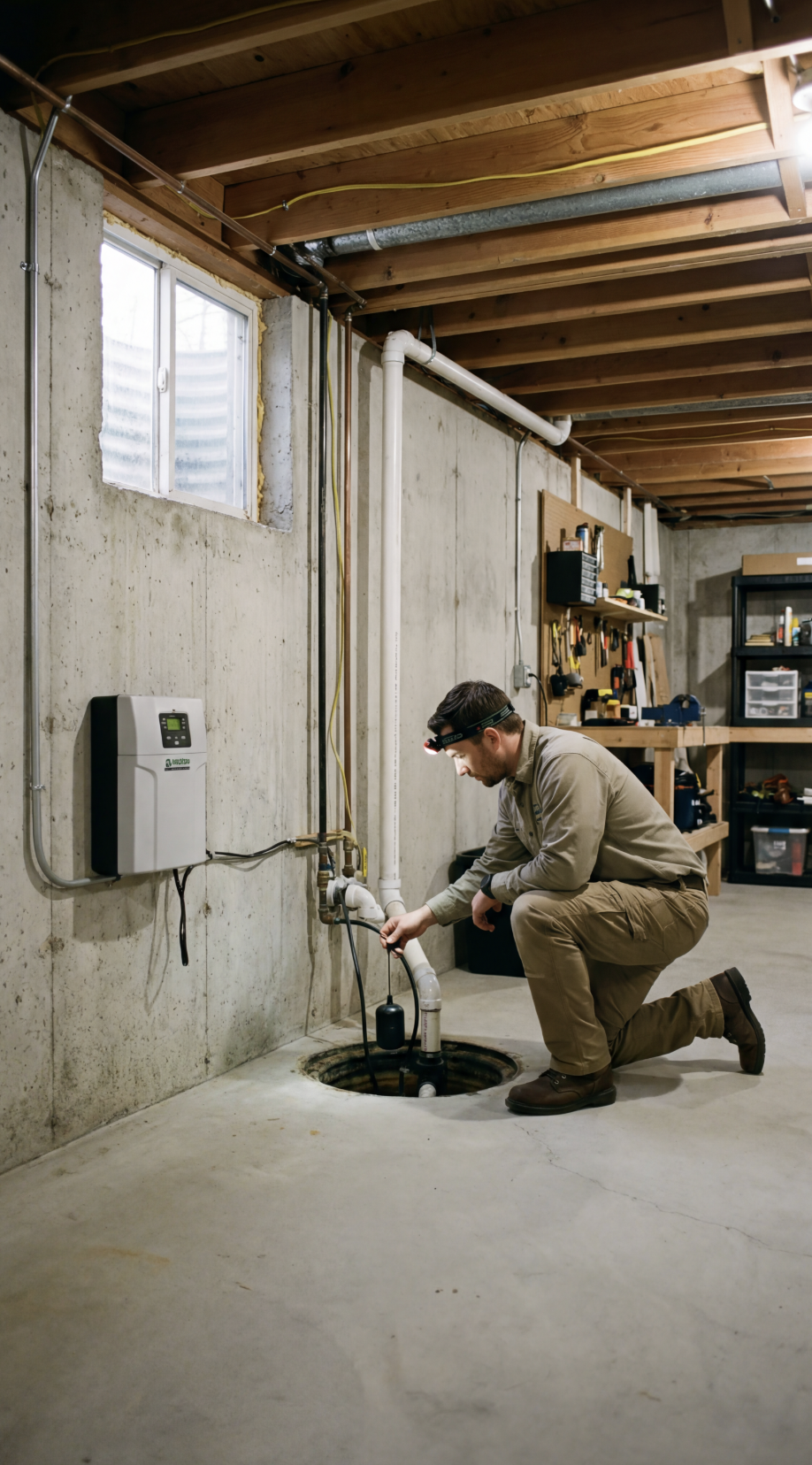
First, Understand What Your Sump Pump Is Actually Doing
Your sump pump sits inside a sump pit. When groundwater rises around your foundation, it drains into that pit. As water level rises, a float switch activates the pump. The pump then pushes water out through a discharge pipe away from your home.
Simple system.
But it relies on:
Electricity
A functioning float switch
A clear discharge line
A pump motor that isn’t worn out
If any of those fail, the system fails.
Step 1: Visually Inspect the Pit
Before testing anything, remove the sump pit cover and look inside.
You’re checking for:
Debris in the pit
Mud buildup
Obstructions near the float
Loose wires
Visible cracks in discharge piping
Sometimes gravel or small stones fall into the pit and block the pump intake. That alone can stop it from working.
If you see heavy sediment buildup, it may be worth cleaning the pit out carefully before testing.
This step takes five minutes and can reveal obvious issues..
Step 2: Test the Float Switch (The Most Important Part)
The float switch is what activates the pump when water rises.
There are two common types:
Tethered float (a small floating ball on a cord)
Vertical float (slides up a rod)
Both can stick over time.
To test it:
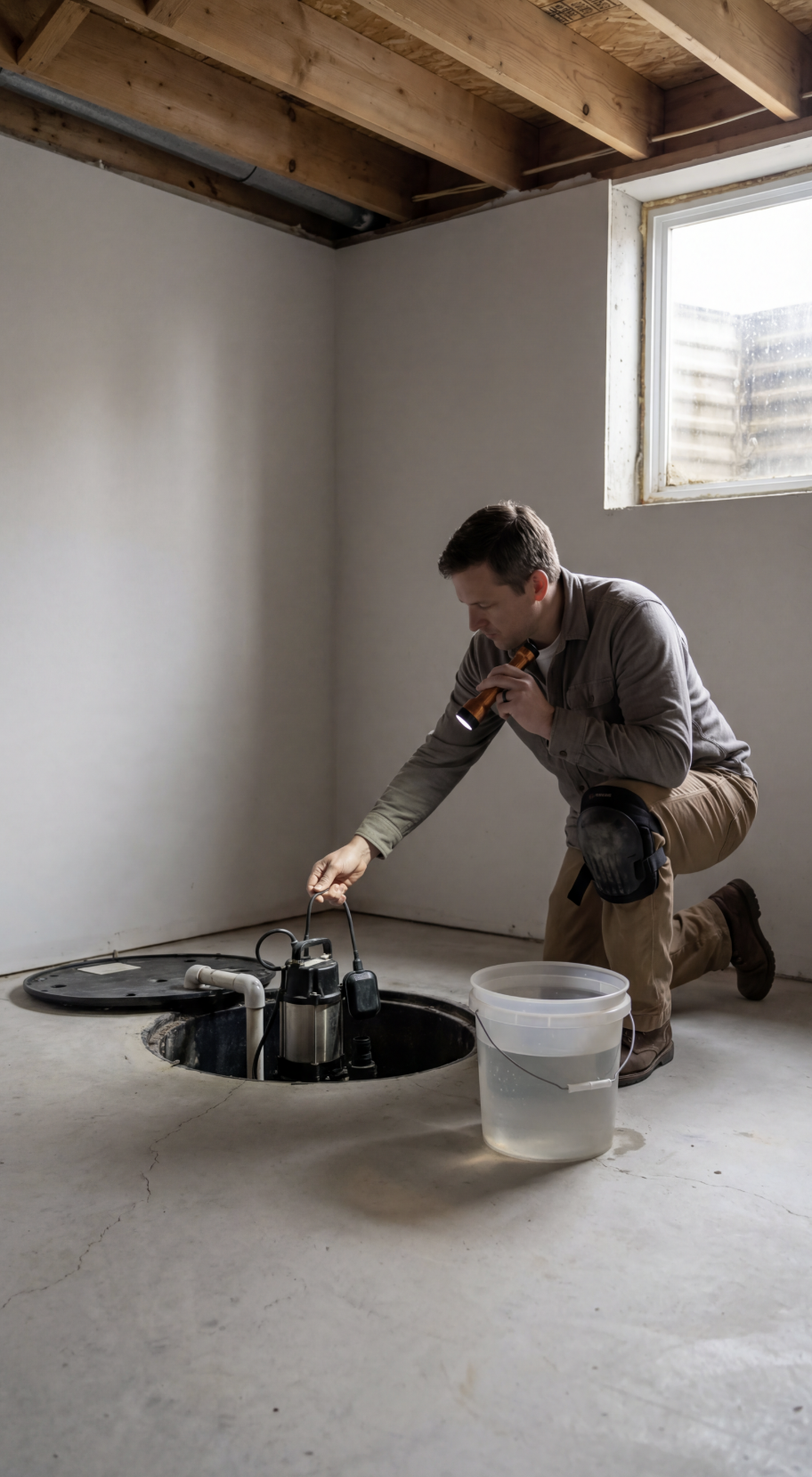
Slowly pour a bucket of water into the pit.
Watch as the water level rises.
The float should rise with the water.
The pump should activate automatically.
If it doesn’t turn on:
The float may be stuck.
The switch may be faulty.
The pump may have lost power.
You should hear the motor kick on clearly and see water discharge outside the house.
If nothing happens, stop and investigate before assuming it’s fine.
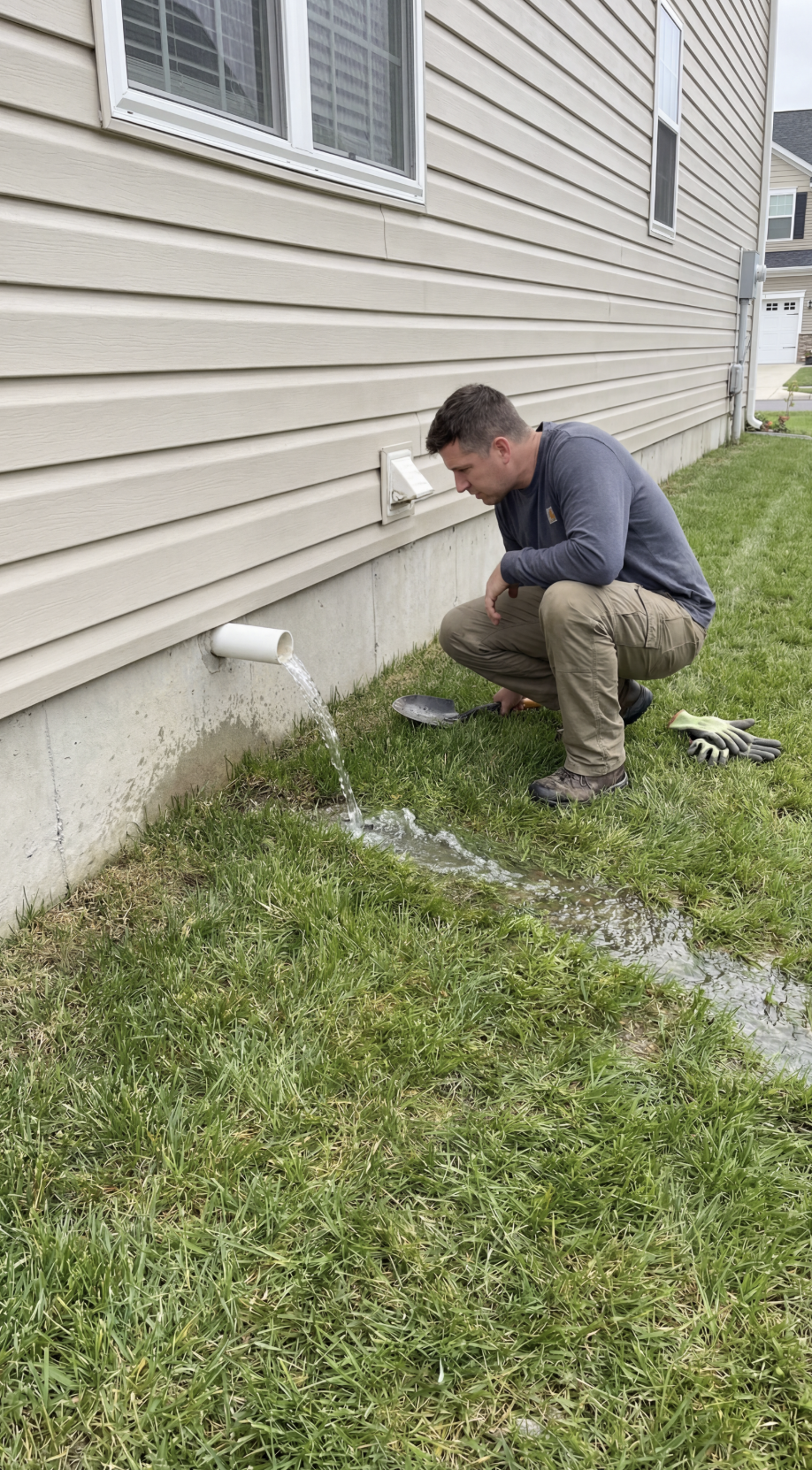
Step 3: Check the Discharge Line Outside
Once the pump activates, go outside.
Look at the discharge pipe outlet.
You should see water flowing away from the home.
Make sure:
The pipe isn’t clogged.
The water isn’t draining directly against the foundation.
The outlet isn’t blocked by debris.
A simple downspout extension or discharge hose can help redirect water farther away from the house if needed.
Also check for cracks in exterior piping. Freeze-thaw cycles can split PVC without you noticing.
Step 4: Test the Check Valve
The check valve prevents water from flowing back into the pit after the pump shuts off.
Without it, water drains back down and forces the pump to cycle repeatedly.
You’ll know the check valve is working properly if:
The pump shuts off cleanly.
You don’t hear excessive water rushing back down.
The pump doesn’t restart immediately after shutting off.
If you hear a loud clunk or constant cycling, the check valve may need replacing. It’s an inexpensive part that makes a big difference.
Step 5: Test the Power Source
This is where many systems fail.
Sump pumps rely on power. But storms often knock out electricity.
Unplug the pump and plug it back in to ensure the outlet works properly.
If your sump pump is connected to a GFCI outlet, press the test and reset buttons to ensure it trips and resets correctly.
Better yet, consider adding a battery backup sump pump system. These systems activate automatically when power goes out.
For extra peace of mind, some homeowners install a water level alarm inside the pit. If water rises above normal levels, it sends an alert before flooding happens.
That small device can be the difference between early response and major cleanup.
Step 6: Listen for Strange Sounds
When the pump runs, it should sound steady.
Grinding, rattling, or high-pitched whining can indicate:
Worn bearings
Impeller damage
Motor stress
If your sump pump is over 7–10 years old, it may simply be nearing the end of its lifespan.
Unlike cosmetic home upgrades, sump pumps are pure function. When they age, replacement is often safer than waiting for failure.
In 2026, one of the smartest upgrades for sump systems is remote monitoring.
Smart water sensors placed near the sump pit can send alerts if water levels rise abnormally.
Some smart home systems integrate directly with sump pump power supply to notify you if electricity is lost.
This is especially helpful if:
You travel frequently
You own a rental property
Your basement is finished
You store valuables in the basement
It’s not about tech for the sake of tech.
It’s about early warning.
How Often Should You Test It?
At minimum:
Once in early spring
Before heavy storm season
After major plumbing work
If you notice unusual basement moisture
Some homeowners test quarterly for peace of mind.
The test takes 10–15 minutes.
That’s a small investment compared to flood cleanup.
Signs Your Sump Pump May Be Failing
Even if it passes a simple test, watch for:
Frequent cycling without heavy rain
Constant running
Visible rust
Strong vibration
Musty basement smell
Water staining near walls
A sump pump that runs constantly may indicate groundwater issues or a stuck switch.
One that rarely runs during known heavy rain may be failing quietly.
Don’t Forget the Rest of the System
A sump pump is only one part of water control.
Also check:
Gutter cleanliness
Downspout direction
Foundation grading
Window well drainage
If exterior drainage fails, your sump pump works harder.
Water control starts outside.
Final Thoughts
Heavy rain doesn’t cause basement flooding.
Failed preparation does.
Your sump pump is one of the most important protective systems in your home. And unlike cosmetic upgrades, you won’t get a warning when it fails.
Testing it now — before storms arrive — gives you time to fix small problems before they become big ones.
You don’t want to discover a stuck float switch during a thunderstorm.
Spend fifteen minutes today.
Save thousands later.