
Things to Do Outside Your Home Before It Gets Hot
(Because Summer Problems Start in Spring)
Most people think summer maintenance starts when it’s already hot.
That’s backwards.
By the time temperatures climb, small exterior issues have already turned into bigger ones. Wood has expanded. Caulk has cracked. Soil has dried and shifted. Pests have found entry points. Air conditioners are working harder than they should.
The best time to prepare your home for heat is before it arrives.
Late spring — when the weather is mild — is the ideal window. You can work comfortably, see issues clearly, and fix small things before they’re stressed by extreme temperatures.
Here’s what to do outside your home before the heat hits.
1. Wash What Winter Left Behind
Winter leaves more than dirt. It leaves salt, grime, mildew, and organic buildup.
Before summer sun bakes it into siding and concrete, clean it off.
Start with:
Siding
Walkways
Driveways
Porch steps
Deck surfaces
A compact electric pressure washer is more than enough for most homes and is easier to control than gas models. You don’t need maximum pressure — just consistent cleaning to remove surface buildup.
If you don’t own one, even a hose with a spray nozzle and a stiff exterior brush can handle light grime.
This isn’t about perfection.
It’s about removing buildup before heat makes it harder to clean.
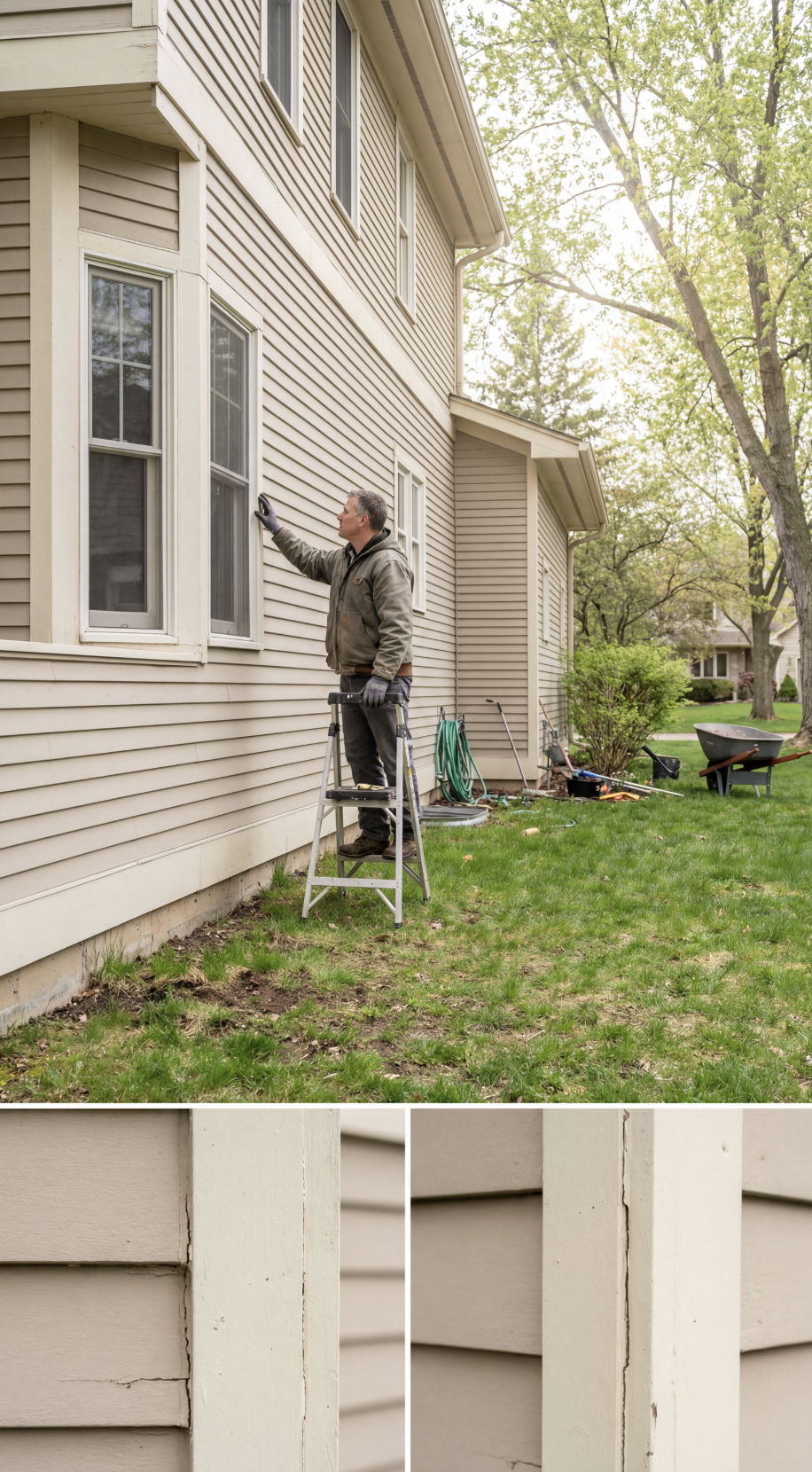
2. Check Exterior Caulking and Seals
Heat expands materials. Gaps get worse in summer.
Walk around your home and inspect:
Window frames
Door frames
Trim joints
Siding transitions
Exterior penetrations (hose bibs, vents, conduit lines)
Look for cracking, shrinking, or separation.
High-quality exterior-grade sealant applied in spring has time to cure properly before extreme heat stresses it.
Small gaps allow moisture intrusion and insect entry. Sealing them now prevents bigger issues later.
3. Service Your Outdoor Faucets and Hoses
Before heavy watering season begins, test your outdoor spigots.
Turn them on slowly and check for:
Drips at the handle
Leaks around connections
Reduced pressure
If hoses have been sitting all winter, inspect for cracks and stiffness. A durable expandable garden hose or reinforced rubber hose lasts longer than cheap vinyl versions.
Also check hose bib vacuum breakers. These prevent backflow into your plumbing system and are inexpensive to replace if worn.
Summer water use puts stress on exterior plumbing. Fixing issues now avoids mid-season failures..
4. Inspect and Clean Gutters (Yes, Even in Spring)
Most people associate gutter cleaning with fall.
But spring storms can overwhelm gutters filled with leftover debris.
Clogged gutters cause:
Water overflow near foundation
Fascia board rot
Landscape erosion
Clean them out and check for loose brackets.
Also inspect downspouts. Make sure water drains at least several feet away from the foundation. A simple downspout extension prevents water pooling during summer thunderstorms.
Water direction matters more than people realize.
5. Prepare Your Air Conditioning System
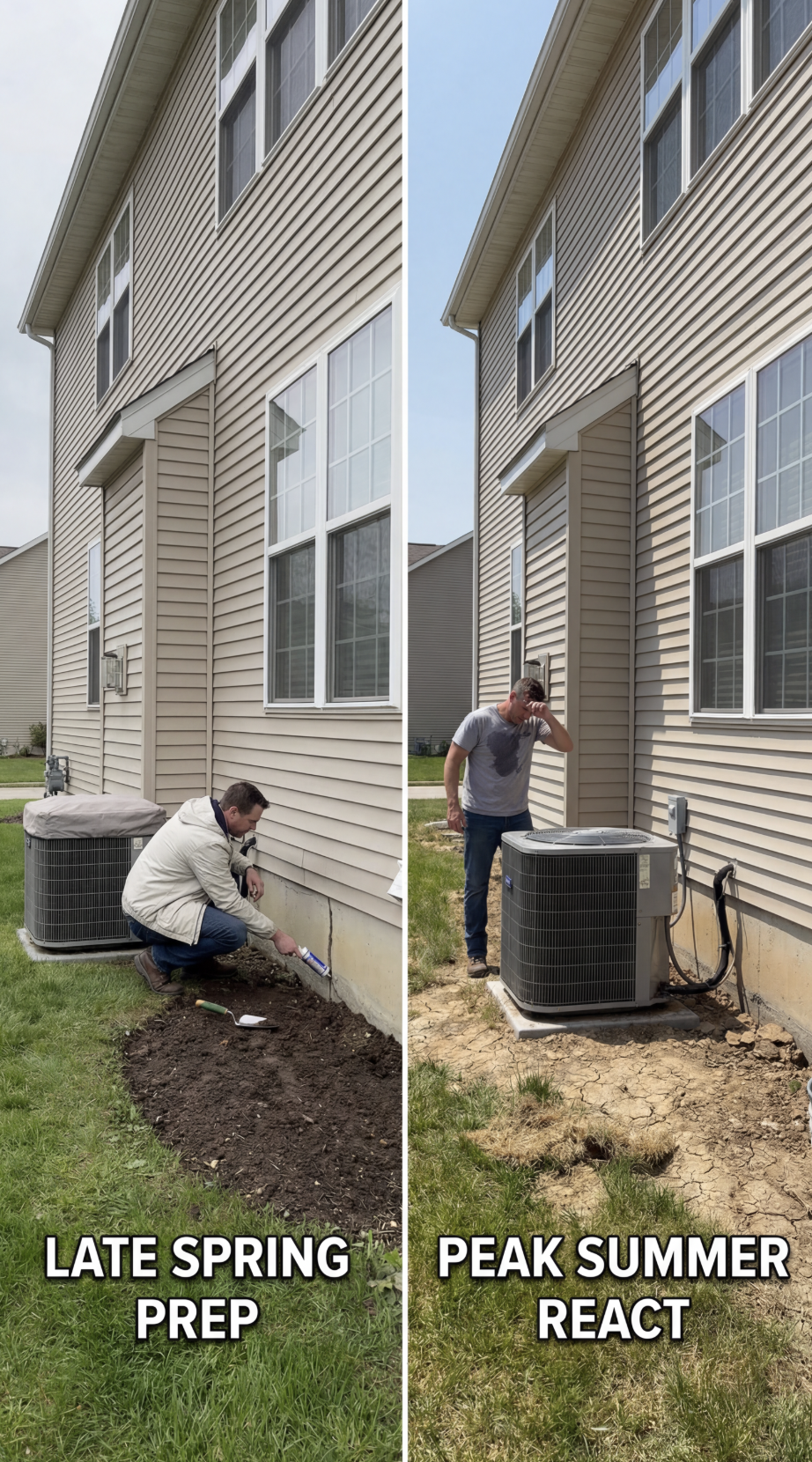
Before the first hot day hits, check your outdoor condenser unit.
Clear away:
Leaves
Grass clippings
Debris
Mulch piled too close
There should be at least two feet of clearance around the unit.
Gently rinse the exterior fins with a hose (not high pressure) to remove dust buildup. Dirty coils reduce efficiency and increase strain.
Inside, replace your HVAC air filter. A clean high-efficiency furnace filter improves airflow and reduces dust during heavy summer runtime.
Testing your system early ensures you’re not calling for service during peak heat waves.
6. Look for Early Signs of Foundation Stress
Hot weather dries soil. Dry soil shrinks. That movement can affect foundations.
Walk around your home and look for:
Cracks in foundation walls
Soil pulling away from foundation
Uneven settling
If grading has changed over winter, add soil to restore slope away from the house.
Foundation movement isn’t always dramatic. It starts subtly.
Catching it early matters.
7. Refresh Decks and Patios Before UV Damage
Sun exposure is harsh on wood and composite surfaces.
If you have a wood deck, inspect for:
Loose boards
Nail pops
Splinters
Faded finish
A light sanding and reapplication of deck stain or sealer in late spring protects against summer UV damage.
For patios, clean expansion joints and remove weeds before they harden in heat.
Heat doesn’t create damage. It accelerates it.
8. Check Outdoor Lighting
Longer days don’t eliminate the need for lighting.
Test:
Path lights
Motion lights
Entry lights
Garage lights
Replace burnt bulbs and clean lenses. Dust and insect buildup reduces brightness significantly.
Consider upgrading to LED outdoor bulbs if you haven’t already. They handle heat better and reduce energy use during longer evening gatherings.
Lighting improves safety and curb appeal without major upgrades.
9. Inspect Screens and Windows
Open windows become common in spring and early summer.
Check window screens for:
Tears
Loose frames
Bent edges
Repair kits are inexpensive and prevent bugs from entering.
Also check weatherstripping around doors. Cracked or flattened seals allow hot air in and cool air out.
Replacing worn weatherstripping improves comfort and reduces AC strain.
10. Control Weeds Before They Take Over
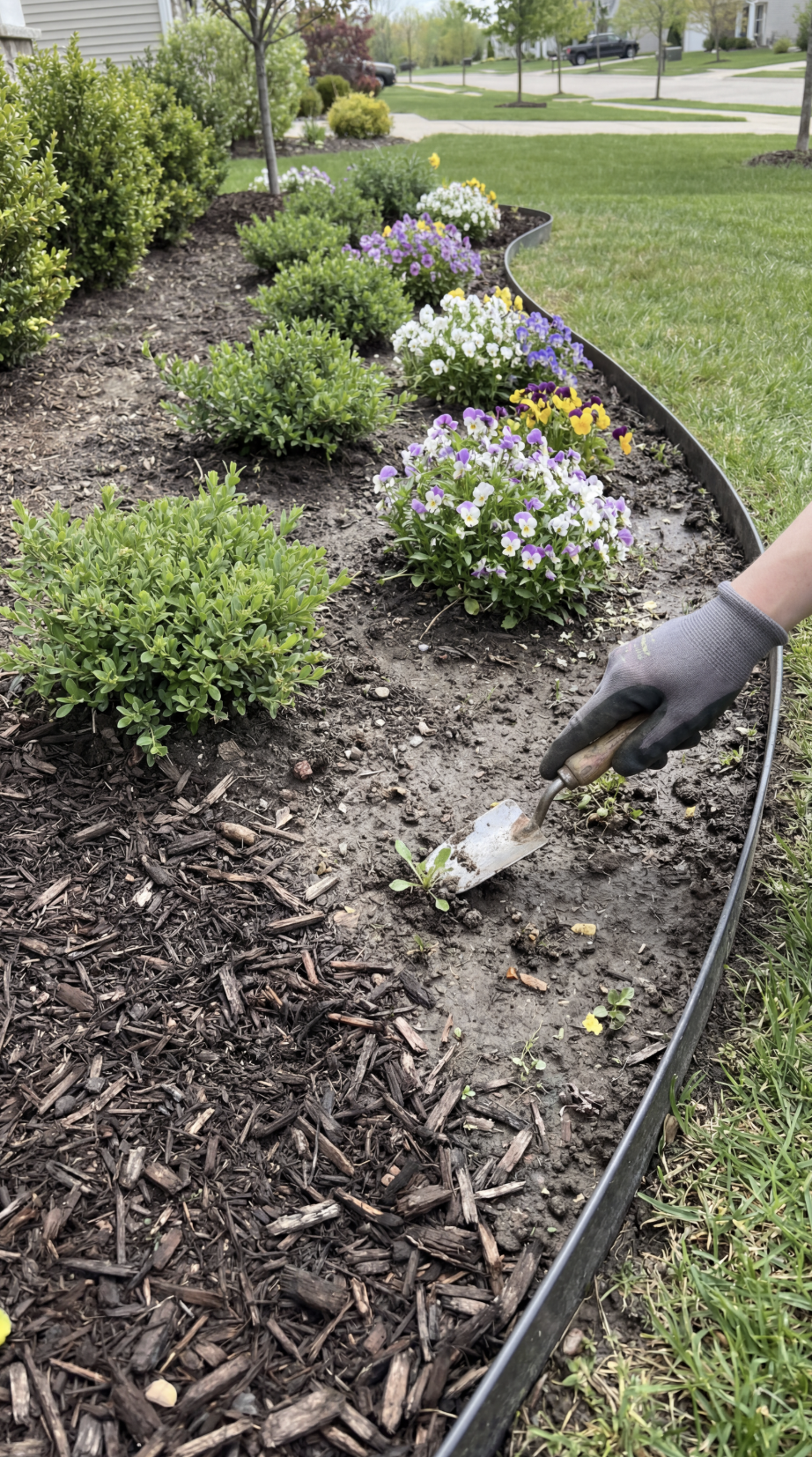
Weeds are easier to manage early.
Pull them when soil is slightly moist. Apply fresh mulch around garden beds to suppress growth and retain moisture during heat waves.
Landscape fabric under mulch can help in high-growth areas, but it should be installed properly to avoid trapping water.
Weed control now prevents frustration in July..
11. Test Your Sump Pump
Spring rain often precedes summer storms.
Before temperatures rise, test your sump pump by pouring water into the pit and ensuring it activates properly.
Also check discharge lines for obstructions.
Consider installing a battery backup system if you don’t already have one. Power outages during summer storms are common.
Flood prevention isn’t seasonal. It’s preventative.
12. Seal Concrete and Pavers If Needed
Driveways and patios benefit from occasional sealing.
If concrete looks porous or stained, applying a concrete sealer protects against UV damage and moisture intrusion.
For pavers, polymeric sand in joints prevents weed growth and stabilizes surfaces.
These are small upgrades that extend lifespan significantly.
13. Think About Shade Before You Need It
Once it’s hot, it’s uncomfortable to install shade solutions.
Consider:
Installing exterior sun shades
Adding retractable awnings
Planting strategic shade trees
Using UV-blocking patio umbrellas
Reducing direct sun exposure lowers indoor temperatures and protects outdoor furniture.
Planning for shade reduces energy bills later.
Final Thoughts
Summer doesn’t damage homes overnight.
It stresses what was already weak.
Loose seals expand. Poor drainage worsens. UV exposure accelerates wear. AC systems strain under buildup. Soil shifts under heat.
The calm weeks before real heat arrives are your opportunity.
Walk your home slowly.
Look for water direction. Airflow. Cracks. Gaps. Loose components.
Fix the small things while they’re still small.
Because once it’s 95 degrees and humid, everything feels harder.
And by then, prevention has already passed