
Spring Deck and Patio Refresh Guide
(Because Summer Problems Start in Spring)
Decks and patios don’t usually fail dramatically.
They fade. They loosen. They collect grime. They get ignored through winter. Then one warm weekend hits and suddenly you want to be outside — and everything looks tired.
Spring is the ideal time to reset your outdoor spaces. Not when it’s already hot. Not when guests are arriving in two hours. Not mid-July when the sun is beating down and every task feels harder.
A proper spring refresh isn’t about making your deck look brand new. It’s about restoring it so it lasts longer, feels solid, and is ready for real use.
Here’s how to do it the right way.
Start With a Slow Walkaround
Before cleaning anything, inspect.
Look for:
Loose boards
Popped nails or raised screws
Soft or spongy spots
Cracks in composite decking
Wobbly railings
Rusted hardware
Winter moisture and freeze-thaw cycles stress fasteners and joints.
If you see nail pops, replace them with exterior-rated deck screws instead of hammering them back down. Screws hold better long term and reduce repeat issues.
If railings move even slightly, tighten brackets now. Structural integrity matters more than cosmetic cleanup.
Spring is about preventing summer failures.
Deep Clean Before You Decide What It Needs
Dirt hides damage.
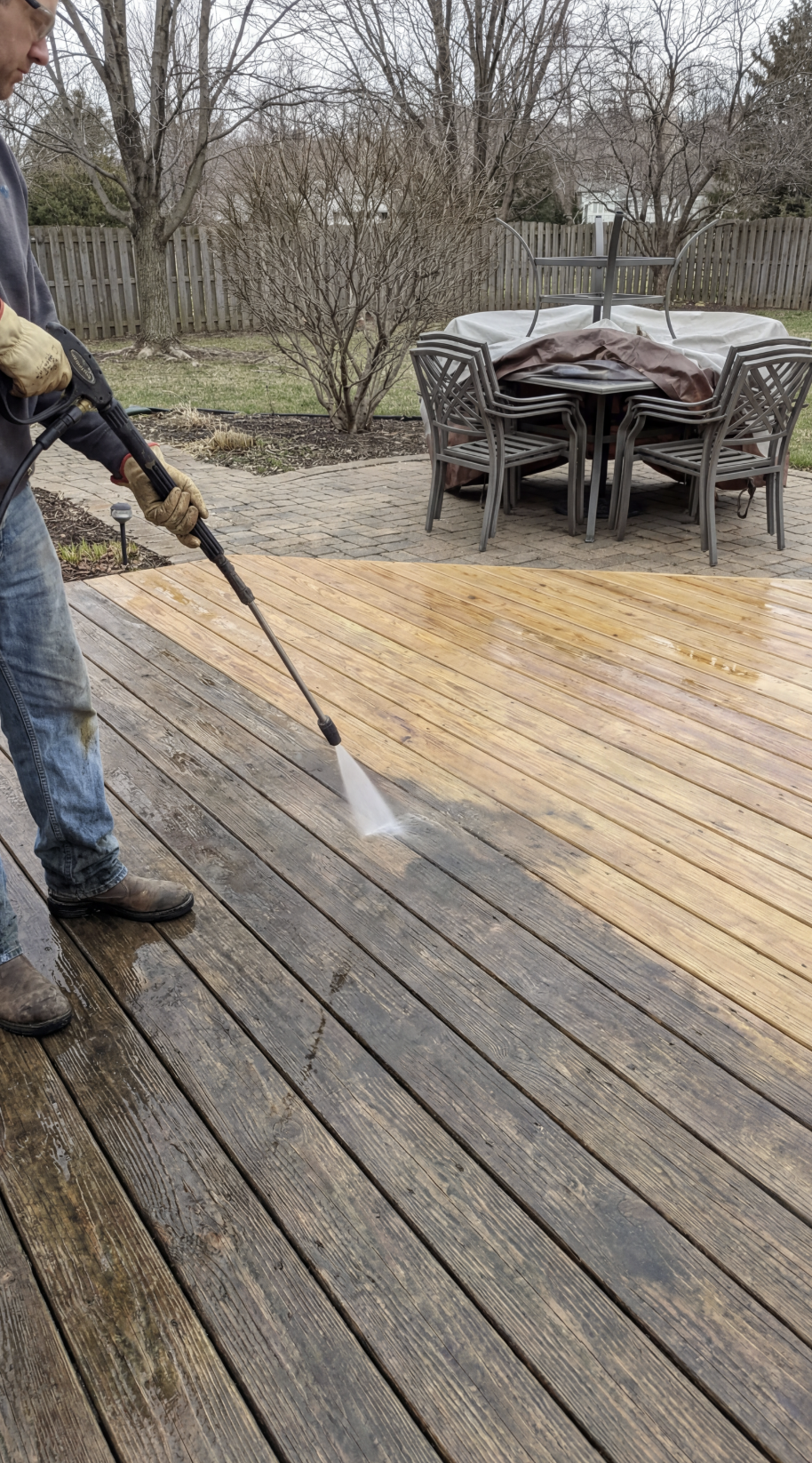
Pressure washing is effective — but only if done properly. A compact electric pressure washer is usually safer than a high-powered gas model for residential decks.
Use moderate pressure and keep the nozzle moving. Staying too long in one area can gouge wood or scar composite boards.
If you prefer less risk, a stiff-bristle deck brush and a quality deck cleaner can remove grime without damaging the surface.
Pay attention to:
Between boards
Railing bases
Stair edges
Corners where debris collects
Cleaning reveals the true condition of the surface.
Check for UV and Moisture Damage
Once clean, examine the boards.
Wood decks may show:
Graying from UV exposure
Splintering
Fading stain
Minor surface cracks
Composite decks may show:
Surface chalking
Slight separation at seams
Loose fasteners
If water no longer beads on wood, the protective finish is likely worn.
Spring is the ideal time to apply a fresh deck stain or sealer. Choose a product designed for UV protection and water resistance. Semi-transparent stains often age better visually than solid paints, which can peel over time.
Avoid applying stain in direct midday sun. Mild spring temperatures allow proper curing.
Inspect the Structure Underneath
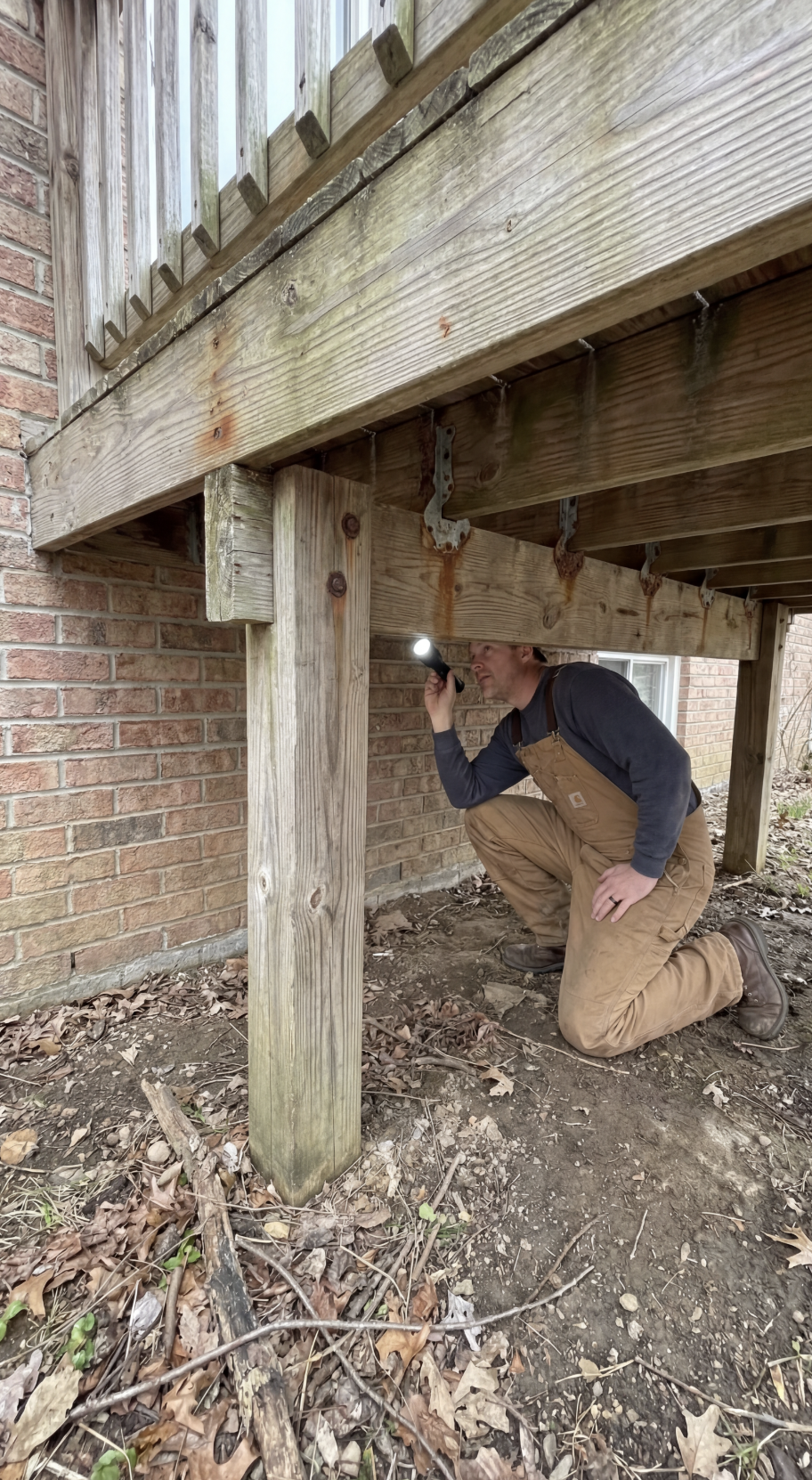
Most homeowners never look under their deck.
That’s where inspectors look first.
If accessible, check:
Joists for rot
Ledger board attachment to the house
Corrosion on metal brackets
Signs of insect activity
Moisture trapped under decks causes long-term damage.
Clearing out debris from underneath improves airflow and reduces rot risk.
If you see rusted hardware, consider replacing it with galvanized or stainless steel fasteners rated for exterior use.
The surface might look fine while the structure weakens.
Spring is your window to catch that early.
Refresh the Patio Surface
For patios — whether concrete, pavers, or stone — the approach is slightly different.
Concrete:
Power wash
Fill visible cracks with concrete crack filler
Consider resealing if surface looks porous
Pavers:
Remove weeds from joints
Refill with polymeric sand
Rinse and allow to settle
Natural stone:
Clean with a stone-safe cleaner
Avoid harsh acids that degrade surface
A breathable concrete sealer can protect against UV fading and moisture intrusion, especially before intense summer heat.
Sealing isn’t about shine. It’s about protection.
Check Drainage Around the Area
Decks and patios fail faster when water lingers.
After cleaning, observe where water flows.
Does it pool near the house?
Does soil slope toward the structure?
Do downspouts drain onto the patio?
Adding a simple downspout extension or redirecting runoff can prevent long-term moisture issues.
Drainage problems rarely look dramatic — until boards warp or pavers sink.
Refresh Railings and Hardware
Railings get touched constantly.
Inspect for:
Loose balusters
Corrosion
Peeling paint
Splinters
Light sanding and repainting metal railings with exterior-grade paint restores protection before rust spreads.
For wood railings, a fresh coat of stain protects against UV exposure.
If upgrading hardware, choose weather-resistant options. Stainless steel screws and brackets resist corrosion better in humid climates.
Small upgrades improve longevity and feel.
Clean and Protect Outdoor Furniture
Furniture often suffers more than the deck itself.
Before placing cushions out:
Clean frames with mild soap and water
Tighten loose bolts
Inspect for rust
Fabric cushions should be cleaned and fully dried before use. Consider applying a fabric protector spray to resist stains and moisture.
If furniture legs rest directly on wood decking, adding small protective pads prevents pressure marks and staining.
Furniture maintenance extends deck lifespan too.
Refresh Lighting
Outdoor lighting changes everything.
Test:
Path lights
Step lights
String lights
Wall fixtures
Replace burnt bulbs with LED outdoor-rated bulbs for longer lifespan and better heat tolerance.
Clean light covers to improve brightness. Dust and insect buildup reduce output significantly.
Lighting isn’t just aesthetic. It improves safety.
Add Shade Before Heat Arrives
If your deck gets full sun, address shade now.
Options include:
Retractable awnings
Shade sails
Patio umbrellas
Pergola additions
Installing shade before peak heat protects surfaces from UV damage and keeps the space usable longer.
Shade reduces surface temperature dramatically — especially on darker decking.
Simplify for Low Maintenance
Spring refresh is also a good time to simplify.
Remove unnecessary clutter. Limit decorative pieces that require constant cleaning. Store items not regularly used.
The less cluttered your deck or patio, the easier it is to maintain through summer.
Low-maintenance design always ages better.12. Seal Concrete and Pavers If Needed
Driveways and patios benefit from occasional sealing.
If concrete looks porous or stained, applying a concrete sealer protects against UV damage and moisture intrusion.
For pavers, polymeric sand in joints prevents weed growth and stabilizes surfaces.
These are small upgrades that extend lifespan significantly.
Final Thoughts
A spring deck and patio refresh isn’t about cosmetic perfection.
It’s about readiness.
When summer arrives, you want to enjoy your outdoor space — not fix it.
Clean it. Inspect it. Protect it. Tighten what’s loose. Seal what’s exposed. Improve drainage. Add shade.
Small spring adjustments prevent mid-summer frustration.
Because once it’s hot, everything feels harder.
Do it now while the air is still cool.
Your future self — sitting outside comfortably in July — will thank you..