
The Easiest Spring Refresh That Makes a Home Look Professionally Styled
Every spring, the same thing happens.
The light changes. The days feel longer. And suddenly your home, which felt cozy all winter, starts to feel a little heavy.
So you do what most people do. You start looking for spring decor inspiration. New pillows. New florals. Maybe a new rug or tray. And yet, after all of that, something still feels off.
This is the part no one really explains.
The most professionally styled homes do not look good because they added more decor. They look good because they followed a very specific order that most people skip entirely.
The easiest spring refresh that makes a home look professionally styled is not about shopping first.
It is about editing first, then making one intentional layer change that affects the entire space.
Once you understand this, spring decorating becomes simpler, cheaper, and far more effective.
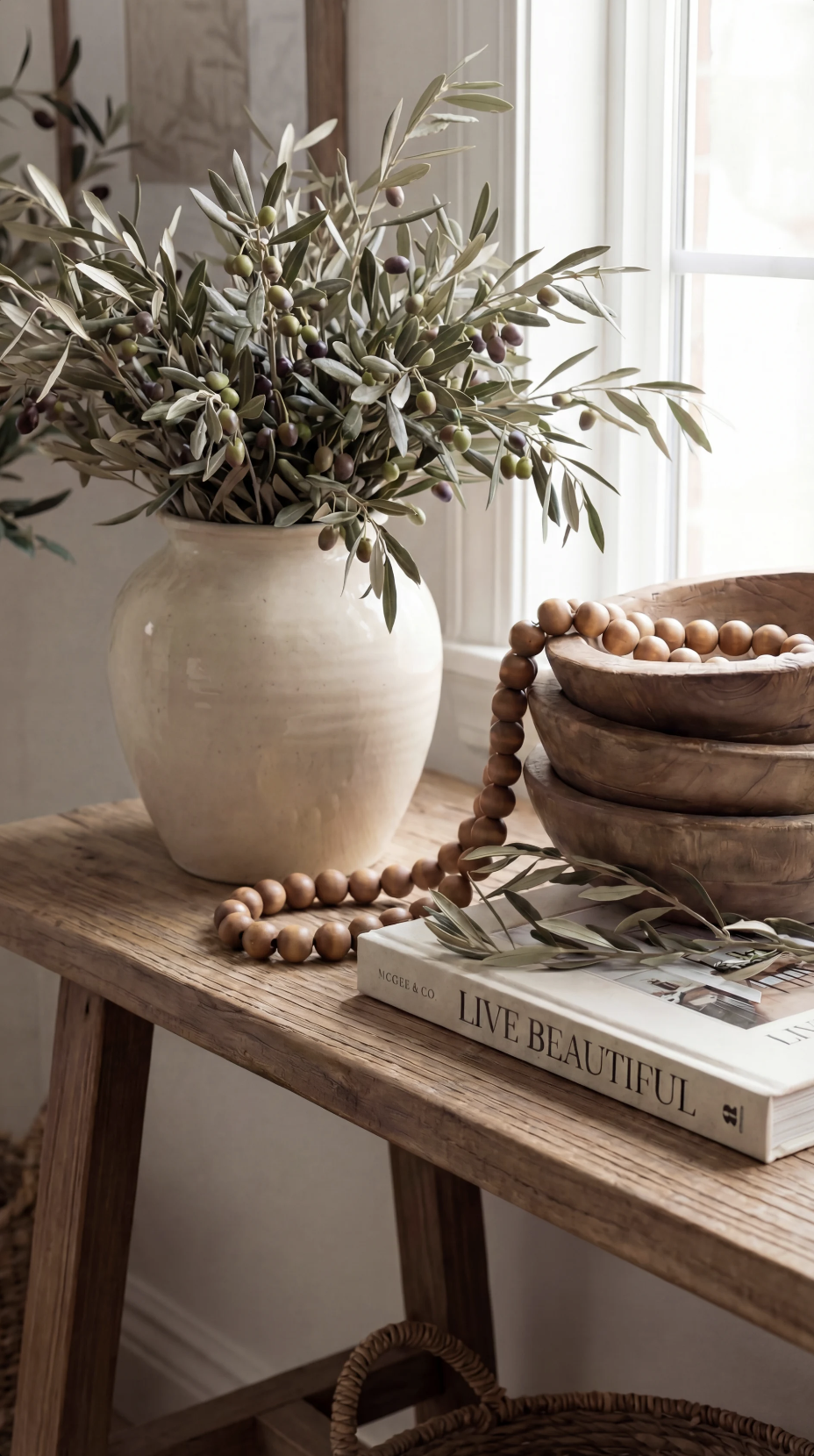
Why Most Spring Refreshes Fall Flat
Before we talk about what to do, it helps to understand why spring decor often disappoints.
Most people decorate for spring like this:
They keep everything from winter and add lighter pieces on top of it.
That means:
Winter textures are still everywhere
Surfaces are already full
Visual weight never actually leaves the room
No amount of pastel pillows or fresh flowers can fix that.
Professional stylists approach spring refreshes differently. They remove first, rebalance second, and only then add a small seasonal layer.
This is why their spaces feel calm instead of cluttered.
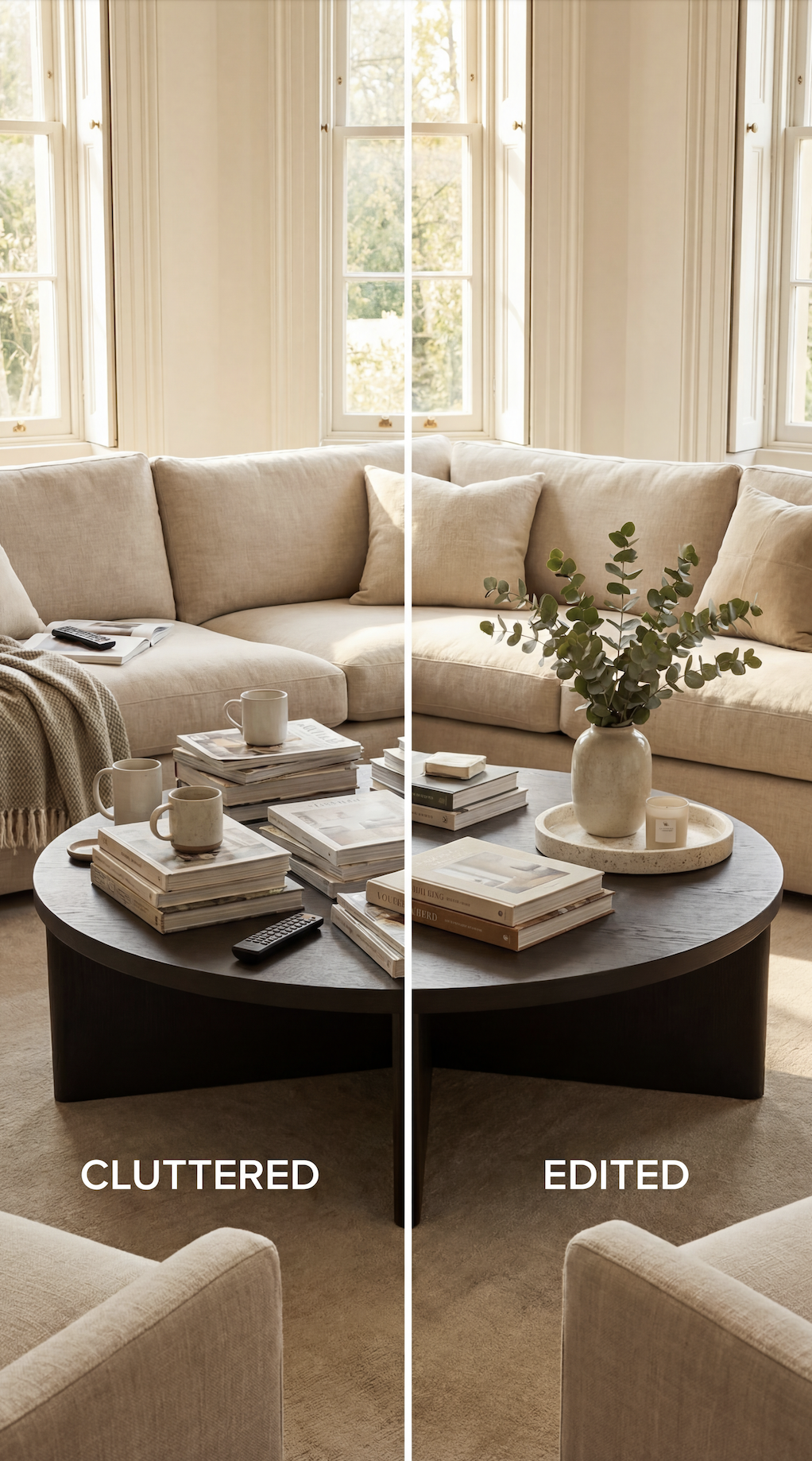
The One Spring Refresh That Changes Everything
The easiest spring refresh that instantly elevates a home is this:
Edit your surfaces, then replace one heavy winter layer with a lighter, textured neutral layer.
Not multiple changes. Not a full makeover. Just one intentional swap that affects how the entire room feels.
This works because the eye reads texture and balance before it reads color or decor.
When that balance is right, everything else looks more polished.
Step One: Edit Every Visible Surface First
This step is not exciting, but it is the most important.
Walk through your main living spaces and look at:
Coffee tables
Console tables
Kitchen counters
Open shelving
Entryway surfaces
Your goal is not to make them empty. Your goal is to give each surface space to breathe.
A good rule of thumb:
If you have to move multiple items just to clean a surface, it is too full.
What to Remove First
Seasonal winter decor
Excess trays or stacked items
Duplicate decorative objects
Anything that only exists to fill space
This alone often makes a home feel lighter before you add anything new.
Removing visual clutter is easier when everything still has a place to go:
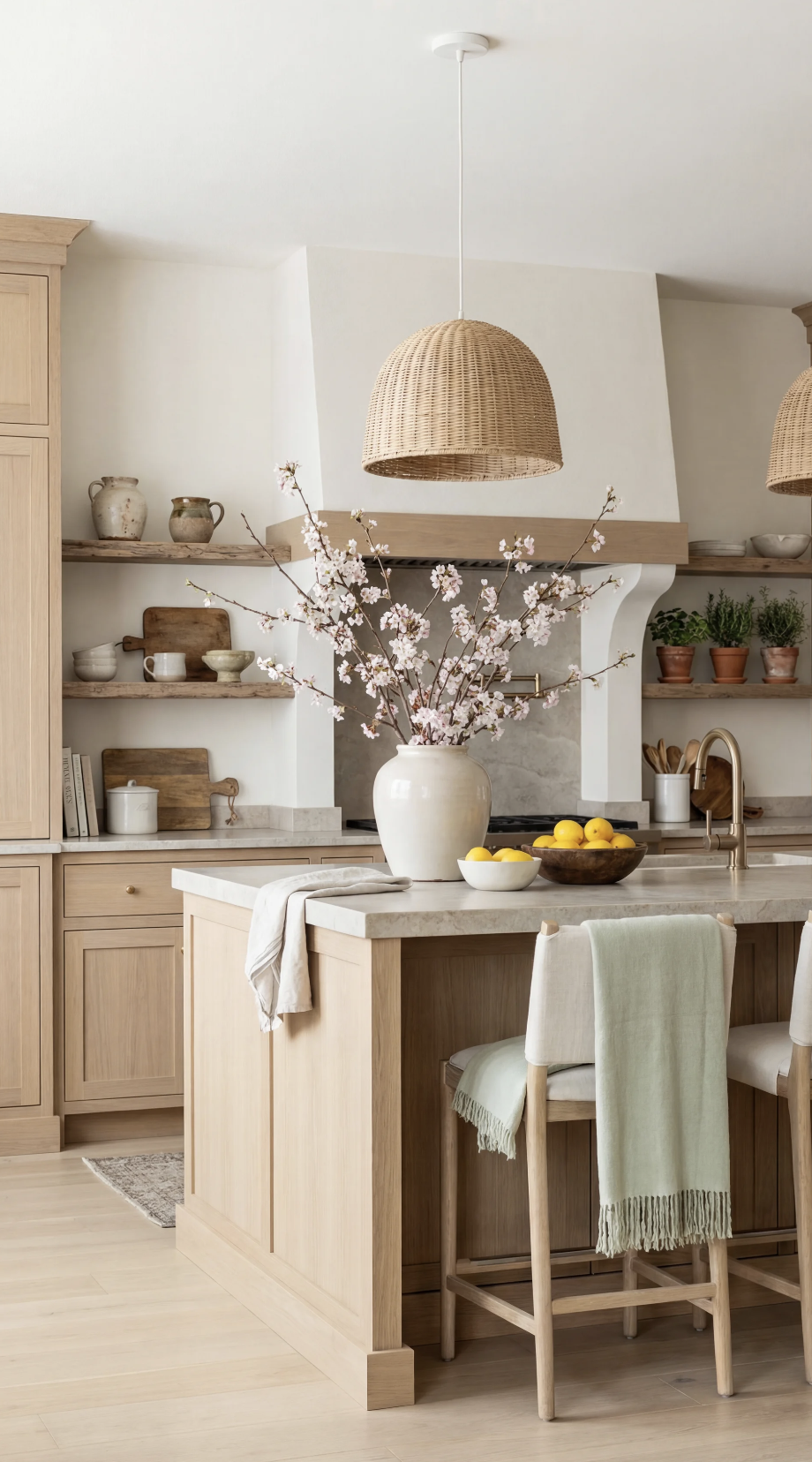
Step Two: Replace Heavy Winter Textures With Lighter Neutrals
Most winter homes rely on heavy materials. Thick knits, dark woods, deep colors, layered fabrics.
For spring, you do not remove warmth. You replace heaviness with softness.
This is where the transformation really happens.
What to Swap
You only need to change one or two of the following:
Area rug if it is very dark or heavy
Choose materials like:
Linen
Cotton
Light wool blends
Soft woven textures
Stick to warm neutrals, soft whites, light taupe, sand, and gentle sage tones.
Swapping one heavy winter layer for a lighter neutral instantly changes how a room feels.
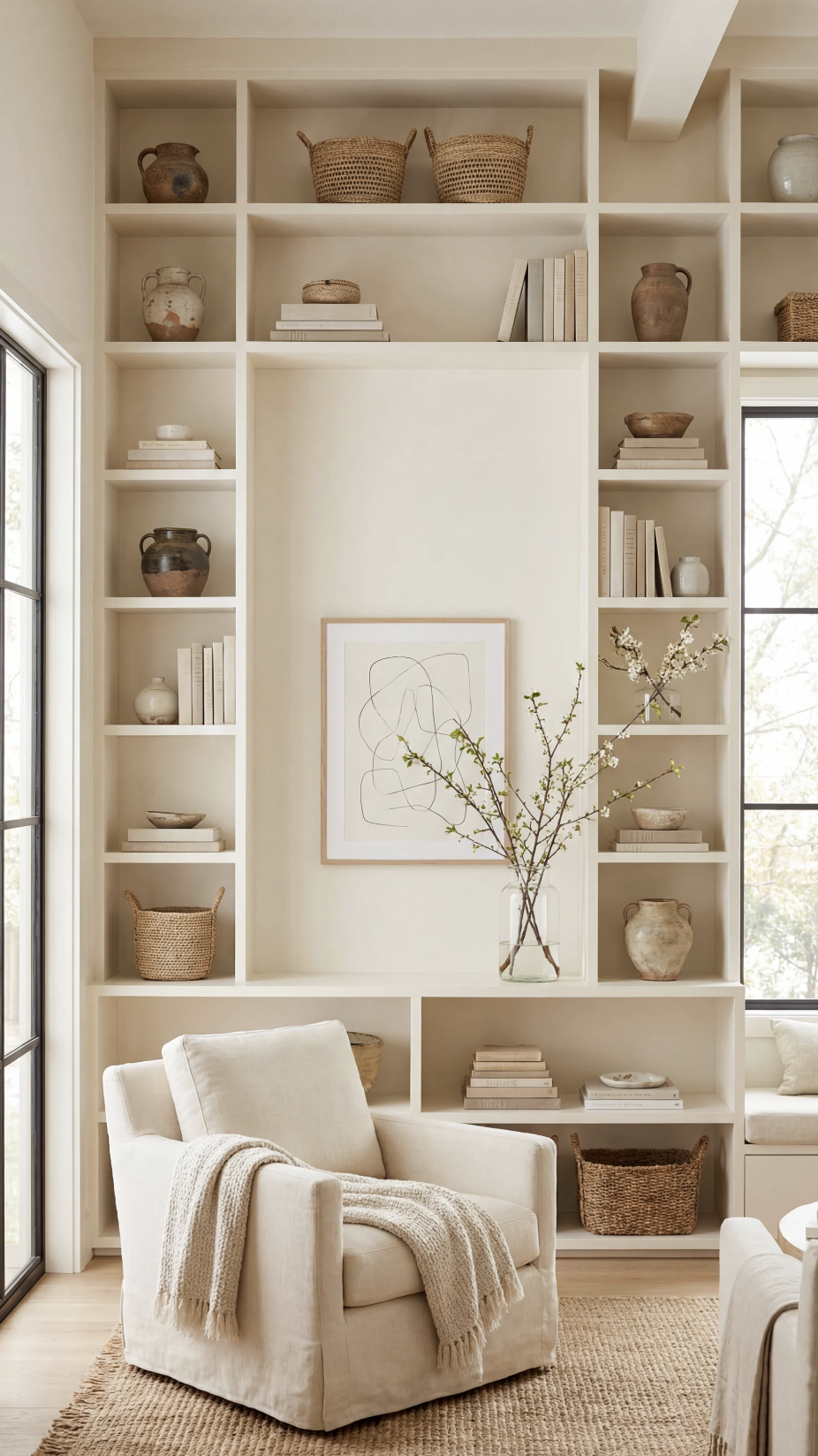
Step Three: Simplify Decor and Let Texture Do the Work
One of the biggest differences between professionally styled homes and everyday homes is restraint.
Professionals do not use more decor. They use fewer pieces with better texture.
Instead of multiple small items, they rely on:
One sculptural object
One natural element
One grounding piece
This creates visual calm.
How to Apply This
On a coffee table, for example:
Replace several small objects with one tray
Leave the rest of the surface open
The same approach works on consoles, shelves, and kitchen islands. One grounding piece like a wood tray or ceramic bowl helps a surface feel finished without feeling busy.
Step Four: Add One Subtle Spring Element Only
This is where most people overdo it.
Spring decor works best when it is barely noticeable.
Choose only one of the following per room:
Fresh greenery
A simple floral arrangement
A seasonal scent
A light color accent
Avoid themed decor or anything that clearly announces the season.
The goal is for your home to feel fresh, not decorated.
Spring should feel like a shift in atmosphere, not a theme.
Having key pieces to tie in the feeling of Spring make a noticeable difference:
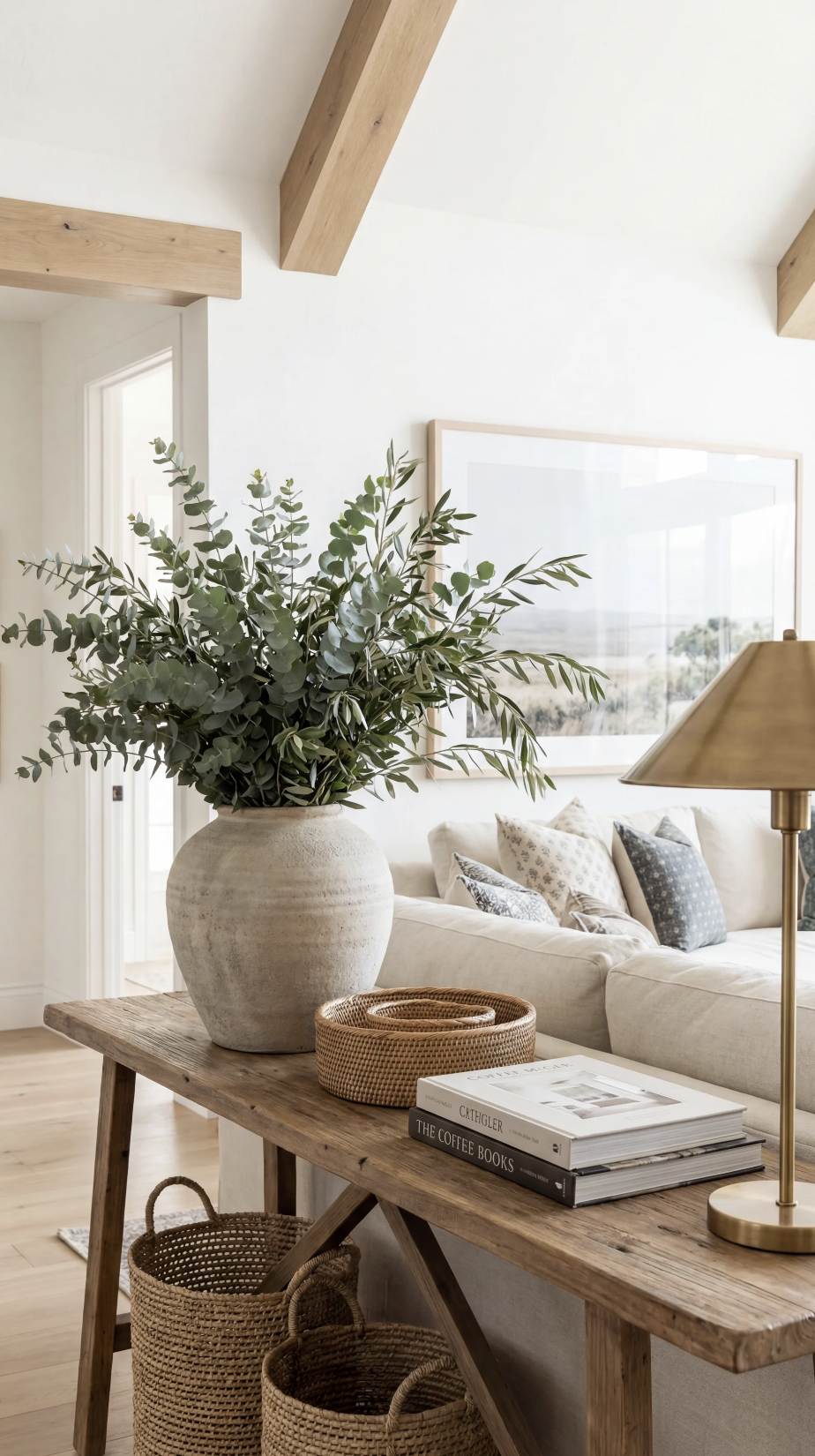
Step Five: Balance Light and Grounding Elements
One mistake people make in spring is removing all darker elements.
When everything becomes light, a room can feel unfinished.
Professionally styled homes always include grounding pieces:
Wood
Stone
Black or brass accents
Heavier ceramics
These pieces stay year round and make lighter decor feel intentional.
Think of items like:
Table lamps with ceramic or stone bases
Wood accent pieces
Neutral rugs with texture
Why This Method Works So Well
This approach works because it follows how the eye actually reads a space.
First, the eye notices clutter.
Then it notices balance.
Then it notices texture.
Color and decor come last.
When you edit first and layer intentionally, your home feels styled without looking staged.
And the best part is that this refresh works in every room. Living rooms, kitchens, bedrooms, and entryways all benefit from the same process.
How to Make This Refresh Last Beyond Spring
The biggest advantage of this method is that it is not seasonal.
By focusing on texture, balance, and editing, your home transitions easily into summer without another full refresh.
When the next season comes, you are swapping one layer again, not starting over.
This is how professionally styled homes stay timeless.
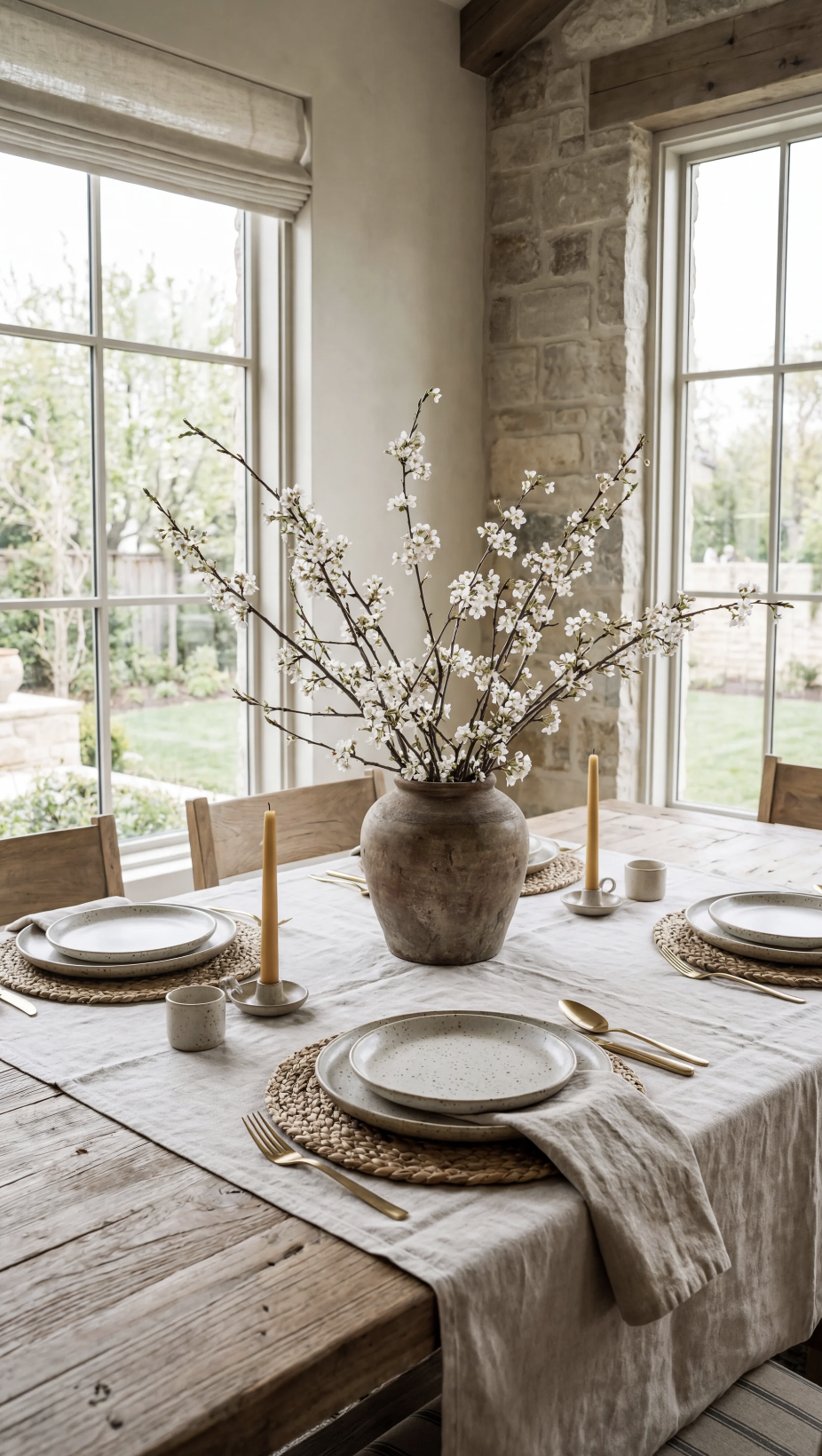
What This Means for Your Home
Spring decorating does not need to be overwhelming or expensive.
When you remove before you add and focus on one meaningful change, your home instantly feels calmer, brighter, and more intentional.
That is the difference between decorating and styling.
And once you see it, you cannot unsee it.
Related Reads You Might Love
If you want to keep refining this approach, these posts pair perfectly with this refresh method: