
Ultimate Garage Maintenance Guide
(Moisture, Doors, Storage, Safety)
Garages are often treated like unfinished space.
They’re where things get stored, postponed, or dealt with later. As long as the car fits and the door opens, most homeowners assume the garage is fine. But garages quietly affect the rest of the house more than almost any other area. Moisture starts here. Pests enter here. Cold air leaks here. Safety issues hide here. And clutter builds here until it spills indoors.
A well-maintained garage doesn’t need to look like a showroom. It needs to stay dry, operate smoothly, store items safely, and avoid becoming a source of problems for the rest of the home.
This guide breaks garage maintenance into the four areas that matter most: moisture control, doors and movement, storage and organization, and safety. None of this is complicated. Most of it is preventative. And once it’s handled properly, the garage becomes a quiet, low-maintenance buffer instead of a stress zone.
Moisture: The Root of Most Garage Problems
Moisture is the single biggest issue garages face.
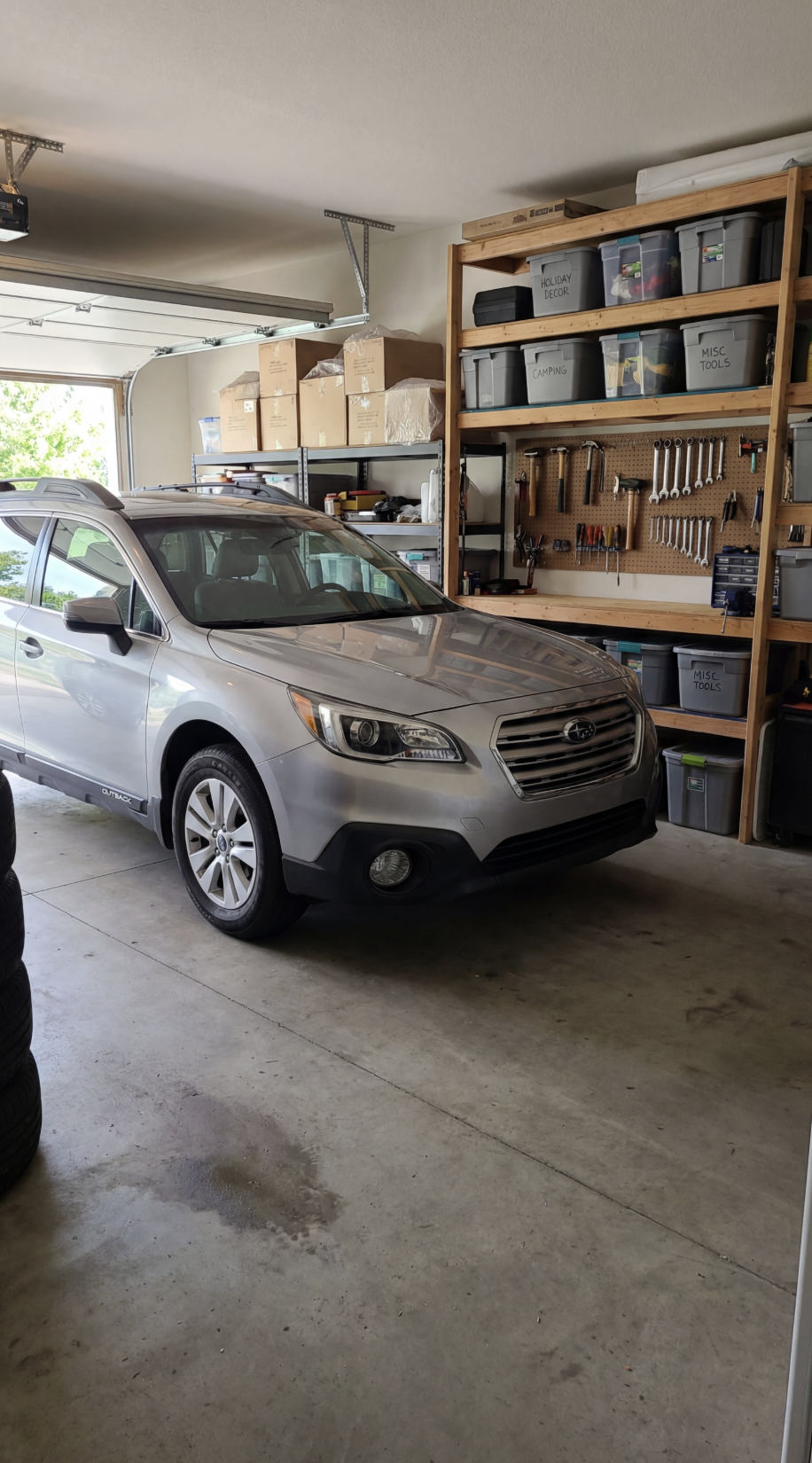
Concrete absorbs moisture. Temperature swings cause condensation. Snow melts off vehicles. Humid air enters through gaps. Over time, this creates rust, mold, musty smells, and deterioration of anything stored too low or too long.
One of the simplest checks is the garage floor itself. If water pools near the door or along walls after rain or snowmelt, drainage needs attention. Sometimes this is as simple as clearing debris from the exterior threshold so water can exit properly. In other cases, improving the slope outside the garage or sealing small cracks in the concrete prevents moisture from wicking upward.
Inside the garage, airflow matters more than most people realize. Garages without ventilation trap humidity, especially in warmer months. A basic wall-mounted fan or ensuring existing vents are unobstructed helps moisture dissipate instead of settling.
In humid climates or damp garages, a compact dehumidifier set to maintain a reasonable humidity level can prevent long-term issues without much effort. This is especially useful if tools, freezers, or cardboard storage boxes are present.
Anything stored directly on the floor is more vulnerable. Elevating items slightly using shelving, pallets, or even simple plastic feet reduces moisture exposure dramatically.
Moisture control doesn’t need to be perfect. It just needs to be intentional.
Garage Doors: Movement, Seals, and Quiet Operation
Garage doors are the largest moving component in most homes, and they’re often ignored until something goes wrong.
Start with the basics. A door that feels heavy, jerky, or loud is telling you something. Springs, rollers, and tracks all wear over time. Lubricating moving metal parts with a garage-door-specific lubricant (not general-purpose oil) reduces noise and strain and extends component life.
Rollers deserve special attention. Older metal rollers can be noisy and rough. Nylon rollers with sealed bearings operate more quietly and require less maintenance, making them a worthwhile upgrade during routine service.
The bottom seal on the door is another critical but overlooked piece. Cracked or hardened seals allow water, cold air, pests, and debris into the garage. Replacing a worn bottom seal is inexpensive and immediately improves comfort and cleanliness.
Check the side and top weatherstripping as well. Gaps here let air and moisture move freely. Proper sealing reduces temperature swings and helps keep the garage drier.
Garage doors don’t need to be silent or perfect. They just need to move smoothly and seal properly.
Storage: Preventing Clutter Before It Starts
Most garages don’t have a storage problem. They have a layout problem.
Storing items on the floor invites moisture damage, pests, and constant rearranging. Wall-mounted storage systems change how the garage functions entirely.
Pegboard systems or rail-based wall storage allow tools, yard equipment, and accessories to stay visible and accessible. When items are easy to grab and put away, clutter doesn’t pile up as quickly.
Shelving should be chosen with environment in mind. Metal or heavy-duty plastic shelving handles temperature swings and humidity better than untreated wood. Adjustable shelves adapt over time as storage needs change.
Overhead storage racks are useful for seasonal items but should be installed thoughtfully. Storing lighter, sealed bins overhead keeps rarely used items out of the way without creating safety risks.
Clear storage bins reduce forgotten clutter. When you can see what you have, you’re less likely to stack duplicates or lose track of items.
A garage that stays organized is one where every item has a logical place.
Safety: The Things That Matter More Than You Think
Garages quietly host more safety risks than most rooms in the house.
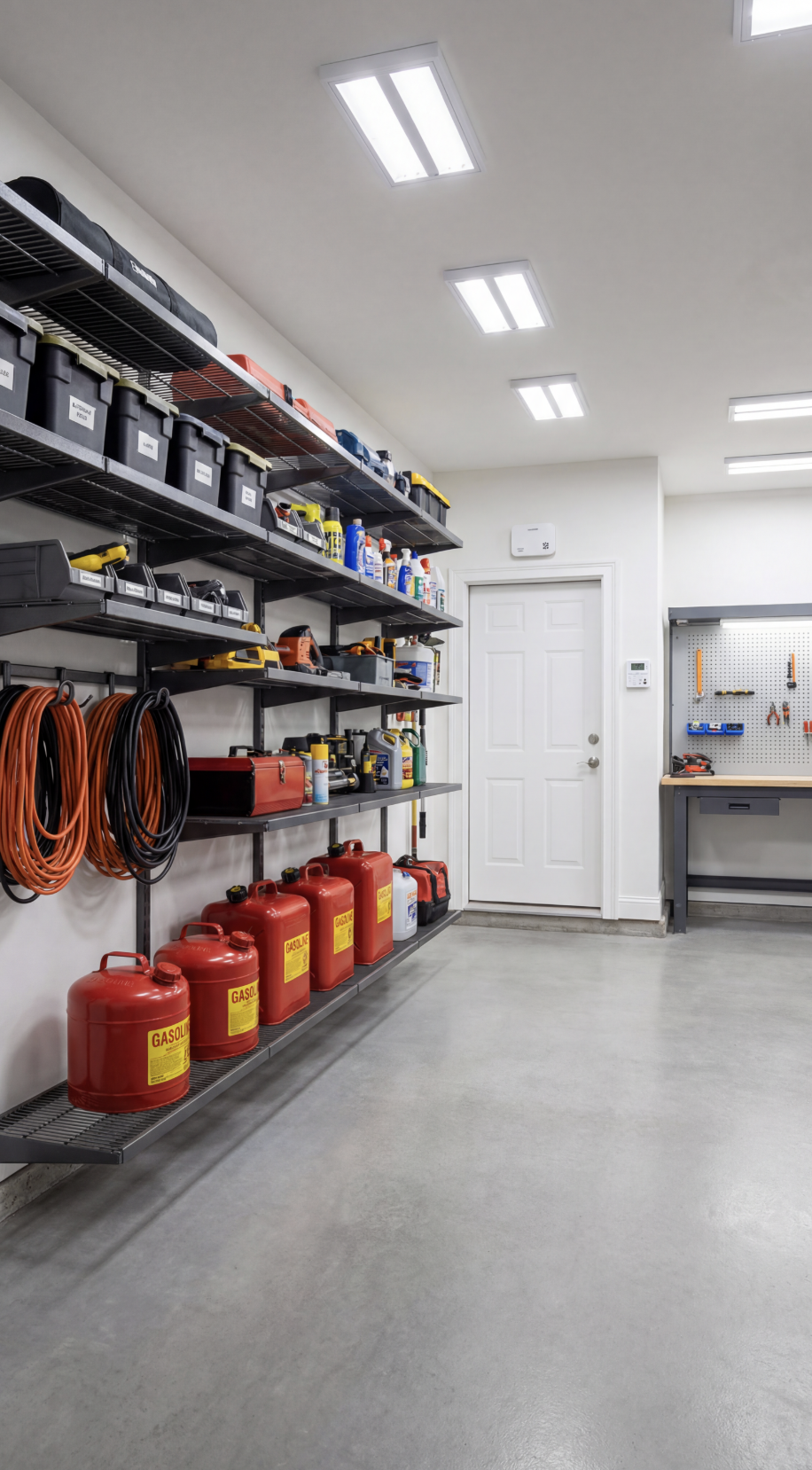
Start with fire safety. Many garages store flammable liquids, fuels, or chemicals. These should be kept in approved containers and stored away from ignition sources. Shelving should be stable and secured to prevent tipping.
Electrical safety matters too. Extension cords used as permanent wiring are a red flag. If outlets are insufficient, installing additional outlets or a power strip designed for workshop use reduces risk. GFCI outlets should be used where moisture is possible.
Lighting is another overlooked factor. Dim garages increase accident risk. Swapping old bulbs for bright, energy-efficient LED shop lights improves visibility and makes the space more usable. Better lighting also discourages clutter because messes are easier to see and address.
Carbon monoxide risks are real in attached garages. Vehicles should never idle unnecessarily, and gas-powered tools should be operated with the door open. Installing a carbon monoxide detector near the entry door to the house adds another layer of protection.
Garages don’t need to feel industrial. They just need to be safe and predictable.
Pest Prevention: Sealing the Weak Points
Garages are common entry points for pests.
Small gaps around doors, vents, and utility penetrations invite rodents and insects. Inspecting and sealing these openings with appropriate materials like metal mesh or exterior-grade sealant prevents issues before they start.
Keeping food sources out of the garage helps as well. Pet food, bird seed, and open trash attract pests quickly. Using sealed containers reduces temptation.
Pest prevention is far easier than pest removal.
Floors: Function Over Appearance
Garage floors don’t need to look pretty, but they benefit from protection.
Oil, salt, and chemicals break down bare concrete over time. Even basic floor mats placed where vehicles park protect concrete from staining and moisture absorption.
For homeowners looking to upgrade, epoxy or polyaspartic coatings create a sealed surface that’s easier to clean and more resistant to damage. These coatings aren’t required, but they do reduce long-term maintenance significantly when done correctly.
Cracks should be addressed early. Small concrete crack fillers prevent water intrusion that leads to larger problems later.
A functional garage floor is one that stays dry and intact.
Temperature and Comfort: Why It Matters
Garages influence indoor comfort more than people realize.
Cold air from an unsealed garage transfers into adjacent rooms. Improving door seals, insulating shared walls, and closing gaps reduces drafts and improves energy efficiency.
If the garage is used as a workspace, even minimal insulation makes a noticeable difference. Comfort encourages use, and use encourages organization.
Maintenance Schedule: Keep It Simple
Garage maintenance doesn’t need a complex checklist.
Once or twice a year:
Inspect door operation and lubricate moving parts
Check seals and weatherstripping
Sweep debris and inspect floor condition
Review storage and remove unused items
Check for signs of moisture or pests
After winter:
Rinse salt residue from floors
Inspect for water intrusion
Replace damaged mats or seals
Consistency beats intensity.
Final Thoughts
A garage doesn’t need to be perfect to be effective.
It needs to stay dry, operate smoothly, store items safely, and avoid becoming a source of stress or damage for the rest of the home. Most garage problems develop slowly, quietly, and predictably.
When moisture is controlled, doors move properly, storage is intentional, and safety basics are covered, the garage becomes a buffer instead of a liability.
Good garage maintenance isn’t about turning it into living space.
It’s about making sure it never causes problems inside the house.