
Why Your Toilet Keeps Running
(And the DIY Fix That Actually Works)
A running toilet is one of those problems homeowners tend to tolerate far longer than they should.
It is not loud enough to feel urgent. It does not leak onto the floor. It still flushes, so everything feels mostly fine.
Until the water bill arrives. Or until you notice the tank refilling every few minutes and realize something is clearly wrong. The good news is that a running toilet is rarely a serious plumbing failure. In most cases, it is caused by one or two small parts inside the tank that are worn, misaligned, or simply doing their job poorly after years of use. Understanding why a toilet keeps running is the key to fixing it quickly and correctly.
What “Running” Actually Means
When people say a toilet is running, they usually mean one of two things.
Either water is continuously flowing into the bowl after a flush, or the tank refills itself every few minutes even when no one is using it. Both situations point to the same issue. Water is escaping the tank when it should not be, and the fill valve is turning on to replace it. Your toilet is not broken. It is responding exactly the way it was designed to. The problem is that something inside the tank is allowing water to leak out.
The Most Common Cause: A Worn Flapper
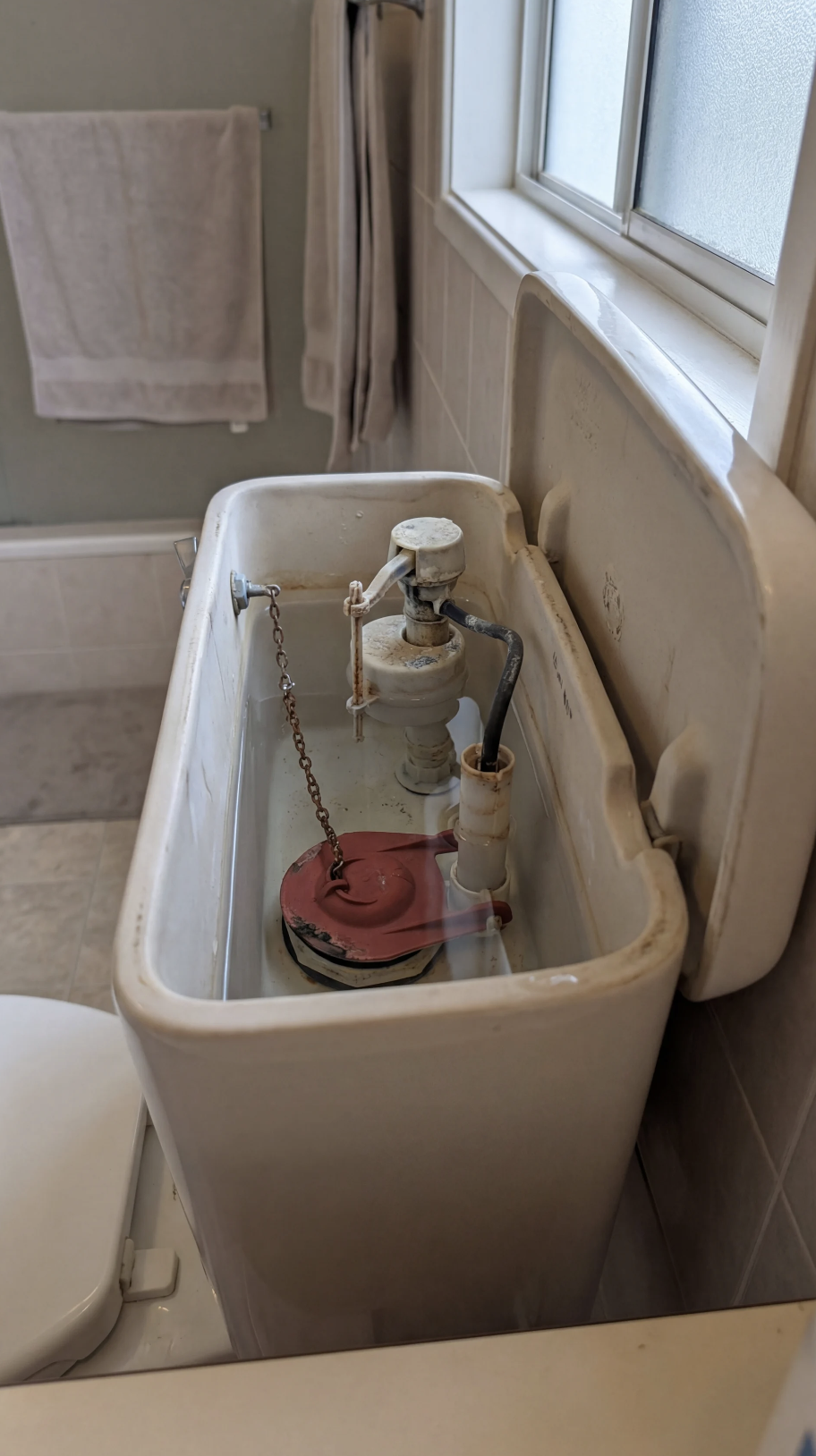
The flapper is the rubber valve at the bottom of the tank that lifts when you flush and seals again afterward.
Over time, flappers harden, warp, or develop small cracks. When that happens, they no longer create a watertight seal. Water slowly leaks from the tank into the bowl, lowering the water level just enough to trigger the fill valve. This is the most common cause of a running toilet, and it is also the easiest fix.
A flapper replacement usually takes less than ten minutes and costs very little. It does not require special tools or plumbing experience. Contractors often replace flappers proactively because they know how frequently they fail.
Chain Issues That Prevent a Proper Seal
Sometimes the flapper itself is fine, but the chain attached to it is not.
If the chain is too long, it can get caught under the flapper and prevent it from sealing fully. If it is too short, it can hold the flapper slightly open even after flushing. Both situations allow water to leak quietly into the bowl.
Adjusting the chain so it has just enough slack to lift freely without getting trapped is often all it takes to stop the running. This is a detail many homeowners miss because it looks minor, but small misalignments matter inside a toilet tank.
The Fill Valve May Be Misadjusted or Worn
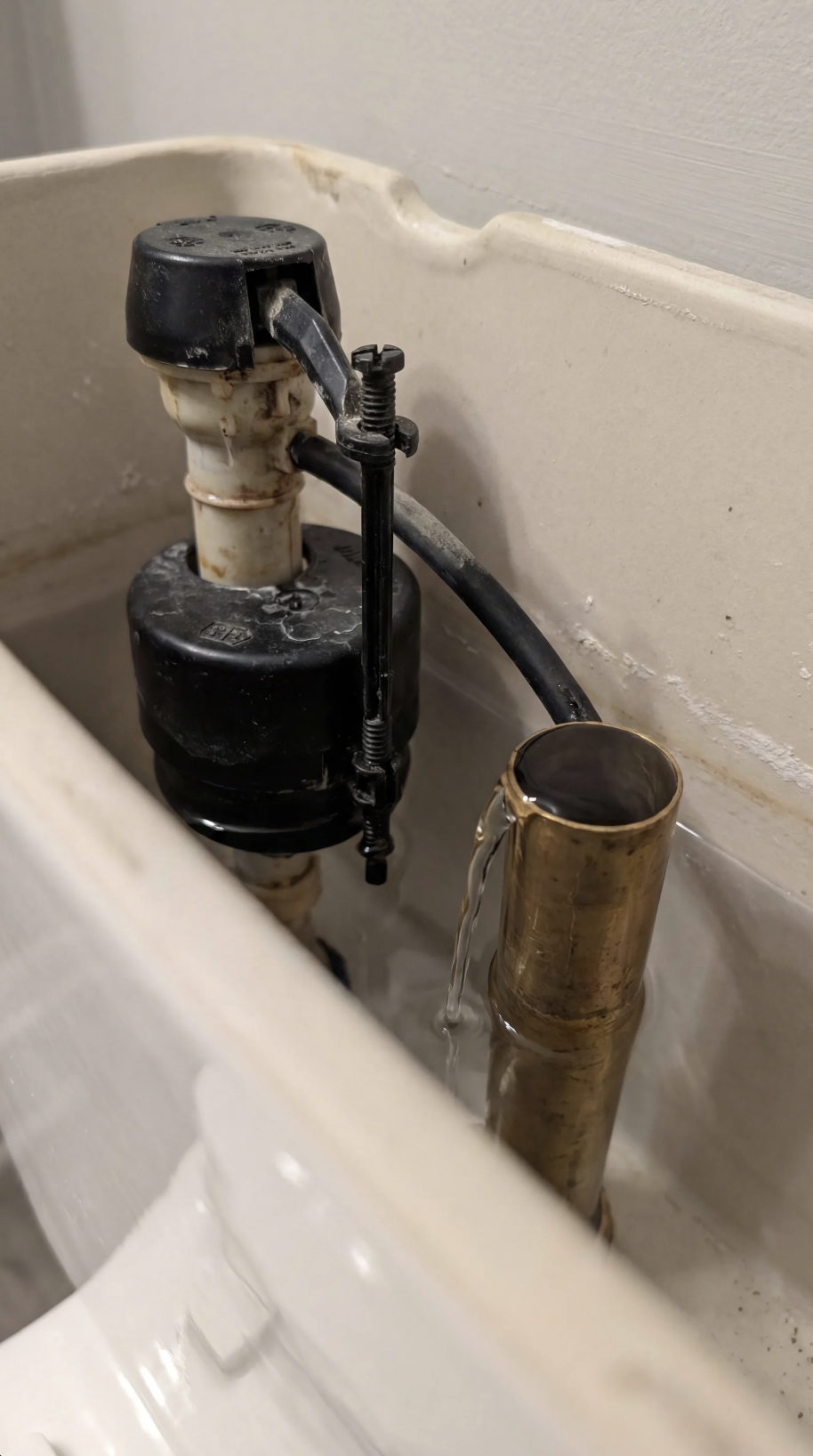
The fill valve controls how much water enters the tank after a flush. If the water level is set too high, water spills into the overflow tube, sending it straight into the bowl. This creates a constant refill cycle even if the flapper is sealing correctly.
Modern fill valves are adjustable. Lowering the float slightly so the water level sits below the overflow tube can stop the problem immediately. Older fill valves can also wear out internally. When they do, they may not shut off cleanly, causing water to trickle continuously. Replacing a fill valve is still a straightforward DIY task and is often easier than trying to repair an aging one.
Why the Overflow Tube Matters More Than You Think
The overflow tube is a safety feature designed to prevent tank overflow.
If water rises too high in the tank, it flows into this tube and directly into the bowl. That is a good thing when something goes wrong, but it also means improper water levels create silent waste. If your toilet runs intermittently and you notice water flowing into the overflow tube, the fix is usually as simple as adjusting the fill valve height. Professionals check this immediately because it is one of the fastest ways to diagnose a running toilet.
Mineral Buildup Can Create Hidden Problems
In areas with hard water, mineral buildup can interfere with how toilet components seal and move.
Calcium deposits can form on flappers, valve seats, and fill valves, preventing smooth operation. Even a new flapper may not seal properly if buildup is present. Cleaning the sealing surfaces inside the tank with a cloth or mild vinegar solution can improve performance and extend the life of replacement parts. This is especially common in older homes and often overlooked.
Why Running Toilets Cost More Than You Realize
A running toilet does not just waste water. It wastes treated water.
That means you are paying for water to be filtered, pumped, heated in some cases, and then flushed away without being used. A slow, steady leak can waste hundreds of gallons per day. Over a month, that adds up quickly. Contractors fix running toilets early because they know how small inefficiencies quietly turn into expensive habits.
The DIY Fix Most Professionals Use First
When a professional encounters a running toilet, they usually follow the same order.
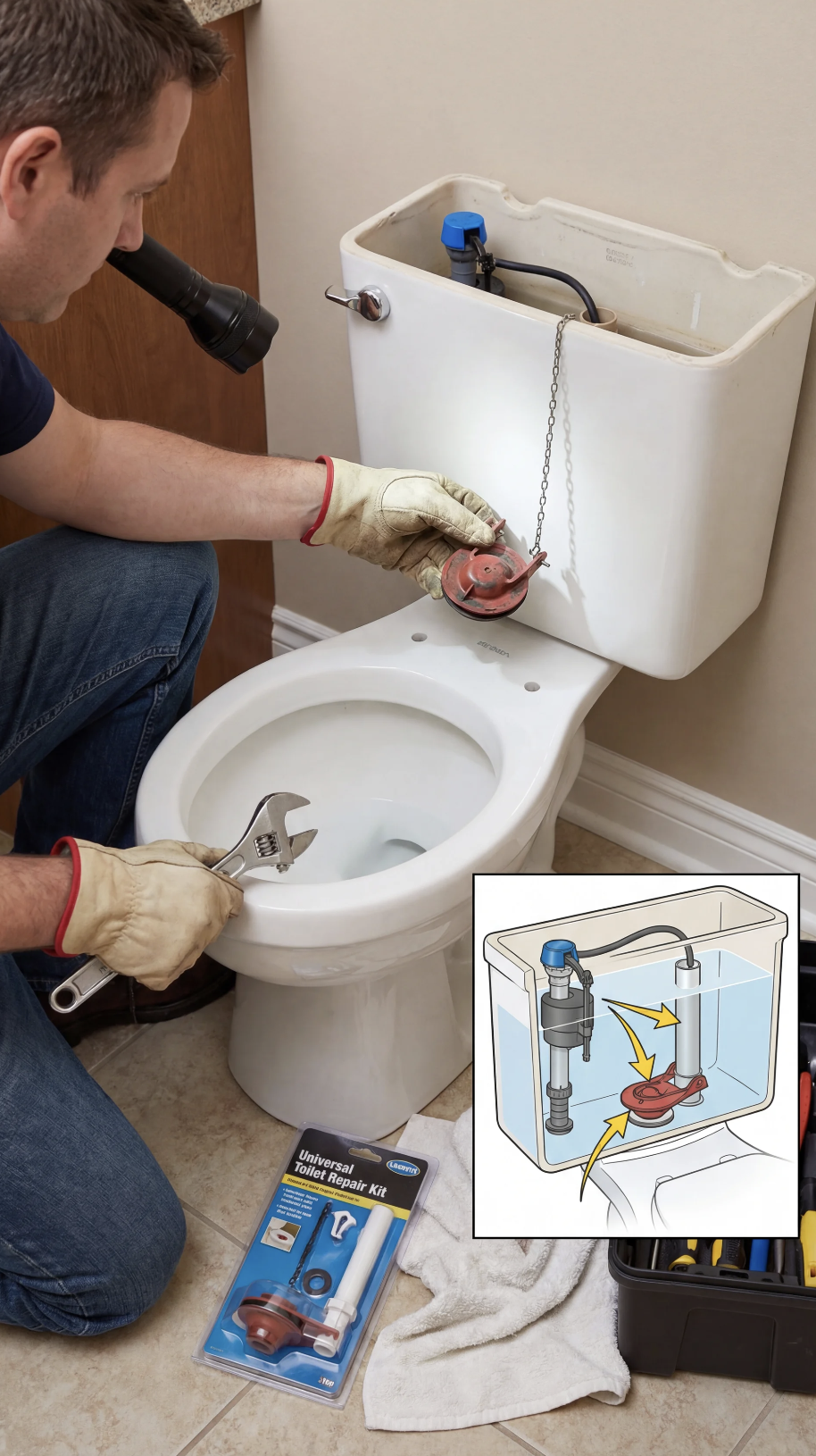
First, they inspect the flapper and chain. Second, they check the water level relative to the overflow tube. Third, they evaluate the fill valve.
In many cases, replacing the flapper alone solves the problem.
If the toilet is older or the fill valve shows signs of wear, replacing both components at the same time makes sense. Modern toilet repair kits are designed to be universal and easy to install. This approach prevents repeat issues and saves time.
When a Running Toilet Signals a Bigger Issue
Most running toilets are simple fixes, but there are exceptions.
If the toilet rocks slightly, leaks at the base, or shows moisture on the floor, the issue may involve the wax ring or subfloor. In that case, running water may be a symptom of a larger problem. If replacing internal components does not stop the running, it may be time to investigate further.
The key is not ignoring the issue while hoping it resolves itself.
How Often Toilets Should Be Checked
Toilet tanks should be checked at least once a year.
Lifting the lid, inspecting the components, and watching how the tank refills after a flush takes less than a minute. This simple habit catches problems before they become persistent and expensive. Many professionals do this check whenever they move into a new home, regardless of how new the toilet looks.
Final Thoughts
A running toilet feels like a small problem, but it is one of the most common sources of wasted water in a home.
The fix is usually simple. The parts are inexpensive. The time commitment is minimal.
Understanding how your toilet works turns a mysterious annoyance into a straightforward DIY task. And once you fix it once, you will never ignore a running toilet again. That is the difference between reacting to home problems and preventing them.